
Nanaimo Museum exhibit looks at farming and food security through past and present
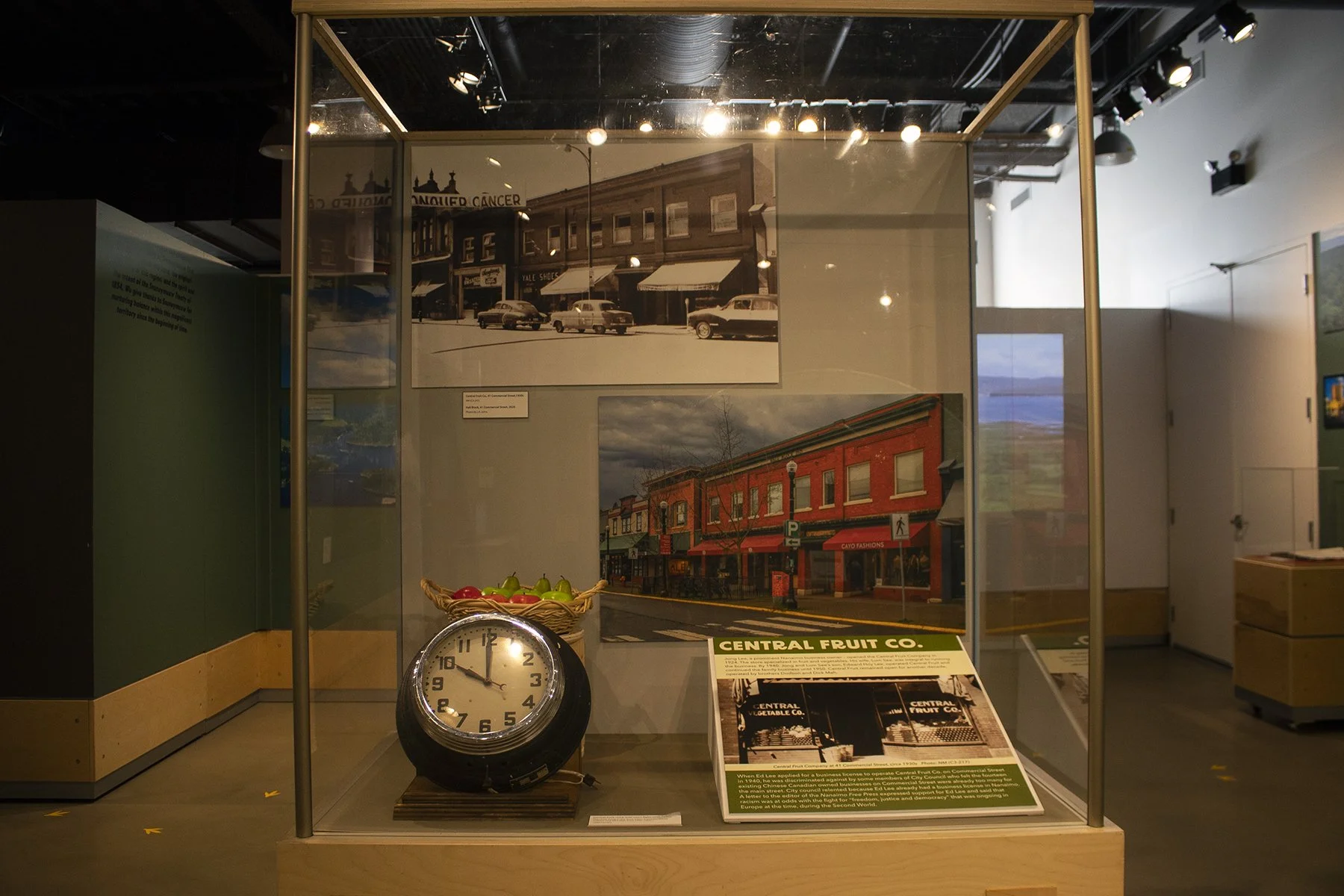
Along with the Five Acres farm, the exhibit looks at farms that were in the Wellington area, Cedar and even downtown Nanaimo. (Lauryn Mackenzie/ CHLY 101.7fm)
Nanaimo has a deep rooted history in farming, and Grow Nanaimo, a new exhibit at the Nanaimo Museum examines it.
One aspect of the exhibit is the story of the Five Acres Farm. A farm that dates back to the 1890’s when Samuel Robins of the Vancouver Coal Mining and Land Company subdivided a section of Crown land in five-acre parcels. These parcels were created for agriculture use for the miners to provide produce for their families.
Nowadays the only one five-acre plot remains in the Harewood neighbourhood. The land at 945 Park Ave is currently overseen by Nanaimo Foodshare who use the urban farming site to grow fruits and vegetables as part of their food security programs.
“We get a lot of interest in stories of people in Nanaimo, and what are some parts of Nanaimo history that are different from other areas,” said Aimee Greenaway, the curator at the Nanaimo Museum. “So we started talking a lot about the Five Acres story, and then pulling in other parts of Nanaimo and connected farming stories.”
Greenway spoke to CHLY following the opening of the exhibit. She worked with a long list of community members on the exhibit.
“We've talked to different people from the farming community. There's a section in the exhibit about several Chinese Canadian market gardeners and so had a few conversations with people from the community that were familiar with those stories as well,” she said. “So we appreciate that people are there to help us and share their input to make the exhibits more nuanced and complex and rich.”
Along with the Five Acres farm, the exhibit looks at farms that were in the Wellington area, Cedar and even downtown Nanaimo.
“We see the connections between what food security looked like in the 1890s and early 1900s and what food security looks like today,” she said. “A lot of it is quite similar, so we encourage people in the exhibit to reflect on that and share some of their perspectives on what food security means to them. So there's that element as well, where we're looking at the past, but also how the past connects with the present and how that informs what we do today.”
Greenaway said one of their favourite parts of the exhibit is how they tell the stories of the Night Soil Scavenger, who would empty people’s outhouses to use as fertilizer, though an interactive outhouse.
“So looking at things that are very, sanitation, and things that could be like, very scientific or very fact based,” she said. “How do we actually bring this story out and embrace some of the parts of the story that could be like, awkward and uncomfortable, but actually just be like, this is part of the human experience, and then have an outhouse that you can go and sit in.”
She said exhibits like this one are really powerful in connecting residents with the land, and their stories.
“I love local history and so for me, all this, all of this work, is exciting, and I love seeing the exhibits come together,” Greenway said. “The then-and-now photos that we have in the exhibit, they're just so interesting to be able to see how things have changed, and also be reminded of the history that's right under our feet in our own neighbourhoods.”
The Grow Nanaimo exhibit is on at the Nanaimo Museum until September 7th downtown Nanaimo.
Funding Note: This story was produced with funding support from the Local Journalism Initiative, administered by the Community Radio Fund of Canada.