
“People need to have options.” Community voices call for more sober housing in Nanaimo
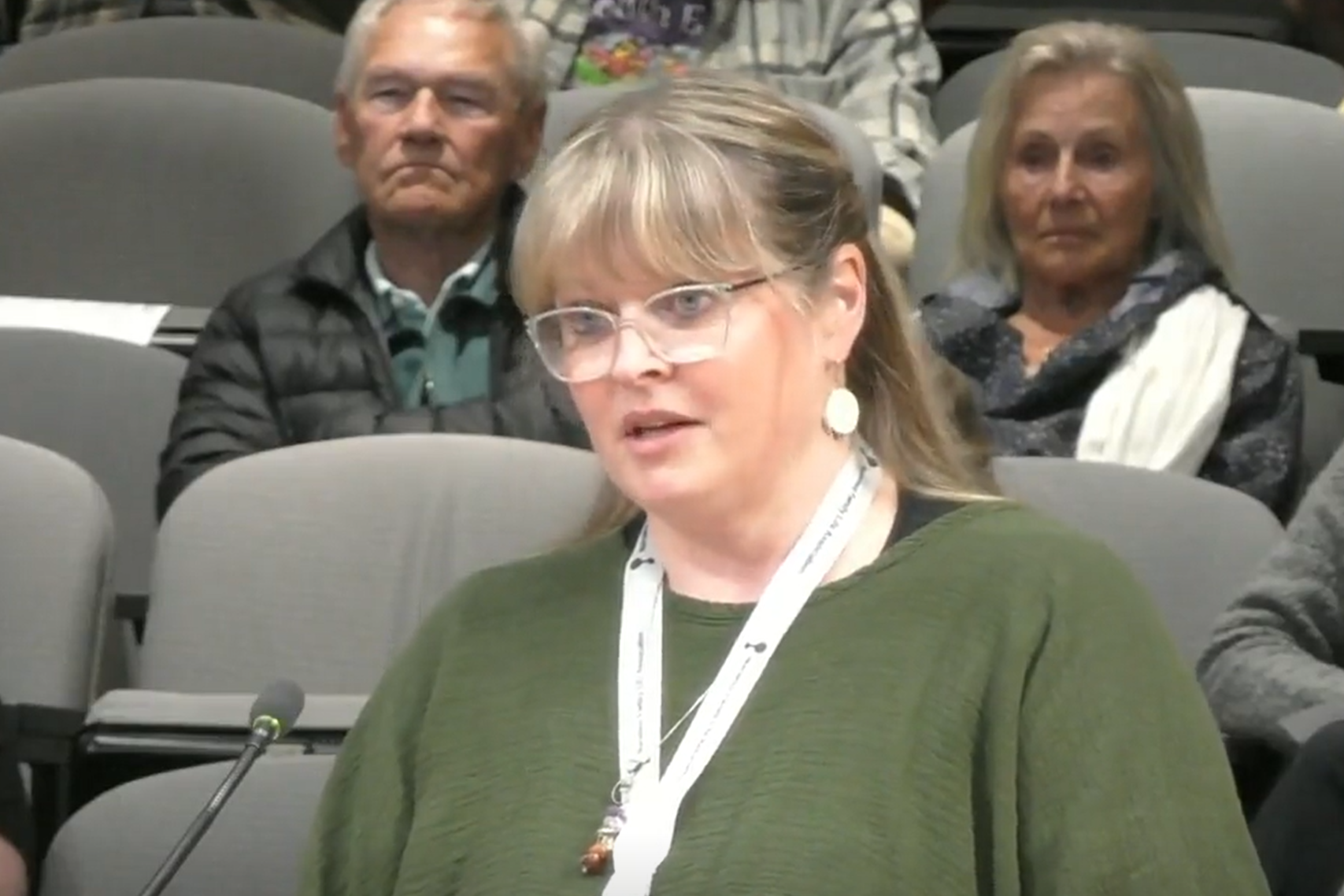
Gagnon (pictured) said she has seen the consequences of only having one type of environment available when people show up to their shelters under the influence. (Governance and Priories Meeting live feed/City of Nanaimo)
The City of Nanaimo is once again calling on the provincial government to provide more dry housing services in the city.
The need for more sober or dry supportive housing was the main topic of a special Governance and Priories Meeting on Monday June 8.
Chair of the meeting, Councillor Erin Hemmens, said it came after council last summer sent a letter to B.C.’s Minister of Housing Christine Boyle requesting that a planned 50-unit supportive housing building at 250 Terminal Avenue, have an emphasis on sober living.
“There was some dialogue and exchange with the Minister, and in February of this year,” Hemmens said. “We received correspondence that says ‘I encourage the city of Nanaimo to share any relevant data which may support the request for the designation of 250 terminal avenue as dry or worse supportive housing,’ So that's that's a big part of why we're here tonight.”
Karen Kuwica, President of the Newcastle Community Association, echoed the need for more sober housing options in the downtown area.
“Communities need housing developments that sustain wellness, safety, and successful community integration,” Kuwica said. “Fifty-two low-barrier supportive housing units proposed at 250 Terminal Ave. will be sharing a driveway, parking, garbage facilities, and other amenities with the proposed 30 affordable units intended for seniors and family. It's simply the wrong housing mix for 250 Terminal.
Dr. Roger Walmsley, addiction medicine physician for Island Health told the committee that dry housing benefits certain people.
“Abstinence-based housing is most helpful for three broad categories of homeless individuals: a) individuals in early recovery who are transitioning from inpatient or outpatient residential treatment, b) those with alcohol use disorders, and c) those with adequate baseline recovery capital,” Walmsley said.
Walmsley said dry housing has been found to lead to prolonged abstinence, greater employment, and quality of life outcomes. He said it has also been shown to improve the mental health of individuals with other psychiatric disorders, particularly when social and mental health supports are readily available.
“There is need for sober supportive housing in this community,” he said.
While Walmsley said the new housing project represents a “bubble of hope”, he also said the program needs to be designed so no one falls through the cracks.
“I think it needs to start small with a few well-chosen clients and build over time,” Walmsley said. “I am curious about the screening process for applicants and the provisions for relapse. Relapse needs to be recognised as an integral part of recovery.”
Erika Gagnon, Director of Shelters and Guest Services for Nanaimo Family Life Association spoke as a delegation at the meeting.
“I want to be clear in saying that low-barrier services are essential, they save lives, reduce harm, and provide a critical point of connection and a first step for people who are often on the very margins of our communities, but there's a gap, a gap that is putting already vulnerable people in crisis and at further risk,” Gagnon said. “That gap is the lack of sober and dry transitional housing and shelter space in our community.”
She said she has seen the consequences of only having one type of environment available when people show up to their shelters under the influence.
“Not everyone who is going through the crisis of being unhoused is affected by the disease of addiction. Dry housing options could make more spaces in low-barrier shelters like ours,” she said. “Low-barrier shelters and housing are not designed to support people who are trying to stay sober. Being surrounded by active substance users, withdrawal symptoms, or unpredictable behavior is not just stressful, it's a known contributor to relapse.”
Following the delegations and presentations, councilor Sheryl Armstrong made a motion for Mayor Leonard Krog to write a letter to the Ministry of Housing to again request that new supportive housing at 250 Terminal Avenue be dry supportive units.
All members of Nanaimo City council voted in favour.
Following the meeting CHLY’s Joe Pugh spoke to MLA for Nanaimo—Gabriola Island and Minister of Social Development and Poverty Reduction, Sheila Malcolmson, who was in attendance at the meeting.
She said she is absolutely in favour of seeing 250 Terminal Ave. be dry supportive-housing.
“We're at a place, absolutely, where we can diversify,” Malcolmson said. “People need to have options, and I might have had a different position on dry housing when we were just opening our first supportive housing units in Nanaimo 10-15 years ago, but we're not at that place now. We want people to have choices.”
She said she has been advocating for Nanaimo and having regular meetings with the Minister of Housing.
“We exchanged a few text messages tonight, letting [Minister Boyle] know what I was hearing in the room,” Malcolmson said. “I know she and her staff will be very interested to review the transcript and the video recording of the extremely constructive submissions that community members made tonight, and I raised my hands to everybody that took the time to speak.”
She said she will continue to encourage BC Housing and the Housing Minister to bring more dry housing to Nanaimo.
With files from Joe Pugh.
Funding Note: This story was produced with funding support from the Local Journalism Initiative, administered by the Community Radio Fund of Canada.