
Residents worried for what might happen to a hidden wetland in Nanaimo
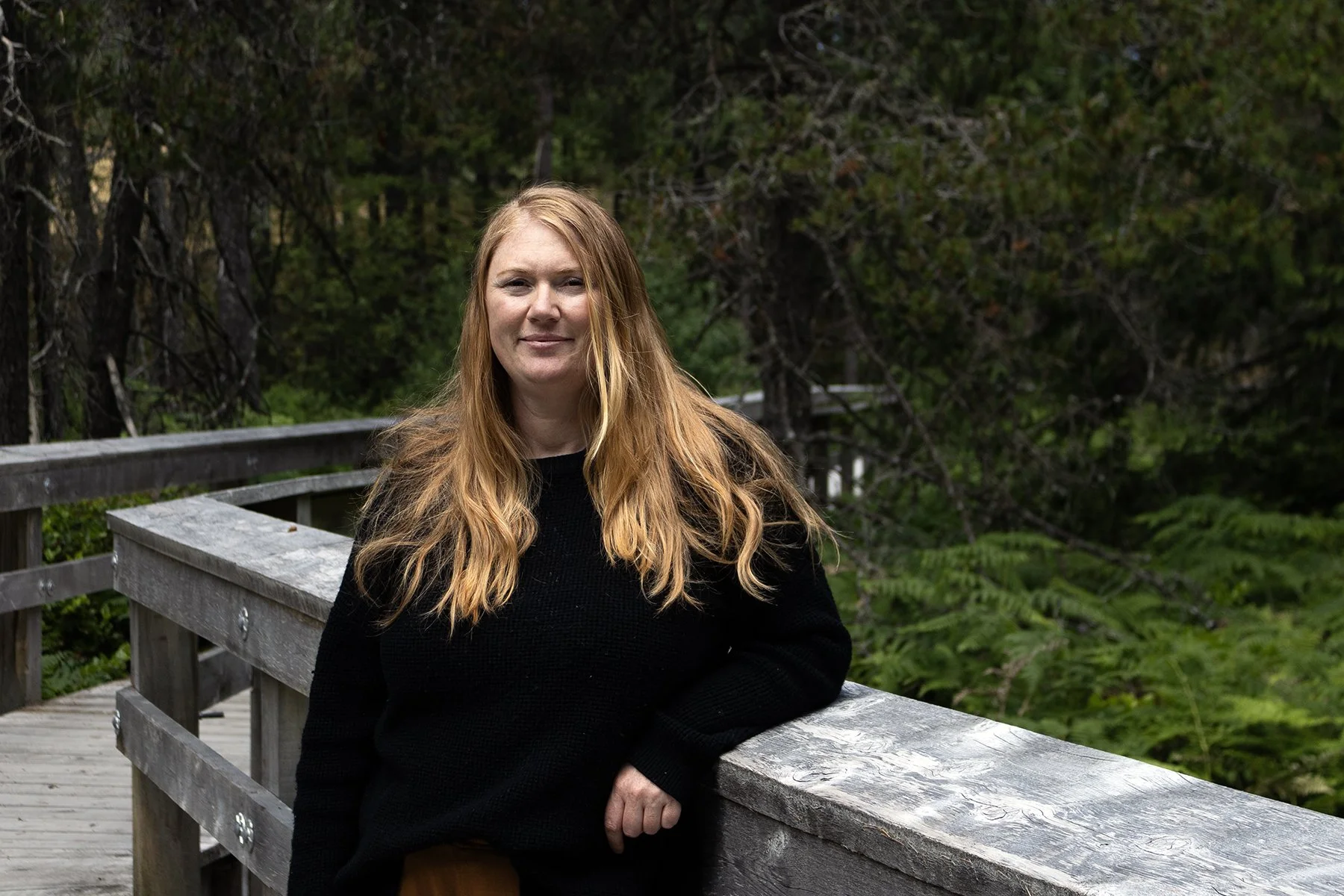
After hearing of a nearby development that could effect the ecosystem of a nearby wetland, Brown teamed up with other residents and community members to try and conserve as much of the area as possible. (Lauryn Mackenzie / CHLY 101.7FM)
Hidden in the middle of Nanaimo’s Rock City neighbourhood is a wetland that a local community group fears could be affected by nearby development.
Tamara Brown is a local biologist and resident in the Rock City area.
“I could go on for hours about things that I love about this place, but I think the thing that I love the most about it is just that feeling that you get when you enter it, like you just have this—at least I do—have this feeling that it’s special. It just feels unique.” Brown said. “You don't have to be a biologist or a wetland ecologist or a specialist of any kind to come in and appreciate this place and feel that it's neat.”
After hearing of a nearby development that could possibly affect the local ecosystem of the wetland, she teamed up with other residents and community members to try and conserve as much of the area as possible.
Brown met with CHLY at the wetland.
“This is the marsh section of Rock City Wetland. Rock City Wetland, incidentally, is a working title because this wetland is so unknown it doesn't even have a name,” she said. “So I came up with Rock City Wetland because we needed some name for trying to protect it.”
Much of the wetland is private property. A public path and boardwalk were placed between Rock City Road and Ocean Pearl Terrace by the City of Nanaimo in 2022.
“There's owls and bats and frogs and salamanders and a huge array of diversity and species of plants in just a small area. It takes less than five minutes to walk from one end of the trail to the other,” she said.
Brown first discovered the wetland shortly after she moved to the area six years ago.
“When you talk to people, they will say, ‘Oh, I had no idea it existed,’ likely because the boardwalk wasn't here, except for maybe you know a few intrepid locals who might have bush walked into this place, or the Snuneymuxw and their Sarlequun ancestors used this place as well. Very few, few, few Nanaimoites know about this place and I'm spreading the word.”
While exploring the wetland, Brown discovered the area to be home to one of the more rare types of wetland ecosystems, a fen.
Similar to a bog, a fen is an organic wetland, or peatland, that is primarily made up of sedge and organic plant materials allowing the fen to be groundwater-fed. This is unlike a bog that is primarily fed by rainwater.
Brown said fens are the rarest type of wetland ecosystem in the province.
“So making it a very rare wetland in the coastal Douglas fir zone makes it one of the more rare ecosystems in Canada.”
Knowing that much of the wetland is private property, Brown knew it would likely one day get developed, but she is concerned about the size of what’s planned.
A development permit has been approved for a 6-storey, 102-unit residential building at 3400 Barrington Road, right beside the wetland.
“I could not believe the scale of the development that they had proposed,” Brown said. “I just never in my wildest years ever thought that someone would think that was a good idea.”
As the development would require blasting the rocky ground, she worries it could affect the rare and sensitive ecosystem she said is just below a bluff.
“Let's go take a look. Yeah, I'll show you. It's pretty shocking how close it is to the wetland. It's just a 15 metre buffer, 7.5 metre from the smaller wetland over there, in fact. It's shocking because of the scale of it,” she said. “So, it's a 1.5 metre hectare property, and the building almost takes up all of that.”
Per City of Nanaimo zoning bylaws, developments must have a 15 metre buffer zone, or ‘setback,’ from all wetland boundaries.
Brown said she is worried one of the water sources was left out of a bio-inventory assessment. The assessment of the development area and the nearby wetland was done by a third party for the City of Nanaimo.
Brown said this water source is an amphibian breeding habitat for the species of concern, northern red-legged frog (Rana aurora). She explains the importance of this factor.
“So under the province’s Develop with Care Guidelines, amphibian breeding habitat requires 30 metre setback for amphibian breeding species, and possibly more typically 60 metres when it's breeding for endangered species, such as the northern red-legged frog,” she said.
She said the assessment also did not demonstrate that the wetland is connected through surface water to the nearby Cottle Creek watershed and Cottle Lake which both are fish-bearing with cutthroat trout.
Brown worries the blasting for the development could affect hydrology of the wetland which could then lead to impacts on the Cottle Creek watershed.
“So, what I hope for is that the City recognises that there were mistakes made, and say, ‘Okay, mea culpa, we didn't know, let's go back and do it properly,’” she said. “That's what I'm asking for, is that when you take into consideration the sensitive ecosystem and the scope of work, what's at stake. Due diligence is needed.”
Brown said she is not anti-development but wants to make sure that all relevant information about the wetland ecosystem is understood and that proper precautions are taken.
CHLY reached out to the City of Nanaimo to ask about potential missing ecological information in the bio-inventory assessment.
Jeremy Holm, City director of planning and development responded via email saying the City of Nanaimo has a strong framework in place for watercourse protection. In the case of the development 3400 Barrington Road the framework also addresses wetland protection and stormwater management.
He said the large wetland on the north side of the property has been “protected by covenant since 1990 with a new covenant established as a condition of subdivision in 2022.”
In addition to the covenant, the large wetland is protected as a “Schedule C” waterbody in the Zoning Bylaw which requires the 15 meter setback.
While there is no provincial protection applied to the small seasonal wetland on the west side of the property, Holm said it is protected under the covenant with a 7.5m leave strip.
Holm said the bio-inventory assessment evaluated a number of factors at the wetland for development plans for the property. Some of the factors are; inventory and classification of aquatic and wildlife habitat values, significant environmental features, slope gradient and exposure, geologic features, and habitat protection.
He said the Qualified Environmental Professional who did the assessment “concluded that no rare species were found.”
He also said “the City of Nanaimo relies on information provided by qualified registered professionals to address relevant bylaws, regulations and standards,” and if any concerns about the work done by a registered professional, “a complaint can be made to the relevant association, or college.”
Brown later told CHLY she plans to file a complaint with the College of Applied Biologists alleging assessment had failed to “adequately characterize the site's ecological and hydrological complexity.”
CHLY will continue to follow this story.
Funding Note: This story was produced with funding support from the Local Journalism Initiative, administered by the Community Radio Fund of Canada.