
Nanaimo honours Japanese Canadian history with new legacy projects at parks
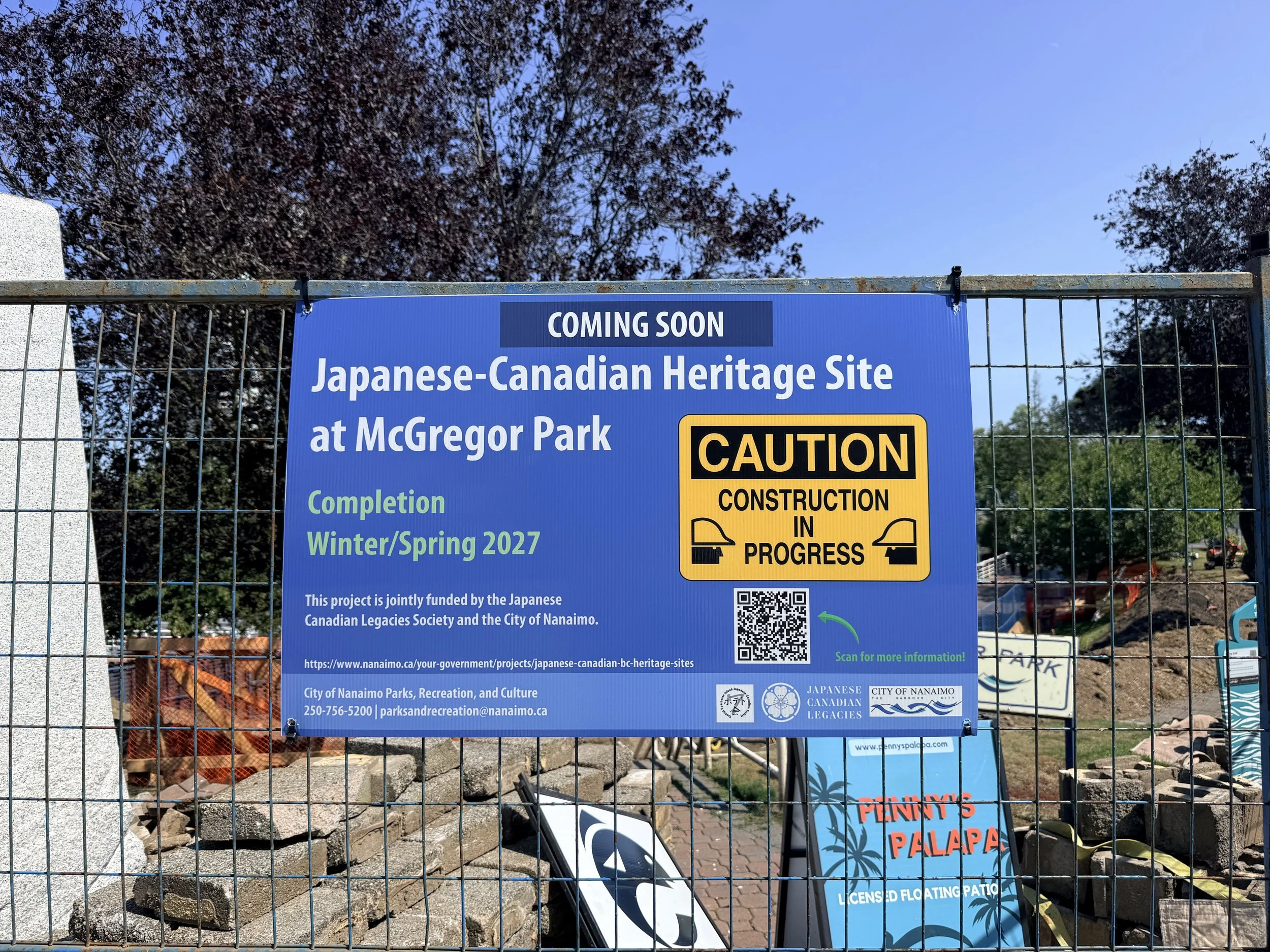
The City of Nanaimo is honouring the history of the Japanese Canadian community with the development of two projects at local parks. The City has been working with the Central Vancouver Island Japanese Canadian Society, also known as 7 Potatoes on the projects. (Luis Zablah / CHLY 101.7FM)
The City of Nanaimo is honouring the history of the Japanese Canadian community with the development of two projects at local parks.
Downtown’s McGregor Park at Nanaimo’s harbourfront is planned to become the site of a permanent landscape art installation. Over at Beban Park, a new outdoor performance space will be built to celebrate cultural performances, hosting storytelling, music, educational programming, and community gatherings.
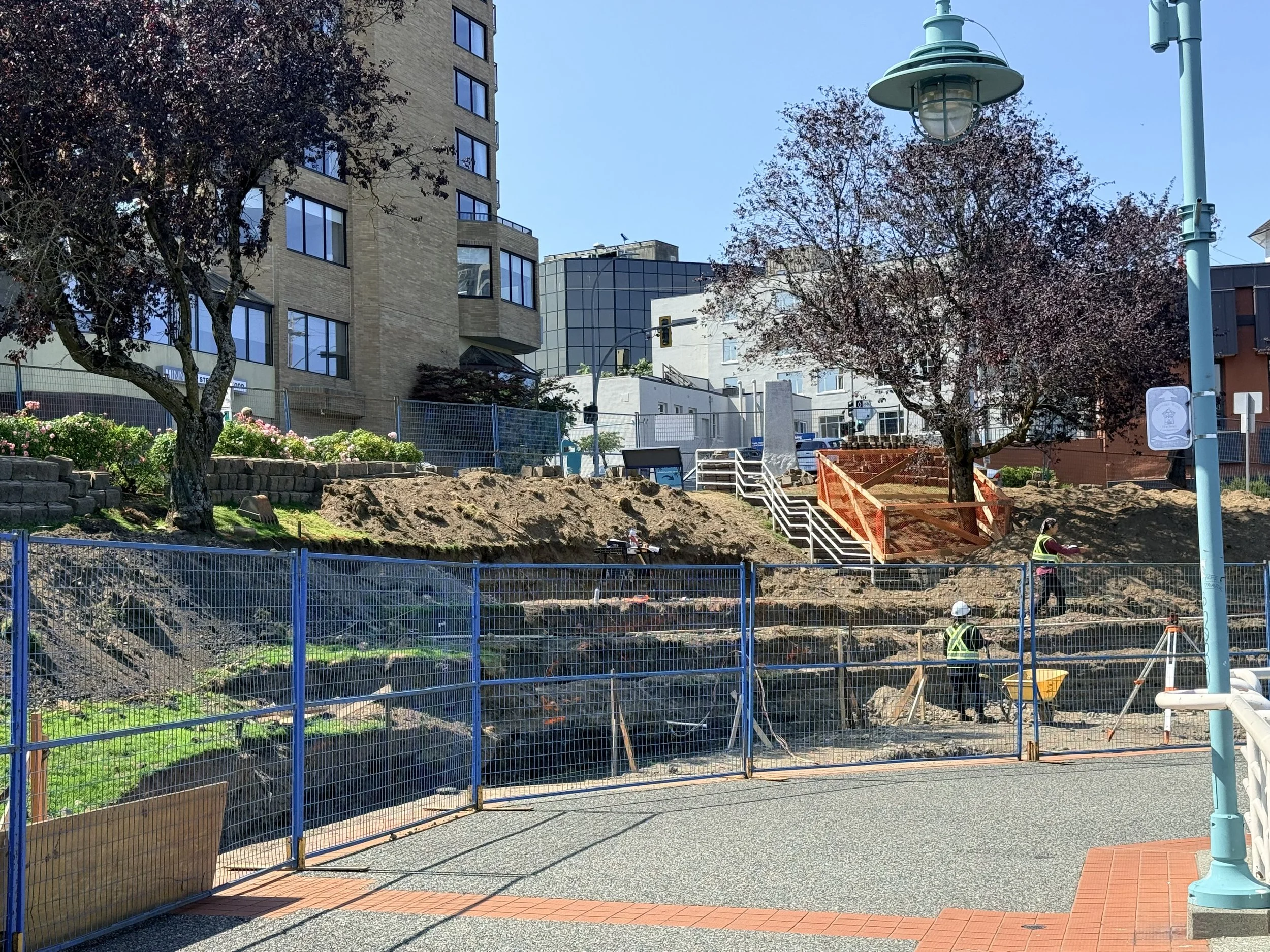
Downtown’s McGregor Park at Nanaimo’s harbourfront is planned to become the site of a permanent landscape art installation. (Luis Zablah / CHLY 101.7FM)
The City has been working with the Central Vancouver Island Japanese Canadian Society, also known as 7 Potatoes on the projects. The society is an organization dedicated to celebrating Japanese culture in Canada, preserving the history of Japanese Canadians, and working towards a more multicultural Canada.
Tami Hirasawa is president of 7 Potatoes. She shared the plan for the McGregor Park project.
“So there's like a wall that's going to go sort of where a clock is, and in amongst the cherry trees, and there's going to be new seating area right where the McGregor Park, you know, tiered seating is, and benches that resemble Saysutshun and Protection Island, and it's the wall is going to be really telling the story of the Japanese Canadian history.”
She described the Beban Park Outdoor Performance Stage.
“The Beban Park community is really for the community for today. The McGregor Park at the waterfront is more the history of the Japanese Canadians, and the one at Beban is a legacy park. It's really for the community to gather and celebrate together, and to have like all Nanaimo people, you know, come and celebrate together.”
Hirasawa said Japanese immigrants began arriving in Nanaimo in the 1890s, where most settled in the Brechin area, specifically in Juniper and Stewart Avenue. Many came from Japan with experience in fishing, shipbuilding, mining and logging and they quickly used those skills to establish a thriving neighbourhood of homes and businesses.
Hirasawa explained the history of the Japanese community in Nanaimo, as the community settled into Vancouver Island.
“The Japanese Canadians built a Japanese language school for their children in the 1920s and that was located at Juniper and Stewart Avenue, and they also were very involved in the fishing industry. So a lot of Japanese came over from Japan and had shipbuilding experience and fishing experience, and so they were very hardworking, and a real economic contribution to Nanaimo in that time.”
As the community grew so did their contributions. Japanese Canadians established herring salteries, where the fish were salted before being exported to Japan, China and other overseas markets. According to the Nanaimo Art Gallery, Nanaimo was known as a ‘Herring Capital’, having 43 herring salteries due to an abundance of the fish.
Although the community thrived, Japanese Canadians faced discrimination. According to Hirasawa, they were denied the right to vote which led to them facing restrictions in employment. They also faced laws that limited their fishing permits with racism and discrimination intensifying around 1907. According to the Royal BC Museum, that year anti-asian riots in Vancouver impacted Japanese Canadian residents and businesses, leading to the Government of Canada taking steps that restricted immigration from Japan.
According to the Canadian Museum of Human Rights, discrimination further intensified after Canada declared war on Japan in 1941 following the Japanese attack on Pearl Harbour. Within days, the government forcibly relocated thousands of Japanese Canadians from the B.C. coast to interior internment camps. Their property and possessions were sold off, with those impacted seeing little to no compensation.
Hirasawa explained the impact of the racial discrimination Japanese Canadians suffered during this time amidst the outbreak of war with Japan in 1941.
“When we were at war with Japan, within 24 hours of Canada declaring war on Japan, they had all of the fishing boats like rounded up and basically were in the possession of the custodian of enemy alien property. So that happened very quickly, and it's because they had already racially profiled all the Japanese Canadians prior to 1941.”
According to the Legislative Assembly of British Columbia, even after the war ended in 1945, Japanese Canadians were not allowed to return to the coast until April 1, 1949. With the war over, old residents returned to rebuild their lives and continue building their community.
Charlotte Davis, is the Acting Director of the Parks, Recreation and Culture department. She spoke on the experience collaborating with 7 Potatoes on the two projects.
“Yeah, it's been in the works for a while, and it's been a very collaborative process. In fact, it's one of the things that our department does fairly regularly is working on projects with the community,” said Davis. “In terms of, we have reviewed and selected designs together, and they are having huge input on the language that is going in the signage. It is the story of the local Japanese Canadian community, and it will be their words, and this is rewarding to help them deliver that.”
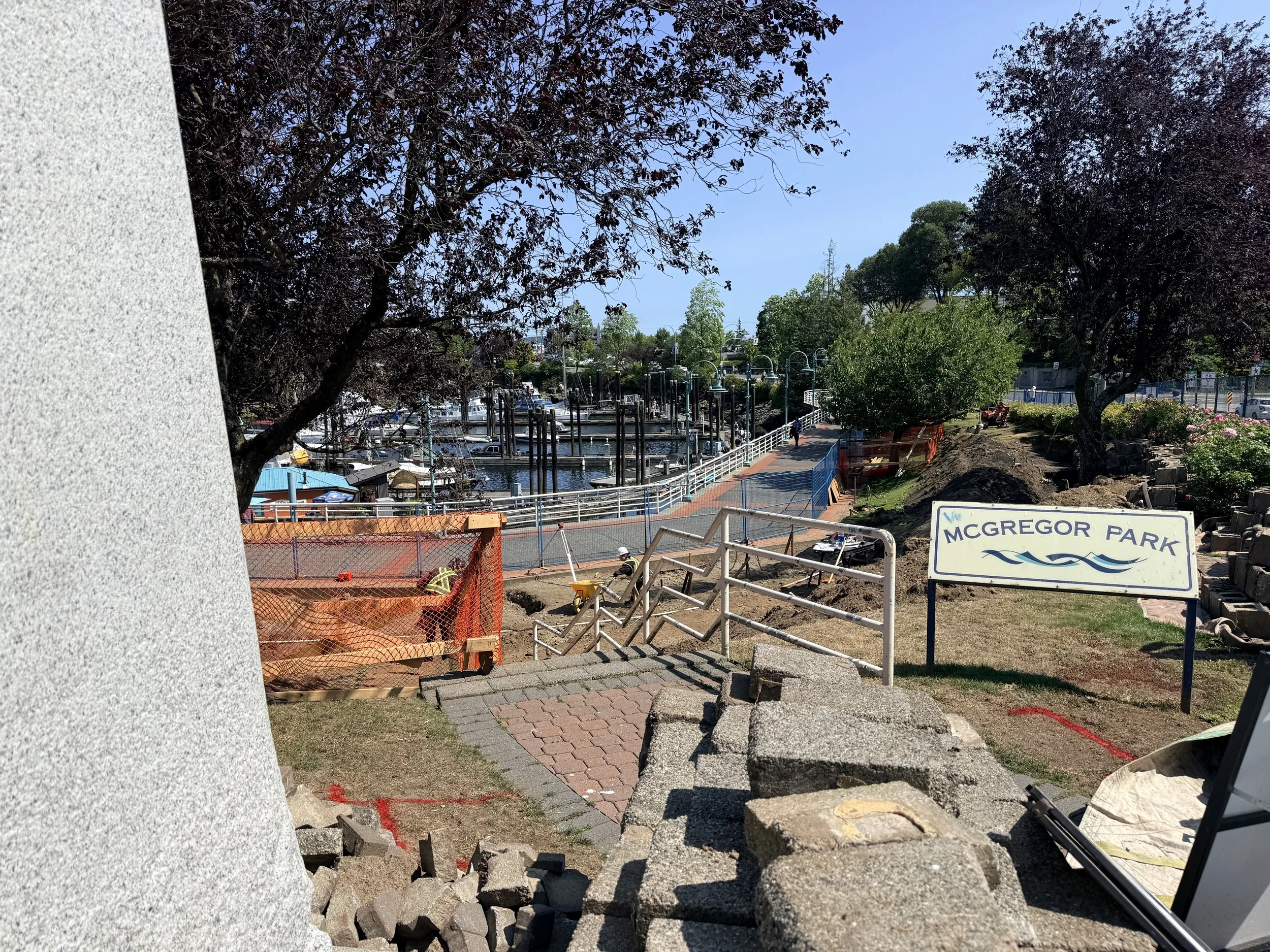
The monuments are scheduled to be done by December 2026. More information about the project is available at the City of Nanaimo’s website. (Luis Zablah / CHLY 101.7FM)
Davis said the projects took shape after grant funding became available, allowing the Seven Potatoes Society to partner with the City.
She spoke on the two upcoming projects.
“The site will be Japanese Canadian in feel, which is really something we've been working closely with our landscape architect and our local Japanese Canadian society on hitting that right,” said Davis. “It's a real, wonderful, flexible outdoor venue that will support Japanese Canadian programming. … So, Taiko drumming performances, the traditional cultural festivals that will be able to take place there, and then also it will be a programmable and bookable space for our community. So, it will be a beautiful pagoda with seating where you can come and book it.”
Charlotte Davis described what she hopes people will take away from the monuments.
“I hope this project makes people, local people, aware of what happened to Japanese Canadian people in Nanaimo around the time of World War Two, and it makes people aware of the timeline. It wasn't that long ago, and it's amazing to see the Japanese Canadian society come back and flourish in Nanaimo, and so I think it's a very, you know, humbling story to hear and heartening as well.”
The monuments are scheduled to be done by December 2026. More information about the project is available at the City of Nanaimo’s website.
Funding Note: This story was produced with funding support from the Local Journalism Initiative, administered by the Community Radio Fund of Canada.
Newsroom Ethics • About our Newsroom • Report an Error • Corrections & Clarifications