
After near extinction, Vancouver Island Marmot population breaks milestone
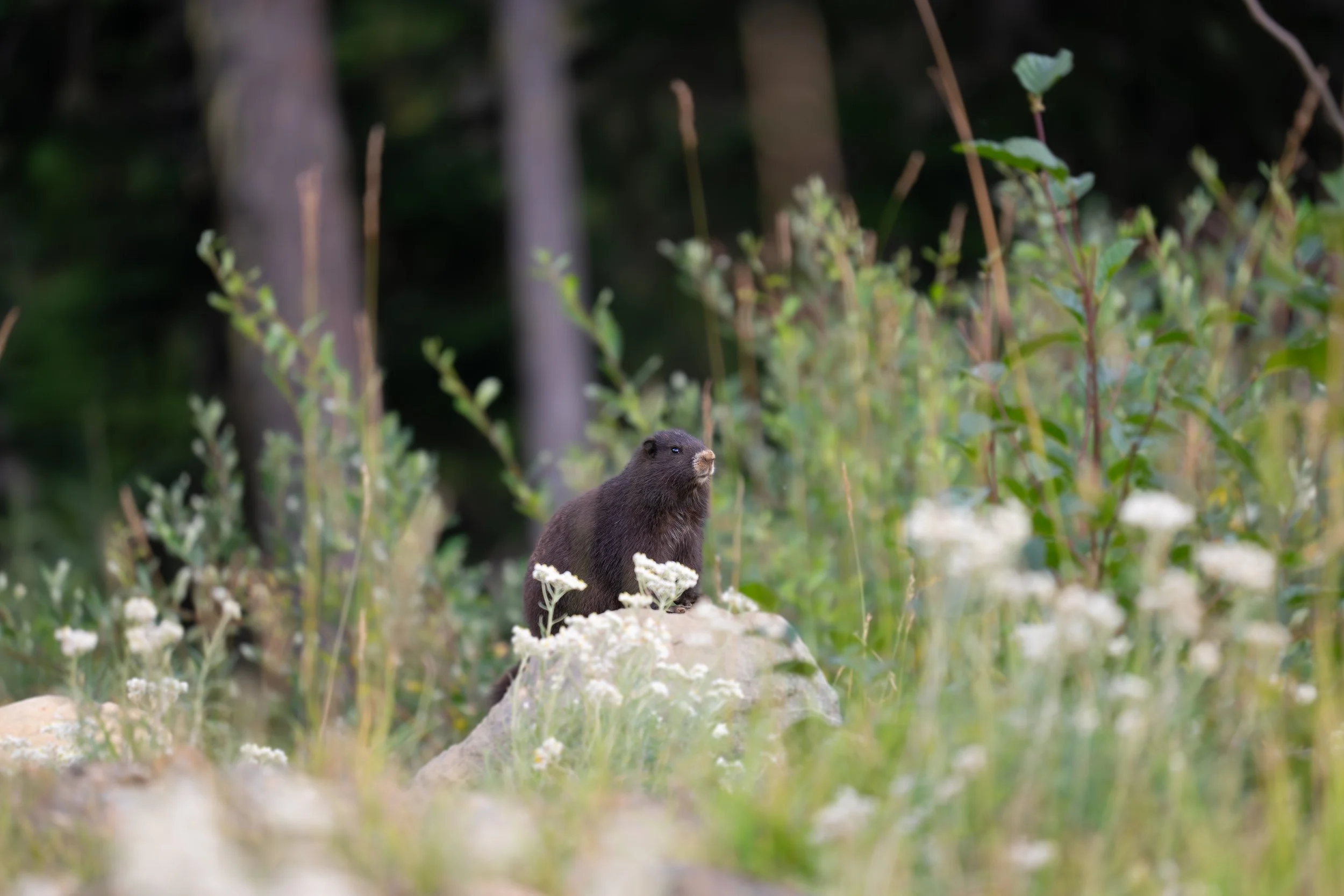
While there is cause to celebrate, the Vancouver Island marmot is still a critically endangered species. Photo courtesy of the Marmot Recovery Foundation
A Vancouver Island conservation organization is celebrating hitting a new milestone, as the marmot population hits new peaks.
In 2003, only 22 Vancouver Island marmots were known to exist in the wild, and the marmot subspecies faced potential extinction. But now, twenty-plus years later, the Marmot Recovery Foundation has broken a 400-marmot milestone.
Adam Taylor, executive director of the Marmot Recovery Foundation, told CHLY this was a milestone he never thought they would break and celebrate.
“When recovery planning for this species first began in the late 90s, ‘400’ was kind of a number that was often kind of thrown about as a dream, ‘well, can we actually get to 400?’ So it's nice to be there,” Taylor said.
While there is cause to celebrate, the Vancouver Island marmot, known in Latin as Marmota vancouverensis, is still a critically endangered species.
Taylor said that at the end of the field season in summer 2025, they were able to identify 427 Vancouver Island marmots living in the wild, the highest number ever since the species has been counted.
He said this work has been made because of the recovery efforts and breeding programs done by the foundation and partnerships with the Calgary Zoo and Toronto Zoo.
Taylor said right now, a key improvement in their population growth has been a stepping-stone methodology for releasing the marmots into the wild.

Mount Washington resident marmot, Shimmer. Photo courtesy of the Marmot Recovery Foundation
The marmots will be released to an already formed colony at Mount Washington, where there is already a very high success rate, as people at the resort scare away predators. Resort goers will also be seen as a treat to the marmots, teaching the animals about protecting themselves from predators.
“So this soft release allows us to really give the marmots an opportunity to learn some of those skills about how to survive in the wild,” Taylor said. “Then we retrap them the following year and translocate them to these far more remote sites, where the risk of predation is quite real, and it makes a big difference to their ability to survive into adulthood.”
As well as a supplemental food program for marmots coming out of their roughly seven-month hibernation period in the spring, it allows females, in particular, to have access to an abundance of high-quality food sources, with the hope that it will encourage them to reproduce more frequently than they otherwise would.
Taylor said, when marmots are hibernating, they lose about 30 per cent of their overall body mass, making them very weak when they emerge. Due to this, female marmots have a harder time gaining back strength to give birth, forcing them to give birth about every other year.
“Last year, the marmots produced a record number of pups, 108 pups we had. We had never seen that many pups before in the wild,” he said. “We really anticipated a real step back this year, because a lot of those females wouldn't be able to reproduce two years in a row. But in fact, we didn't see that at all, and this year, we ended up with 117 pups, so even more pups than last year, and we think some of that is attributable to that supplemental feeding program.”
Taylor said, while this news of the increase in marmots is exciting, he said there is still a lot of work to be done to continue to secure the current number and continue to grow.
“I don't want to be too pessimistic, but there is a part of us that is always waiting for the next shoe to drop. The population is still small, and we have had some luck over the past two years that is totally out of our control. The weather the last two summers has been pretty much perfect for marmots,” Taylor said. “Unfortunately, the weather is out of our control, and we know that not every year is going to be a good year. So, there's this feeling of this, it's really, really incredible to see the population grow and it and it's really important too, because then the next time we do have a bad weather year, whether it's heavy snow in the spring, or a drought during the summer, or whatever it is, this provides that buffer for the marmots to absorb that that hit, because there will be a hit to the population when that happens.”
But Taylor said there is still hope that the marmots will again thrive on Vancouver Island.
“I think it's really important for us to remind people that we can and are having a positive impact on species at risk, and the marmot, I think, is a classic example of that. Unfortunately, those examples are really rare,” Taylor said. “In the world, over the past 30 years, there are roughly 14 to 16 mammal species that we can say conservation action has prevented that species’ extinction, and in Canada, there's only one, and that's the Vancouver Island marmot.”
More information about the Vancouver Island marmot and how to donate to recovery efforts can be found on the Marmot Recovery Foundation website.
Funding Note: This story was produced with funding support from the Local Journalism Initiative, administered by the Community Radio Fund of Canada.