
VIU Students’ Union host free open textbook fair
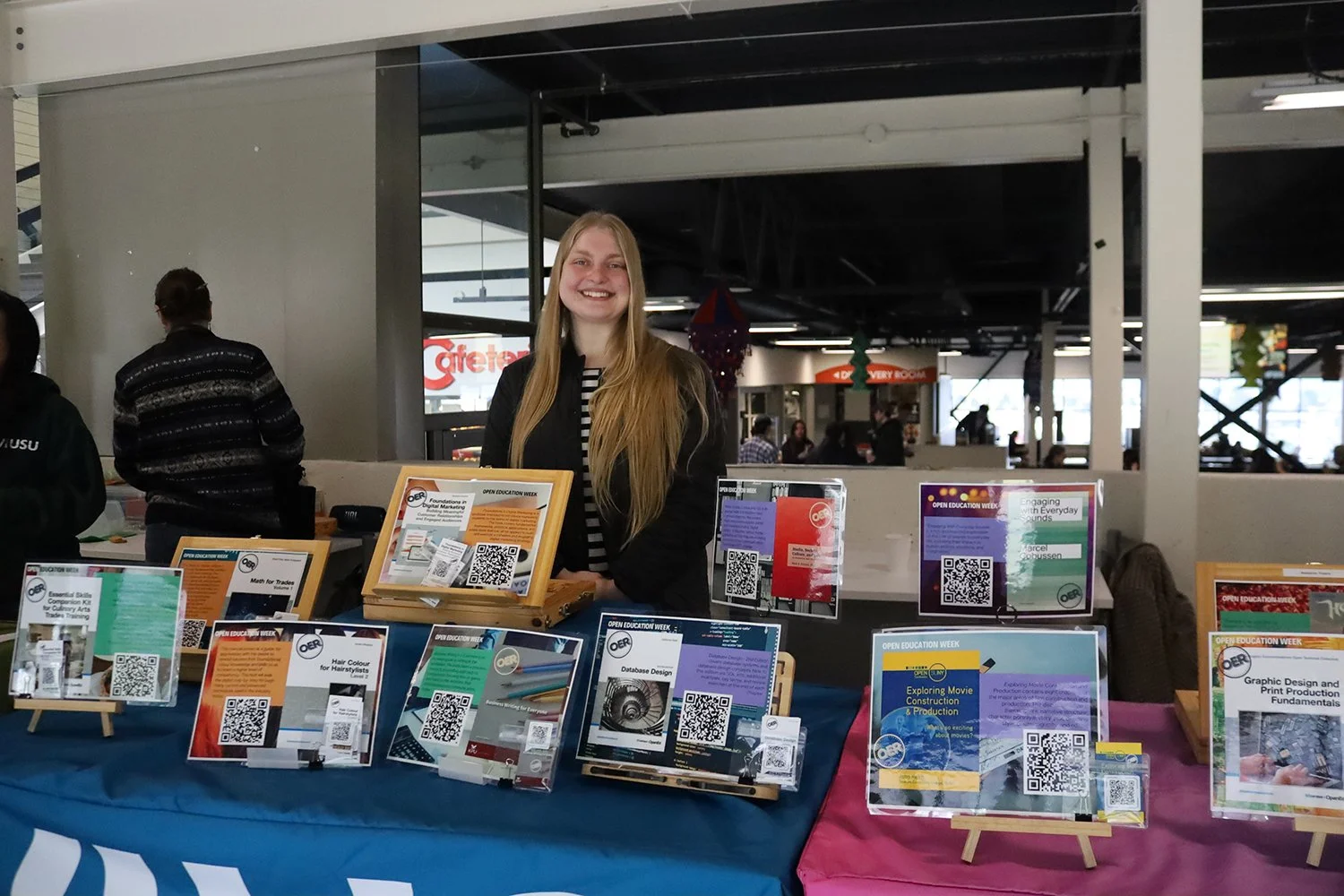
Klee (pictured) said she knows how hard additional textbook costs can be for students. Beyond the cost of tuition, she herself has spent hundreds of dollars every semester on textbooks alone. (Lauryn Mackenzie /CHLY 101.7fm)
The first week of March marks Open Education Week, and facing rising education costs, Vancouver Island University Students’ Union put a spin on the classic Scholastic Book Fair, hosting their first zero cost textbook fair.
“Today we are doing a sort of Scholastic Book Fair type of event, just to introduce students to the zero textbook cost program that we're doing here at VIU,” said Brandi Klee, director of external relations for VIUSU.
At the upper cafeteria of the Nanaimo campus of Vancouver Island University, VIUSU showcased the different textbooks professors, instructors, and students could use at zero cost.
To help alleviate the rising cost in daily life for a university student, Klee said they want to educate professors and students about the vast options of Open Education Resources or OERs. OERs are learning and teaching materials that reside in the public domain or under open license copyright.
“Students have been saying that textbooks are extremely costly and sometimes not even necessary for them to pass their classes with flying colours, unfortunately,” Klee said. “There's some people who are spending $200 just to have these quizzes or little information that you could be looking up through free access educational resources and saving $200”
As a student in both women and gender studies, and political science, Klee said she knows how hard additional textbook costs can be for students. Beyond the cost of tuition, she herself has spent hundreds of dollars every semester on textbooks alone.
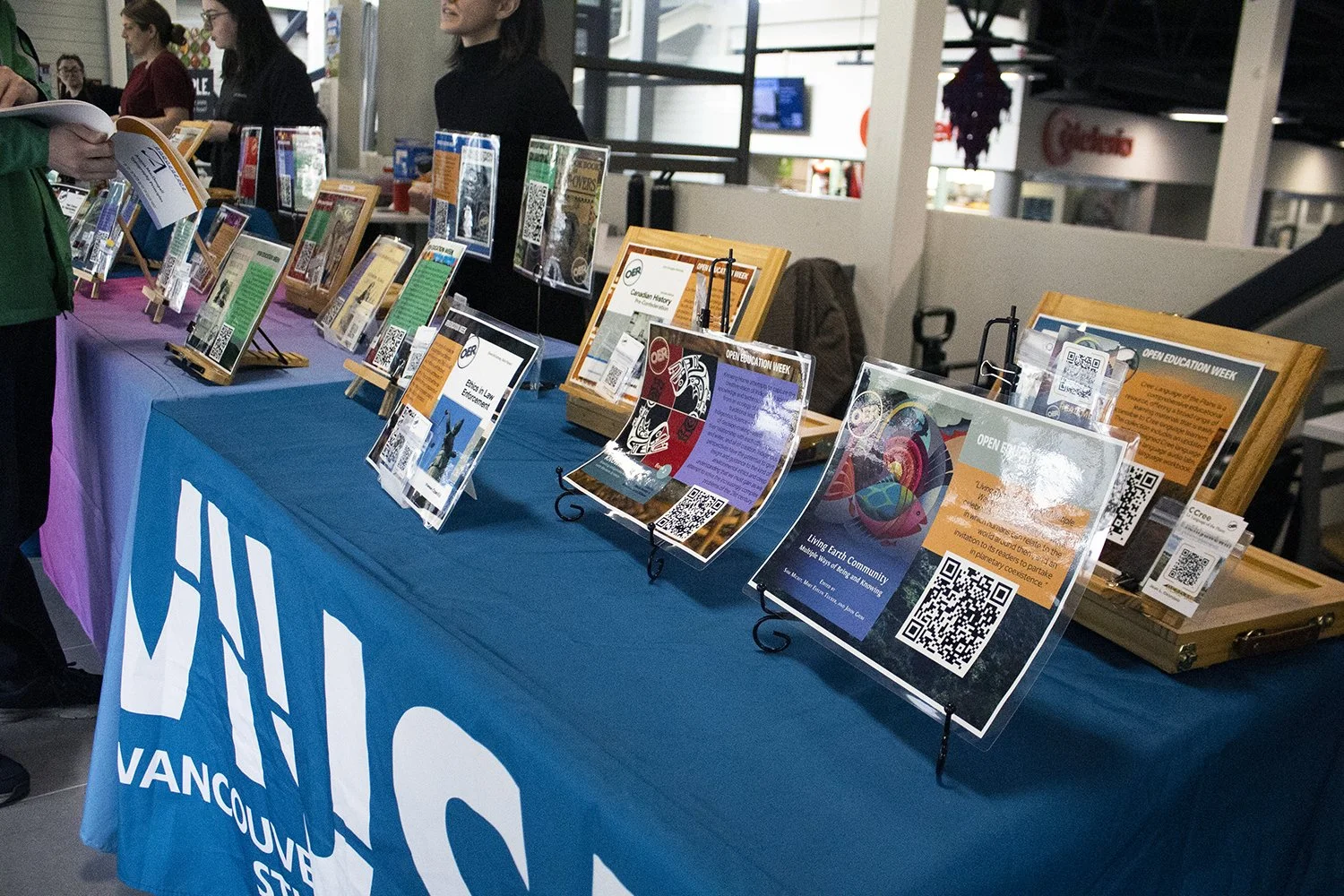
At the upper cafeteria of the Nanaimo campus of Vancouver Island University, VIUSU showcased the different textbooks professors, instructors, and students could use at zero cost. (Lauryn Mackenzie / CHLY 101.7fm)
“Easily, $300 I would say,” Klee said. “I take three classes, and at least two of them will be at $150 cost for one of the newer textbooks.”
Along with OER textbooks, OERs also come with resources like additional study material for students and lesson plans for professors. All at no cost.
“It's amazing the variety that there is, because you have things from multimedia to chemistry to psychology. There are lots of different Open Educational Resources that professors can utilize to save students money,” Klee said. “In addition to that, Open Educational Resources provides additional articles, or the ability for certain levels of open education so that professors can take some chapters out of textbooks to utilize that while it still is free for both the professor and not violating copyright law.”
There are currently 97 different course offerings at Vancouver Island University this winter semester that have indicated that they have zero textbook costs, with more courses indicating that they will be offered in future semesters with zero textbook costs.
BCcampus is an organization that works to improve British Columbia’s public post-secondary sector, by developing and sharing innovative teaching and learning materials for professors, instructors, and students.
Arianna Cheveldave is the coordinator for open education at BCcampus.
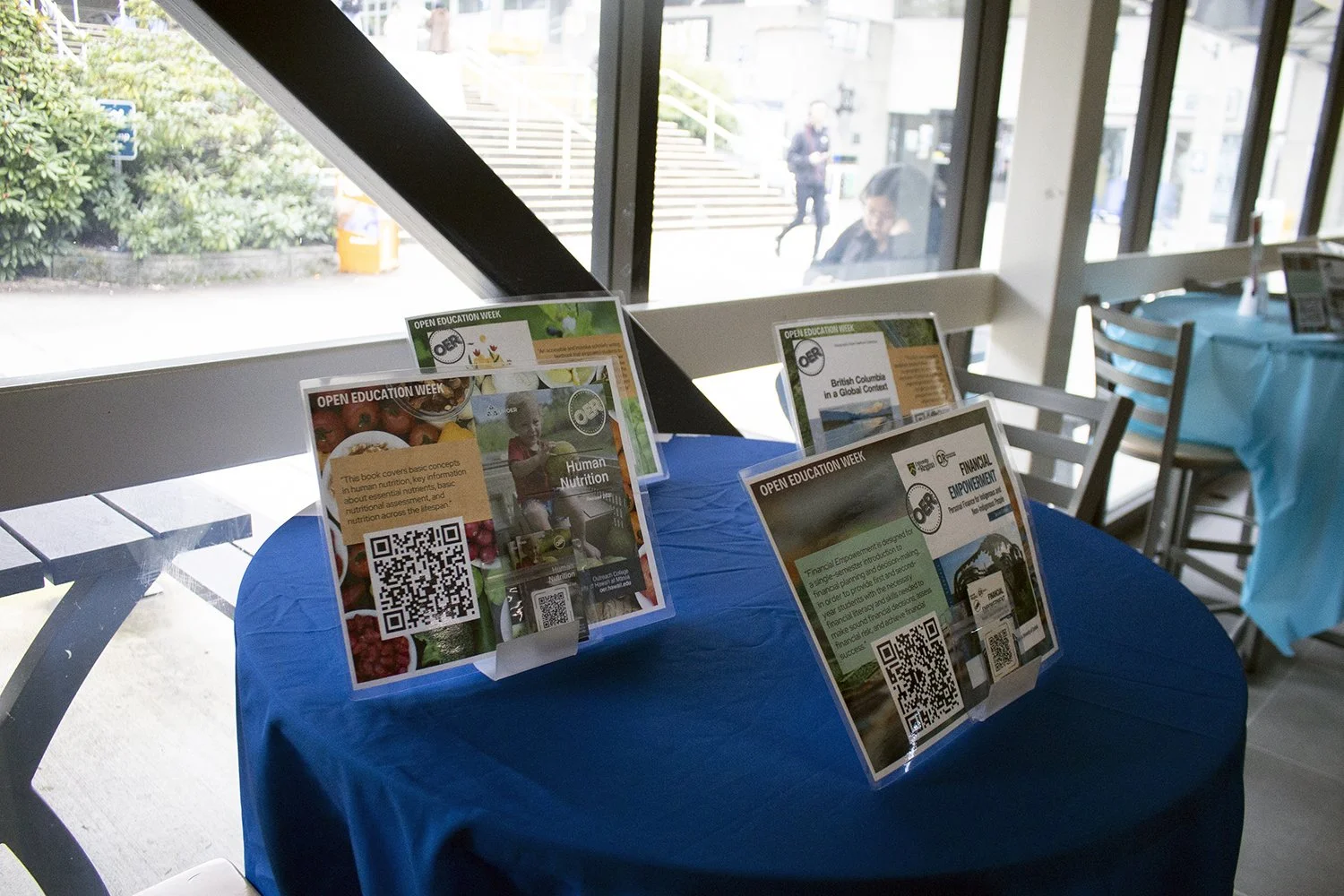
There are currently 97 different course offerings at Vancouver Island University this winter semester that have indicated that they have zero textbook costs. (Lauryn Mackenzie / CHLY 101.7fm)
“Somebody once described open education advocates as, like, evangelicals. I love saying, ‘Have you heard the word about open textbooks?’” Cheveldave said. “It's something people get really into and spend a lot of time on off the side of their desk, because they're really passionate about it.”
She said right now they are focused on helping professors and instructors understand what an OER is and how it could benefit their students.
“We want instructors to understand that this is a win-win, because students save money on textbooks, and then they have more money to register for more courses, and then they are more likely to complete their degrees,” Cheveldave said.
Their B.C. Open Collection has over 300 open textbooks available to access and use at no cost.
The subjects range from trades and tourism, to biology and computer science.
While Cheveldave said not every open textbook is created equal, the B.C. Open Collection has a rating system for each of the books, as well as solicited reviews from subject matter experts.
“So instructors can look at what their peers have said and decide for themselves if this book is going to be worth their time,” she said.
Cheveldave said they understand that not every class can use an open textbook, but she hopes educators will take the time to see what is already available to see if their course could make the switch to free alternatives.
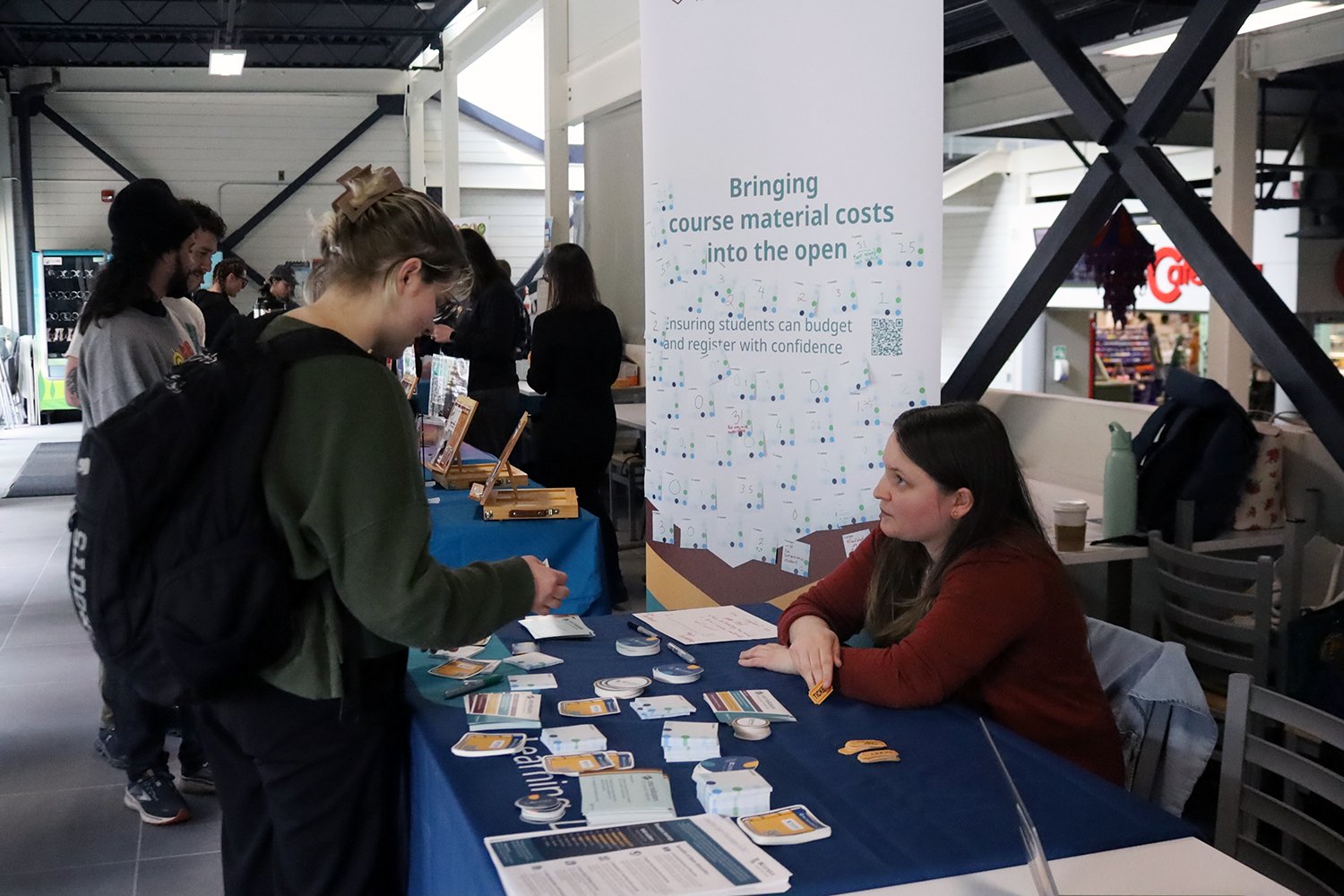
Cheveldave (right) said right now they are focused on helping professors and instructors understand what an OER is and how it could benefit their students. (Lauryn Mackenzie / CHLY 101.7fm)
Another BCcampus led project that is kicking off at VIU this semester is their Cost Indicators Project. Rebecca Shortt, project manager at BCcampus describes it
“We're here because VIU actually is one of the six institutions in B.C. that currently has cost indicators and is using them. So they've implemented the ZTC indicator, which is Zero Textbook Cost,” Short said. “So when students go to register for a course, if an educator has let the registrar know students do not have to pay for a textbook, either because there's no textbook for this course, or they're using Open Educational Resources or library resources, it will come up with the indicators at ZTC.”
The program started this winter semester at VIU. Recently BCIT, Vancouver Community College, University of the Fraser Valley, Kwantlen Polytechnic University, and Thomson Rivers University have also started using ZTC indicators.
“The purpose of the project is to make sure that students have as much information as they can prior to registering for a course, so that they can budget and plan accordingly, and that helps with retention and student experience in school,” Short said.
Short said having this indicator will help students better budget for their semesters by knowing that there won’t be any additional costs for textbooks once the semester starts.
“I think they're really excited to hear about that, because we know that there are courses where you are going to have to pay for a textbook, and I think they recognize that too,” Short said. “So having this option just to help them plan and to be transparent about the costs, and giving that information to them up front, I think they're really excited about it's what we've heard.”
Short said they remember being a student and the amount of money she needed to spend just on textbooks alone.
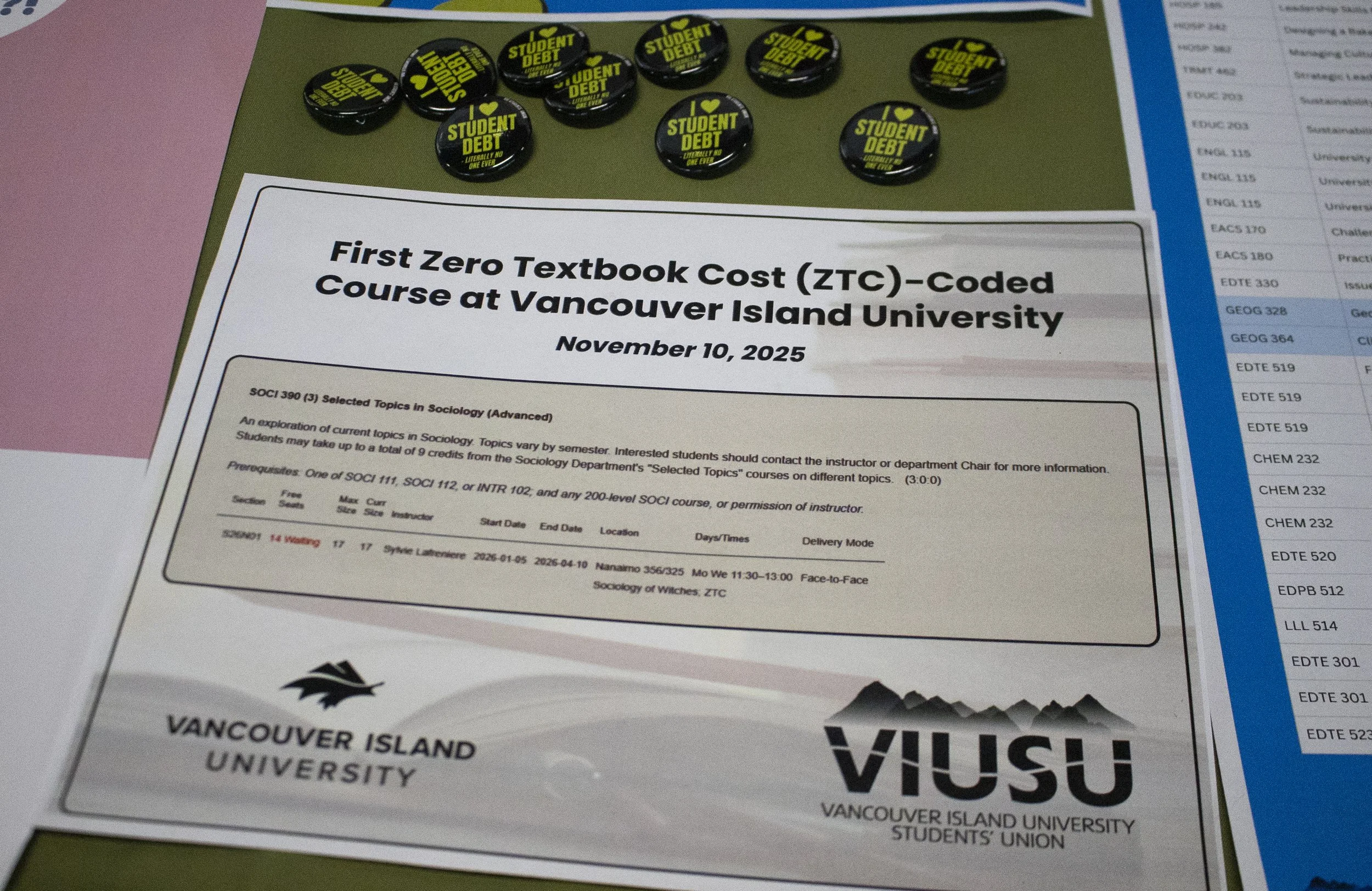
An example of what a course selection would look like with the ZTC indication on it. (Lauryn Mackenzie / CHLY 101.7fm)
“I commiserate with them, and I keep telling them the stories of the $450 art history textbook I had to buy that is still sitting in my parents basement 10 years now, because I just can't get rid of it,” she said. “I know the number that is associated with that. It feels like throwing away $400 and I just can't do it.”
She said that if she had access to zero cost textbooks during her bachelor's degree, that would have made a huge impact on her and meant she could have paid off her student loans sooner.
“My bachelor's was anthropology and sociology. So every single course I took had a textbook. I remember I dropped out of one of my sociology courses because the list we got on the first day with the syllabus was about eight books long. I was like, ‘I can't. There's no way I'm using student loans to pay for this. There's no way I can afford all of these,’” Shortt said. “I ended up taking that same course, but in a different term, with a different instructor, and only had to buy one textbook. So this information up front in planning would have saved me a lot of time. I could have registered for other courses in that block.”
Shortt said during their visits to different post-secondary schools, they hope to hear from students about the cost of textbooks and how the ZTC indicator could benefit them.
“We're hoping to hear from students and then be able to share that information with faculty to show how important it is, because this isn't policy, it's not mandatory,” Shortt said. “So we're hoping to gather what information we can to share with faculty to show this is really important, and encourage them to use it.”
More information about Open Education Resources and the Cost Indicators Project can be found on bccampus.ca.
Funding Note: This story was produced with funding support from the Local Journalism Initiative, administered by the Community Radio Fund of Canada.