
Bluebirds once flourished here, Cowichan conservation works for their return
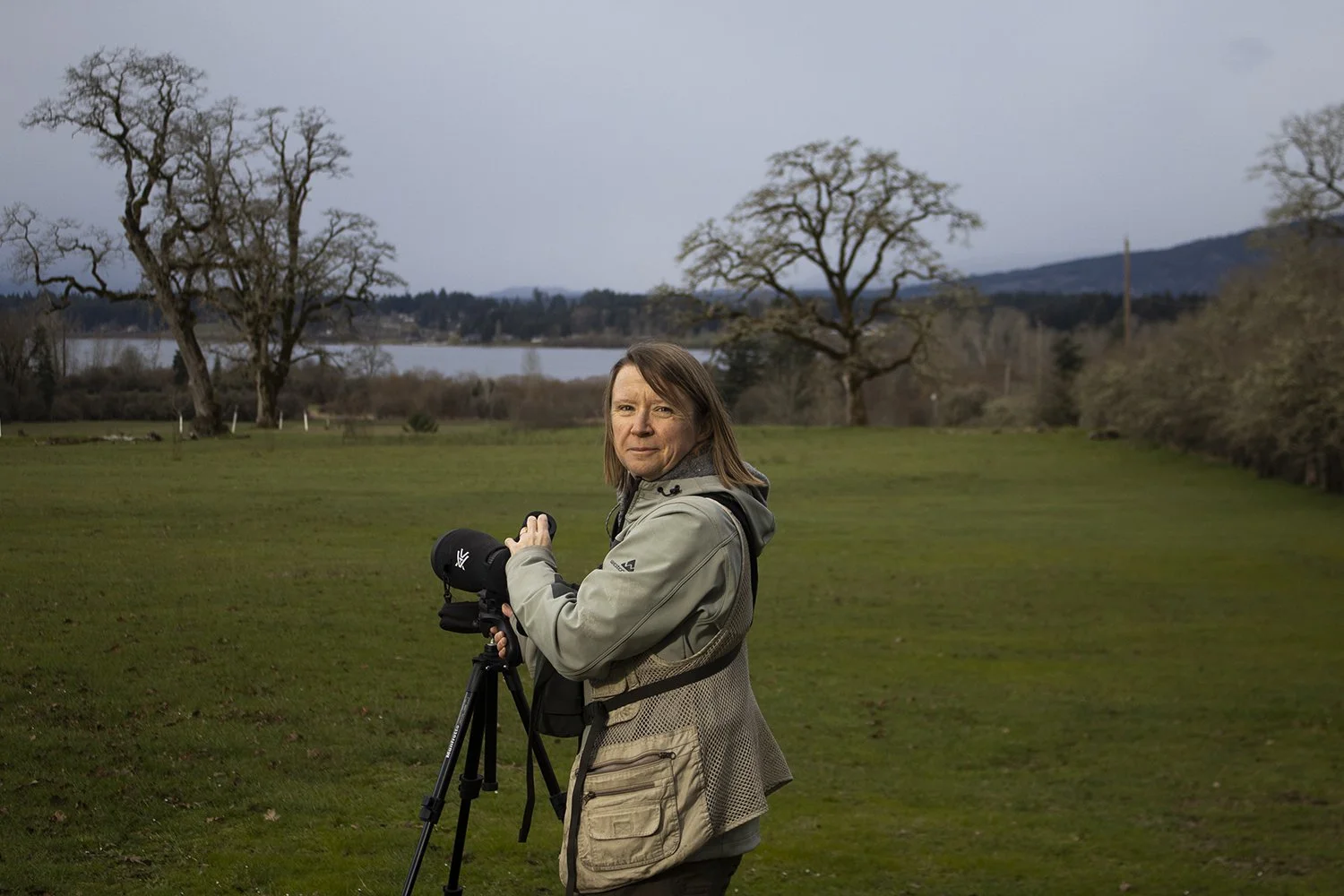
Taylor (pictured) said the Western Bluebird was once labeled as extirpated, meaning the species was locally extinct to the Vancouver Island and Gulf Island area. (Lauryn Mackenzie /CHLY 101.7fm)
Editor’s note: Parts of the field work visit in the audio version of this story has been paraphrased for the written version.
Bluebirds once could be seen–and heard–all across the Cowichan Valley, but loss of habitat due to development saw a decline so significant that bluebirds became locally extinct.
Cowichan Valley conservationists, seeing the devastating loss of bluebirds in the area, started the Bring Back the Bluebirds Project. The project, started in 2012 seeks to reintroduce a flourishing population of bluebirds, while also fostering the stewardship of Garry oak ecosystems.
Jacquie Taylor is the project coordinator for the B.C. Conservation Foundation who oversees the Cowichan Bring Back the Bluebirds Project.
“So they were so common that the local newspaper had an article, this is in the 50s, I believe, saying, We know it's spring because the bluebirds are everywhere, right? So that was how common they were at that time,” Taylor said. “They were all through southern Vancouver Island in Victoria and the Gulf Islands as well. The populations all along the coast had been kind of pummeled through the 70s and into the 90s as people developed the Garry oak habitats and the nesting cavities that they relied on were lost.”
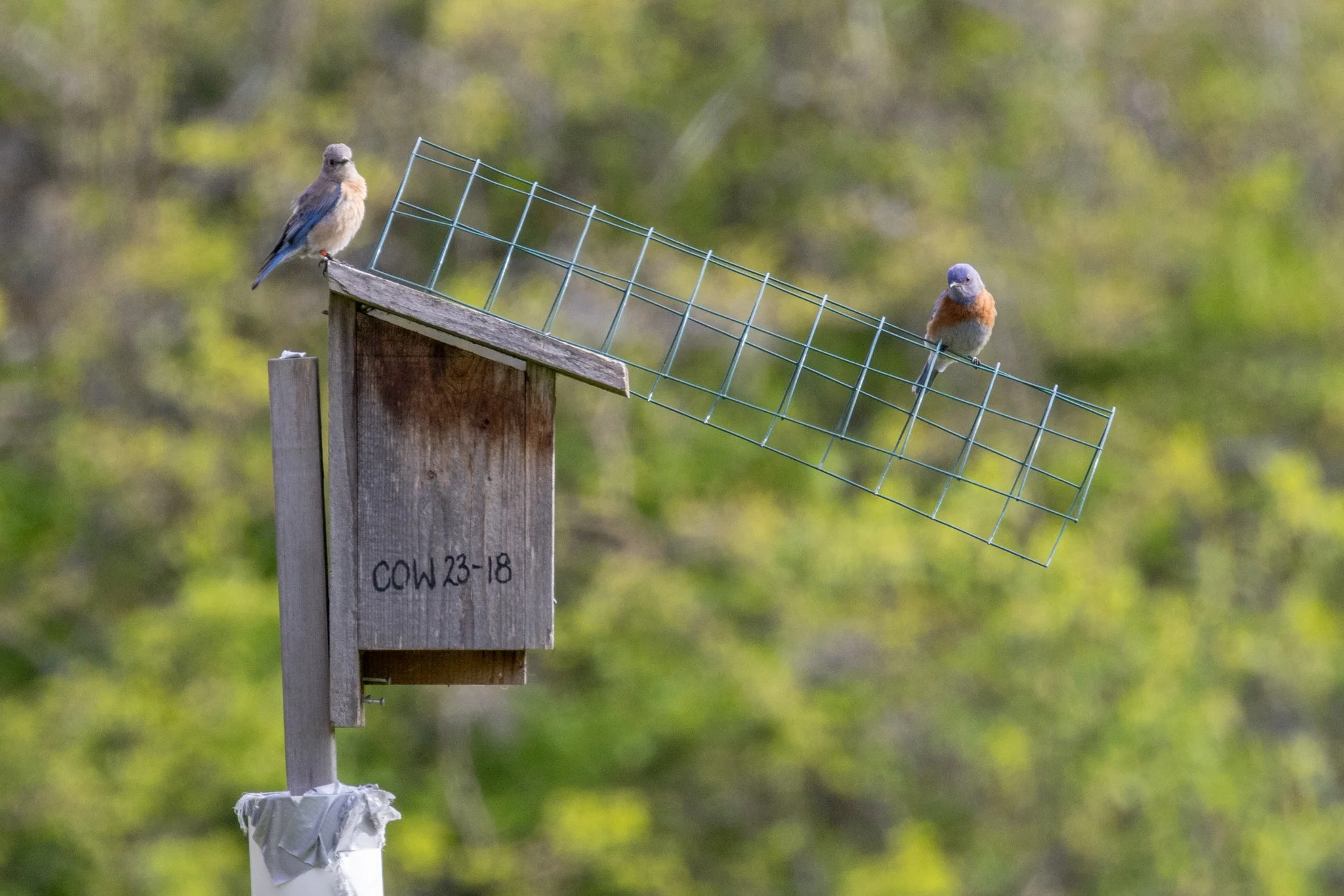
The Western Bluebird (Sialia mexicana) is the only species of bluebird found on Vancouver Island and Gulf Islands. Photo: Pauliina Saarinen courtesy of the Cowichan Bring Back the Bluebirds Project
The Western Bluebird (Sialia mexicana) is the only species of bluebird found on Vancouver Island and Gulf Islands.
Male bluebirds can be identified by their bright blue colour and orange chest, while females have a more gray colouration with blue highlights throughout their body and a peachy coloured breast.
Taylor said the Western Bluebird was once labeled as extirpated, meaning the species was locally extinct to the Vancouver Island and Gulf Island area while the rest of the population in North America was doing fine.
“They rely on cavity nesting holes that are built by woodpeckers in oaks here. They can also go in pine trees and other places, but they can't build their own holes,” she said. “So when people are taking down the old oaks to build homes and buildings, they lost their cavity nesting holes, and so they had nowhere to nest. Their population just dwindled until it was gone.”
The project is focused near Quamichan and Somenos lake in the Cowichan Valley and uses a conservation area that is not open to the public for their work. Taylor said their work is to build a secure population of bluebirds in the area.
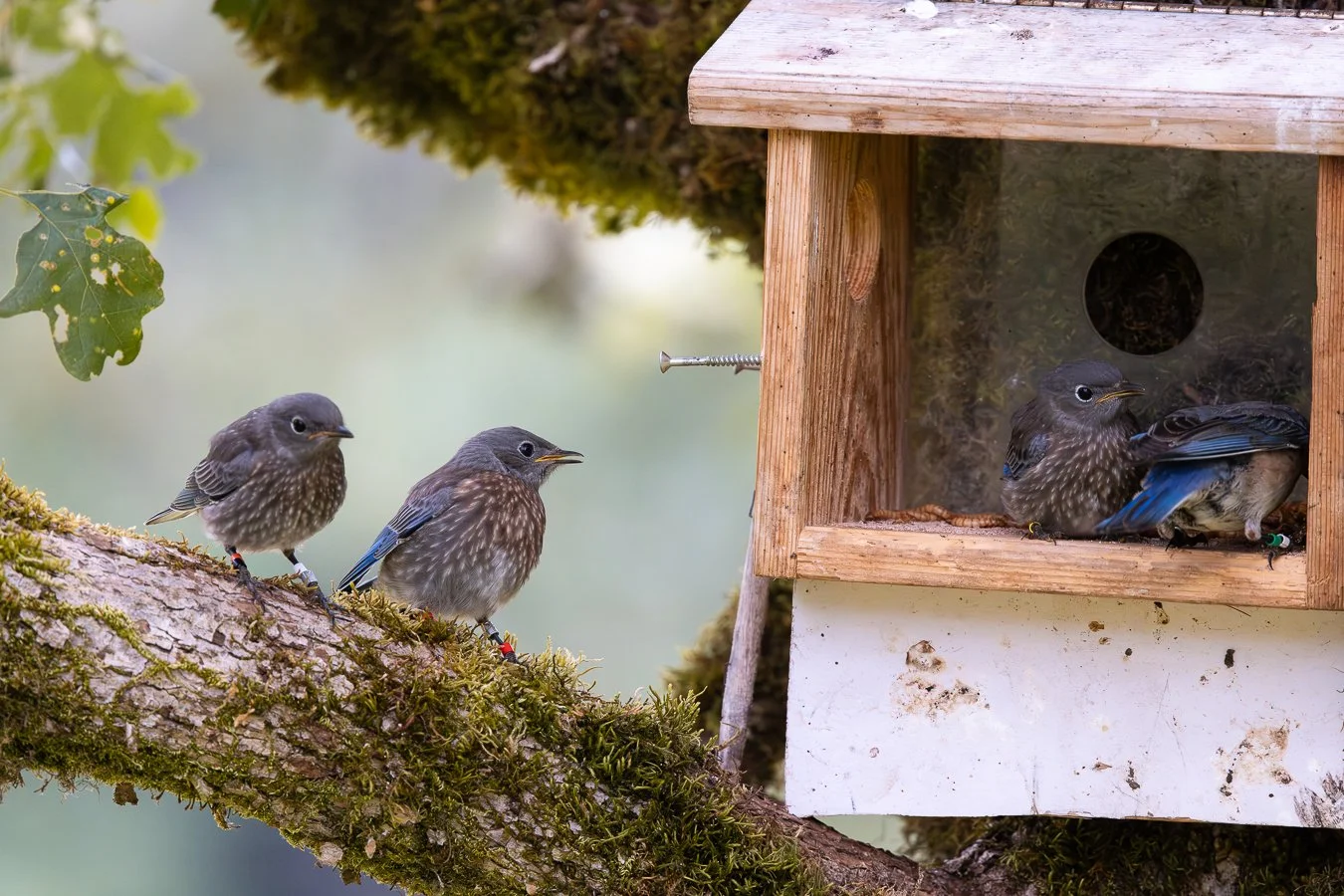
The project is focused near Quamichan and Somenos lake in the Cowichan Valley and uses a conservation area that is not open to the public for their work. Photo: Sarah Hughes courtesy of the Cowichan Bring Back the Bluebirds Project
“So secure looks like we have enough birds returning each year on their own that even if a few birds are lost or predated on, or there's a bad season, the population will recover itself,” she said. “We actually had brought the numbers up, then we stopped translocations, and the population crashed again. So we want to see some resilience in the population. We want to see the return rates high enough that it will grow itself.”
She said this work can be done due to very early conservation of the biodiverse Garry oak ecosystems in the area. These ecosystems are where Garry oak trees naturally occurred before European settlement.
CHLY joined Taylor in the field visiting the conservation site to look for early signs of bluebirds.
Since 2012, the project has been translocating pairs and families of bluebirds from Washington State to grow the local population.
The project also supports the population by supplementing nesting cavities with wooden nest boxes and using supplementary food sources to make sure the birds are receiving enough food. All to encourage the bluebirds to return during migration.
She said they have about 15 volunteers who monitor the local population.
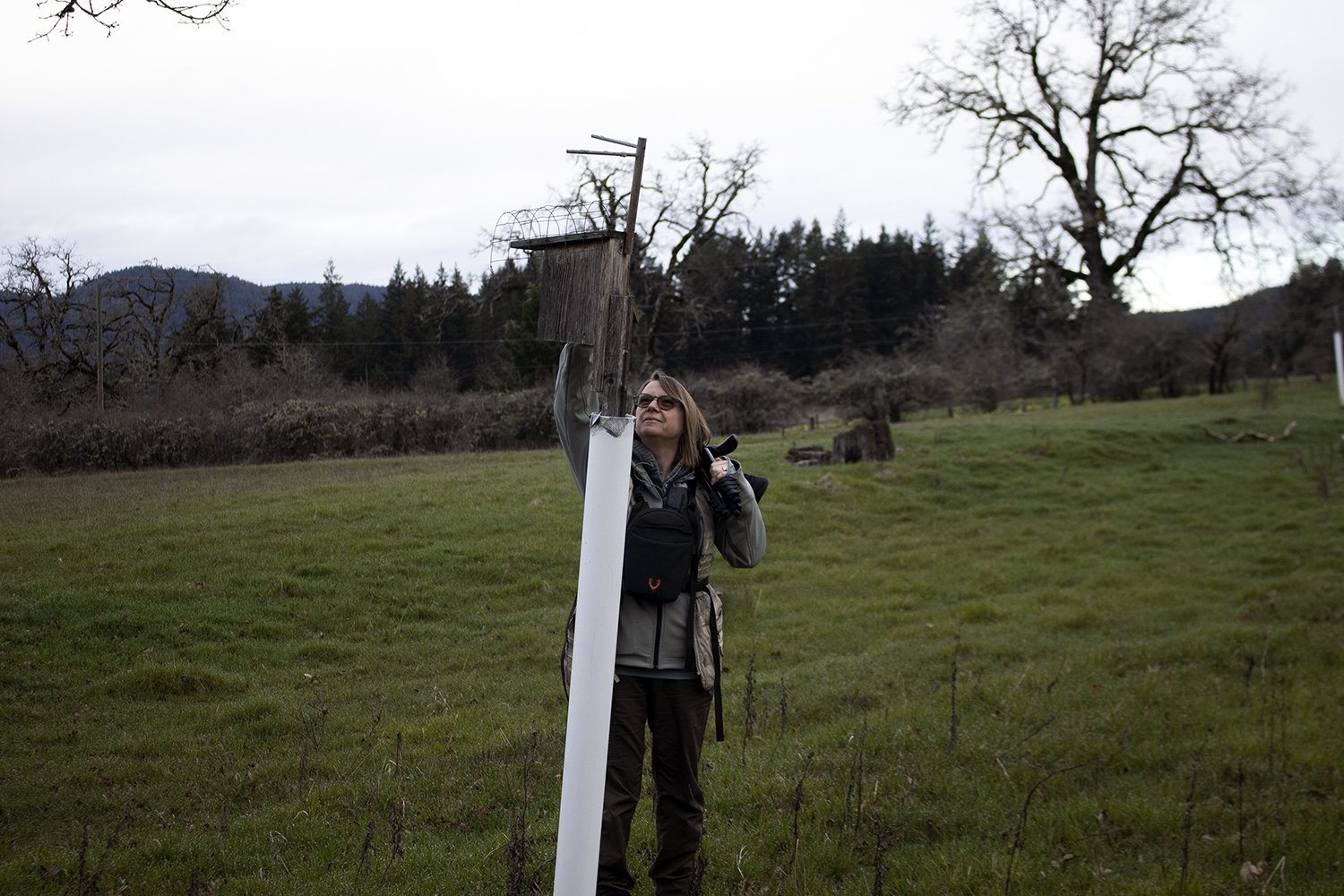
Taylor looking through one of the nest boxes to see if she can see any bluebirds. (Lauryn Mackenzie / CHLY101.7fm)
Along with monitoring the area, Taylor said volunteers do a lot of work building nest boxes and bird feeders and even growing the mealworms that are used for supplementary feeding.
Taylor said they tend to see bluebirds returning in March, and by April most of the birds will have established themselves. She said they stay for the summertime before they then migrate down to Mexico in August.
During the interview, Taylor said in recent years they have been seeing bluebirds visit the south coast of Vancouver Island. While the birds are not yet nesting in the Victoria area, she said this is a very encouraging sign for the local population.
While Taylor said there is not one target number for the population they are working towards, Taylor said they want to get the population secure to the point where the birds can sustain themselves.
“We'll still need to maintain the boxes, that's kind of a forever thing and we might need to support them with mealworms sometimes to get them through bad years, but we're hoping that we can get them a little bit more self-sustaining,” Taylor said.
With conservation efforts underway for the last 14 years, the project received good news last year seeing the highest number of bluebirds in the area since the 1980s.
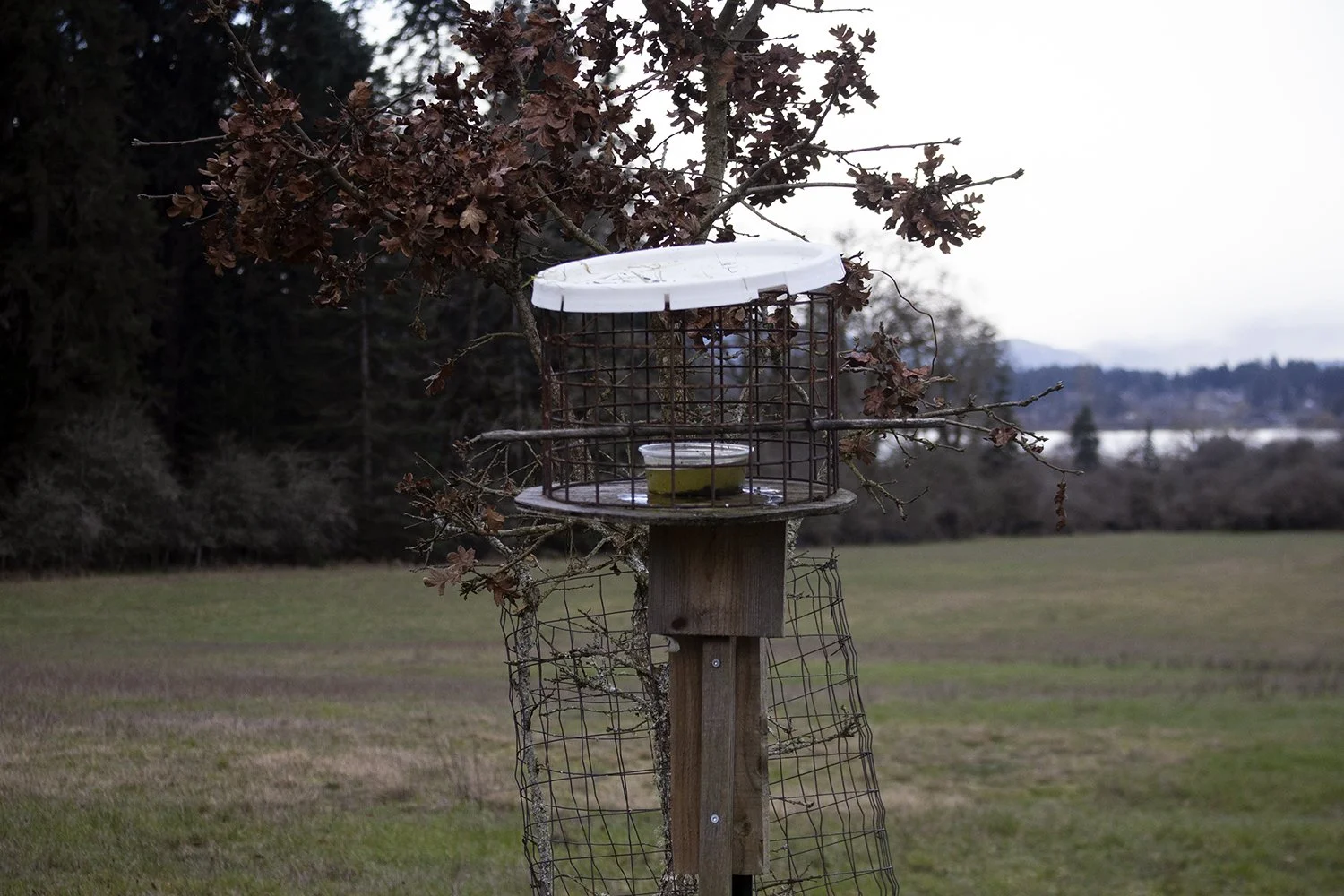
One of the bird feeders made perfectly for a bluebird to fit through. (Lauryn Mackenzie / CHLY 101.7fm)
“Last year we had about 20 adults and over the course of the year, they added 72 young,” she said. “Now, the first year of every species' life is a very risky one, and so we'll only see some of those come back, but it's great to see the population growing.”
The second highest population count was in 2015 with 29 total birds counting adults and young.
As bluebirds start to return to the Cowichan Valley, the Bring Back the Bluebirds Project is hosting a workshop for people interested in volunteering.
“We're gonna train everybody on how to identify different nests and different birds that use the boxes. Then I'll set everybody out on their way with their equipment, and they'll go and check on all the nest boxes and see who's in there,” she said. “They'll keep checking those every week to see what's going on. They'll let me know if there's bluebirds, and if we find bluebirds, then we’ll start supporting them with daily feedings of mealworms.”
People interested in volunteering can email cowichanbluebird@gmail.com. Taylor said people can also email her if they believe they have spotted a bluebird. This helps the project keep track of the birds to support them.
The project also has a adopt a nest program, whereby donation supporters can adopt a nest, receiving updates and photos of the bluebird family who nest there over the season.
As the population continues to grow, Taylor said she is excited to see what will come next for the song bird population in the Cowichan Valley.
Funding Note: This story was produced with funding support from the Local Journalism Initiative, administered by the Community Radio Fund of Canada.