
Nanaimo chapter of Unplugged Canada advocate for legislation barring youth access to social media under 16
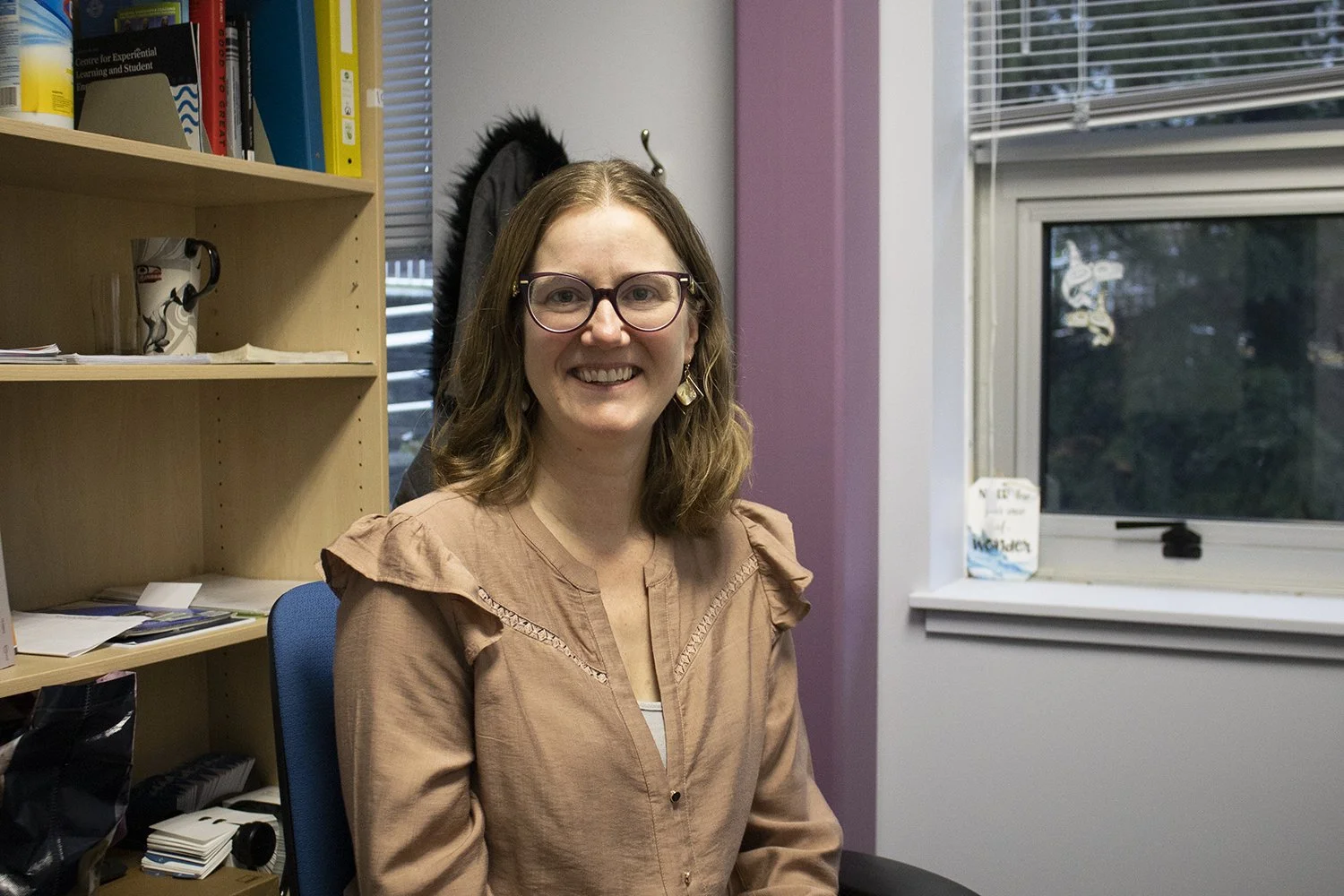
Soylu (pictured) said their work at Unplugged Canada is to encourage parents to look at delaying their children’s access to their own cell phone until they are 14 years old. (Lauryn Mackenzie /CHLY 101.7fm)
A local non-profit group is calling on parents and youth to beware of the harmful effects of their cell phone, devices, and social media.
Karolien Soylu is the leader of the Nanaimo chapter for Unplugged Canada. She started the chapter last fall after reading about the harms that early access to social media can have on children and youth.
“Statistically speaking, it's something like eight hours a day that the average teenager spends on in front of a screen, and five to six hours of that on social media. Then it kind of leads to the question like, ‘what are they actually not doing if they're spending that much time on these devices?’” Soylu said. “That's a full time job, they're not doing hobbies, they're not interacting in person with their friends. They're not developing social emotional skills that are needed to be successful in the world. So it's kind of taking over childhood in a way.”
Soylu, a mother of two, said this topic is personal to her. While she hasn’t allowed her two daughters, grades one and five, to have their own cell phones, as her kids get older, she has seen the increase that other children have in accessing phones.
As social media is fueling what Unplugged Canada is calling a youth mental health crisis, the non-profit is currently advocating for the federal government to place a mandatory age restriction on social media sites like Instagram, Snapchat, TikTok, and Discord.
“So if you're spending all your time on social media, your brain is actually wiring for that, whereas it could be wiring for learning an instrument or being social with your friends, or other more healthy habits that traditionally kids were doing when they were young,” she said.
Unplugged Canada advocates for legislation similar to that recently made in Australia.
At the end of last year, the Australian government placed a ban on youth under the age of 16 from accessing social media. The first legislation of its kind, made major social media sites ban or deactivate accounts for those under 16. As well no new accounts can be made for those under 16.
“I think it will be most beneficial for the kids that aren't yet on those platforms, because it sets a new norm where we're like, okay, we're telling parents, we're telling people that it's not healthy for kids to be on social media and that we should wait,” Soylu said. “I think that will cause a cultural shift eventually that will benefit the kids that are not on it yet.”
Outside of advocacy work for legislation, Soylu said their work at Unplugged Canada is to encourage parents to look at delaying their children’s access to their own cell phone until they are 14 years old.
“We're not anti-tech. We're not saying that kids shouldn't be on technology at all. We're trying to kind of tackle the most harmful aspects of technology,” Soylu said. “So what has been found to be most harmful is smartphones, because the smartphones are in your pocket, you're carrying them around all the time with you. It leads to this compulsive checking. Kids feel like they have to constantly take out their phone and check.”
Stephen Leynard is a student at Vancouver Island University and is researching the effects of social media.
“Social media has a lot of harmful effects that affect people across the developmental lifespan, and I'm kind of diving into how to advocate for change against these harmful effects of social media, specifically towards children and adolescents as well as adults,” Leynard said.
Leynard is in his fourth year of a bachelor of arts degree in psychology and is in the honours program. He recently started volunteering with Unplugged Canada.
He said his interest in his research came after observing youth being so heavily attached to their phones.
“I think it's a great cause to kind of raise awareness for and to make change to protect these, these youth who are so at risk of experiencing many harmful effects from social media, and maybe not specifically social media,” Leynard said. “But like everything that has to do with social media, such as cyber crime, cyber bullying, social comparisons, and then obviously compulsive use.”
Leynard himself is a part of the generation that grew up with social media as it was starting to become popular.
“I mean, as we know, like a lot of the social media sites today, require a minimum age limit of 13,” he said “If not mistaken, I definitely accessed it before then, and I think a lot of people do.”
He said since around 2012, research has shown a massive decrease in life satisfaction for youth, and a massive increase in depression, anxiety, and suicidal behaviours.
While he is in support of Unplugged Canada’s calls to delay cellphone and social media access to certain ages, he said protecting children from online harms starts with education at home.
“By educating our audiences, by becoming aware of all this, parents can do their own due diligence of restricting their children, creating healthy boundaries, educating the children themselves,” he said. “I think a lot of the time, adults give children a hard time and kind of treat them like kids, and they absolutely are, but I think they're a lot smarter than we actually think. We got to give them the benefit of the doubt. We got to give them the chance and educate them”
Leynard does say while there are many harms that come from social media use, he does say social media isn't necessarily all bad.
“Social media can be very beneficial as well, perhaps at a young age, maybe not as much, but I mean, you can go on there and connect with your friends, you can stay up to date on certain things in your life and the news,” Leynard said. “Although, again, that's maybe not for children. But there are benefits too, right? There's pros and cons to everything in life. It's just a healthy moderation, which is absolutely important.”
Parents and guardians can find how to join a local chapter along with educational resources on teaching youth healthy habits for social media use, and the risks of early access can be found on Unplugged Canada’s website unpluggedcanada.com.
Editor’s note: the script has been updated for clarity
Funding Note: This story was produced with funding support from the Local Journalism Initiative, administered by the Community Radio Fund of Canada.