
Nanaimo Hub set to close but nearby neighbourhood group worried about what comes next
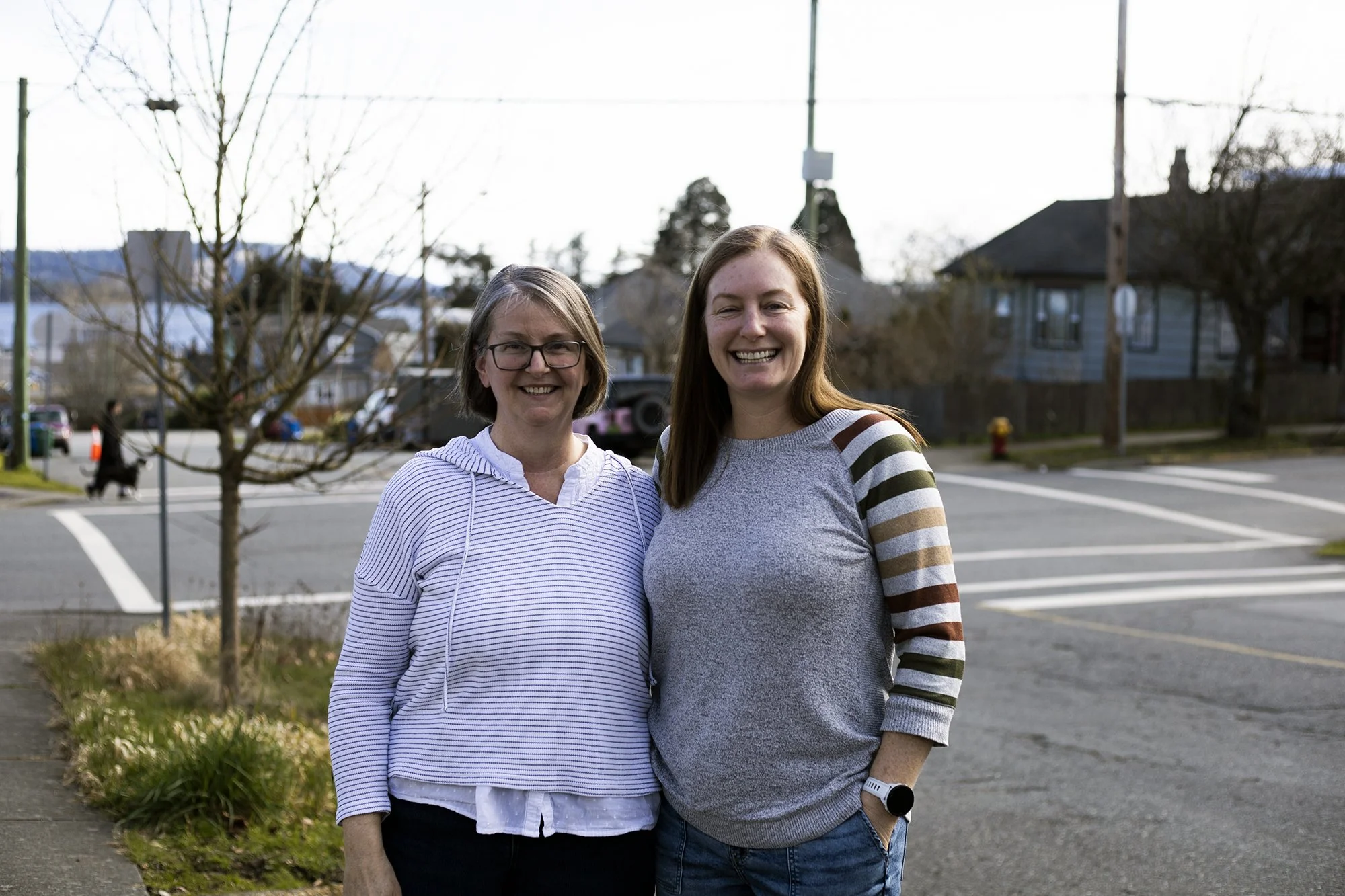
McGeragle (right) said she and her family tried to keep a positive mindset when the Hub first opened knowing the positives the space would offer. Then she said two situations last summer were turning points. (Lauryn Mackenzie /CHLY 101.7fm)
Editor’s note: This is part two in a two part series covering the closure of the Hub. You can find part one of the story here.
Just weeks away from the closing of the daytime and nighttime service Hub, a local neighbourhood group is concerned about what comes next.
“We're really worried that it's going to be a bad summer,” said Sydney Robertson, chairperson of the South End Community Association, or SECA.
Over the last year she has advocated on the behalf of the south end neighbourhood, which she says has been dealing with the impacts of increased social disorder since the opening of the Hub.
The Hub, a year-round drop-in centre at 55 Victoria Road, accessible via its entrance on Nicol Street, was opened on January 2nd, 2025. The space exists for street entrenched people to access essential services and overnight shelter.
Run seven days a week, it is operated by Island Crisis Care Society in partnership with Nanaimo Family Life Association.
CHLY met with Robertson and south end resident MJ McGeragle at McGeragle’s home located less than a block away from the Hub.
When the Hub was first announced Robertson said she brought her concerns to the City of Nanaimo, a funder of the Hub’s daytime services.
She said SECA was told the Hub would be beneficial for the neighbourhood, as it would take the disorder off the streets along Victoria Road. But she said she still questioned how the project would actually work when it opened.
“We immediately said, ‘that's a really nice idea, but what if that doesn't happen,’ because we could see that it really might not happen that way. So we said, ‘what's your plan if it doesn't make things better, and what's your plan if it makes things worse?’ I think it was a really telling moment that all the people we were in the room with [City of Nanaimo] people and agency people, there was silence in the room,” Robertson said. “I think they went in with this one optimistic idea, but the magnitude of the problem means that it's just not an okay model. Not that it's not about helping people, I think people need support, people need help, people need housing.”
She said while these services are important, a problem with the Hub is that it was located in a space with a lot of other services already used by street entrenched people in their neighbourhood. She also said that having only one Hub for the whole city is just not enough to minimize the impact of social disorder.
“There really needed to be multiple locations. I think Nanaimo needs at least three but I can't see it ever being successful with fewer than two locations,” she said. “No matter where they put it, no matter how beautiful the facility is, no matter what supports are included, all that needs to happen as well, but if it's one location, it's going to be horrible for whoever is living or working nearby. The businesses nearby this kind of activity are getting hit really hard as well.”
She said while she regularly had meetings with service providers, the RCMP and the City, she felt like the problems that came with the Hub were much bigger than people expected.
“I think the magnitude of the entire problem is just so big that when we had meetings where we were trying to ask for anything that might help, anything that will smooth off some of the edges or help with some of the problems, to keep things a little more livable for people, there was just nothing else coming,” she said. “I think a lot of people are tapped out.”
As the chair of SECA, Robertson said a lot of neighbours would come to her with their own stories of dealing with social disorder. She said while they had numbers for the RCMP, service providers, and the City of Nanaimo for people to call if there was an emergency, she was being told by neighbours that they just got tired having to constantly make calls.
“I am hearing from more and more of my neighbours that they're giving up on calling. They're tired of calling. They can sometimes feel that they've been dismissed, or that they're criticized for calling in. I'm hearing more people just not bothering anymore,” Robertson said. “They don't feel that it's making a difference. That's always been a thing that SECA has had to work to push against, to keep encouraging people to call in. But it's hard when people don't see a change, when they don't see an effect for the work they're putting in.”
McGeragle said when she got a knock on the door in 2024 from someone letting the area know about an upcoming service hub, she thought the plan sounded awesome.
“And then it just became apparent, I think, that it's so much more than anyone anticipated,” McGeragle said. “We don't think anyone anticipated people moving here for it. Nobody anticipated the dogs that would come with them. There's just all of these sorts of additional factors that nobody had planned for.”
McGeragle said she and her family tried to keep a positive mindset when the Hub first opened knowing the positives the space would offer. Then she said two situations last summer were turning points.
“So one of them was there was a woman in full blown long term psychosis, who had this delusion that her son was being held in one of our houses, and so she came back night after night after night, just trying to get into houses and yelling and screaming and screaming the things she thought were happening to her son, which are pretty awful. It just went on night after night after night, and the at one point, one of the neighbours, a new neighbour I didn't recognize, took things into his own hands and went out on the street, and I went out to try and intervene, and I realized all of a sudden that I was alone on the street with a guy with a gun, which turned out to be a replica, but my nervous system didn't know that,” she said. “The cops rolled up and they rolled out again, and it was no big deal, and I was just left reeling, being, ‘you know what is happening? I'm trying to raise a kid with an intact nervous system,’ and he is just waking up to this kind of chaos. This woman, there was no answer for her. The police would come and they would arrest her, and then she would be right back the next day.”
McGeragle also mentioned that there were two near dog attacks shortly after the Hub had opened. She said then last summer, her own dog was badly attacked by another dog. She said she received her own injuries trying to protect her dog.
“There's four houses on our block, and at one point, 50 per cent of the households had physical injuries from violence associated with the folks and the dogs who had come to our neighbourhood,” she said. “That's hard for anybody to manage, hard to raise kids in the middle of.”
She said after these two incidents she had to change how she spoke to her then seven-year-old son about safety.
“Prior to the Hub, I was raising a kiddo who was just full of compassion. Since he was in a stroller, we were stopping and checking on people, and we'd hang out until an ambulance came, if an ambulance was needed, and wake people up if they needed it or whatever,” McGeragle said. “He was really raised to kind of just see, ‘these are your neighbours, and they're struggling.’ We do what we can, with a lot of compassion and after our dog was attacked, and after this woman just kept coming back again and again, in order to kind of protect his sense of safety, we really had to shift how we were talking to him about things.”
Robertson said SECA tried to support the Hub as much as possible, but she said after constantly hearing stories of neighbours dealing with incidents, including small fires started on their properties, and in one circumstance, bed sheets stolen out of a dryer inside a home, SECA couldn’t continue support.
But now several weeks out from the closure of the Hub, Robertson said she is worried about what will happen as she said there is currently no plan for what’s next.
“Some of what we're hearing now is that we're being blamed a little bit for closing it and for the the chaos that's going to come when it's closed, and that really gets my goat, because we've seen such an increase in social disorder since the Hub opened, it really has become a magnet to this area,” Robertson said. “That's not on us for saying it needed to close,” she said. “We had a meeting the city held to talk about the things that they'll be doing to try to mitigate what's going on during that transition. We're worried that it won't be enough.”
After hearing stories of the impact the Hub had on the neighbourhood, a decision was made in the summer of 2025 by Nanaimo City Council to end its funding. While some city councilors wanted to see the Hub closed as soon as possible, council instead voted in favour of ending funding for the Hub at the end of March 2026.
CHLY’s Joe Pugh spoke to Mayor of Nanaimo Leonard Krog, who voted in favour of ending the funding for the Hub at the end of the month.
Mayor Krog said he never visited the Hub himself, but heard from those involved in the service and the delegations that appeared before city council on the issue. He said while the service is important, so is the impact reported by neighbours.
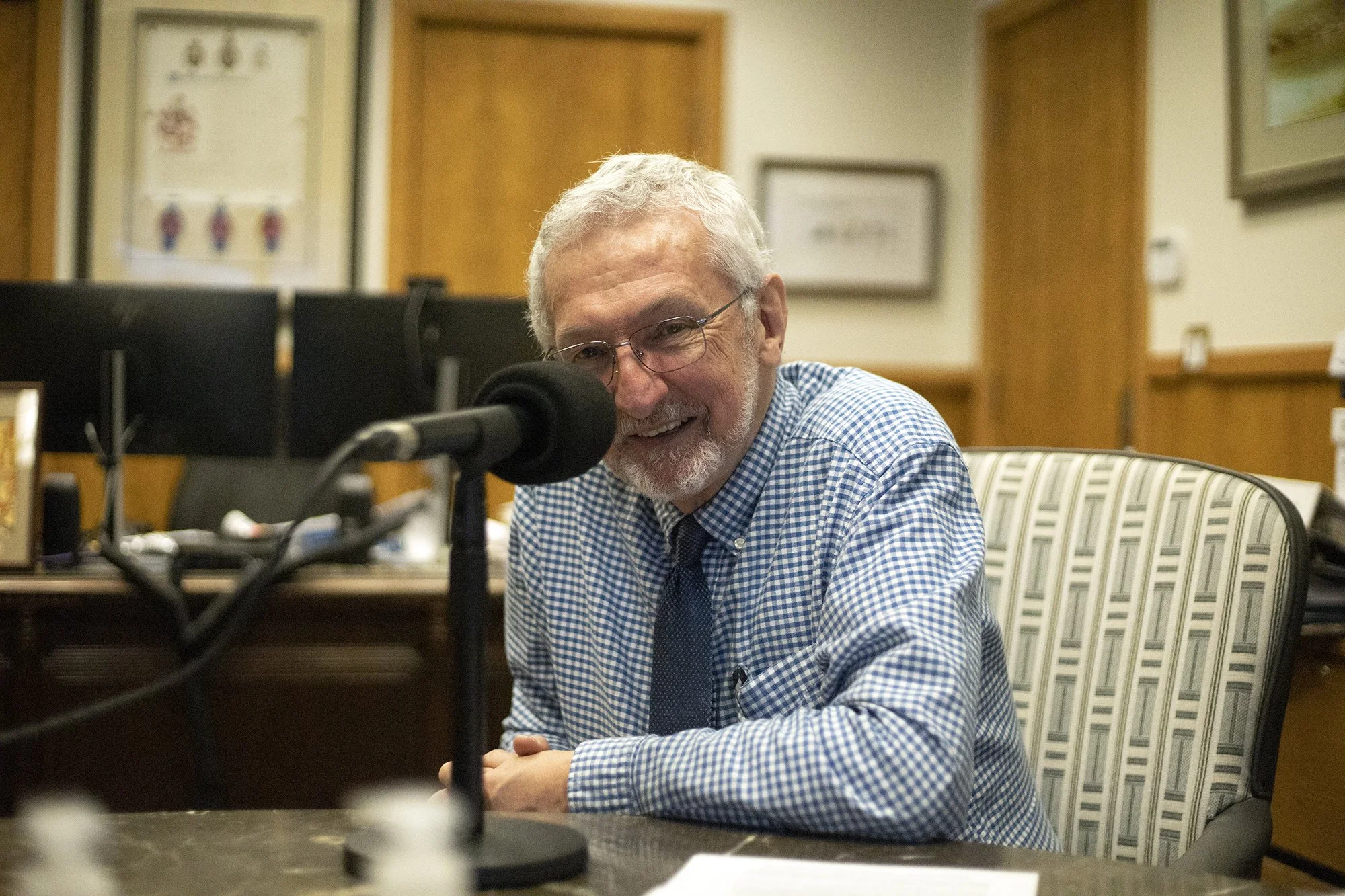
Mayor Krog (pictured) said while the service is important, so is the impact reported by neighbours. (Joe Pugh / CHLY 101.7fm)
“When you hear the stories of families who have faced threats, violence, theft, garbage, litter, you cannot help but be sympathetic,” Mayor Krog said.
He said the City of Nanaimo has been working on finding a new space for the Hub but it has been challenging to find a location that would cover all their needs or that would even consider renting to them.
“There is no question that the kinds of services needed by the folks who are on the street, the hundreds of our citizens who are on the street, those services are needed. They're needed in communities across the province,” Krog said. “The real issue here for council was this particular location, in this particular neighbourhood, which has borne the brunt of the disorder that tends to follow these kinds of services, was simply too much for the neighbourhood.”
Krog notes a letter council sent to the Ministry of Housing and Municipal Affairs in February 2026 asking the provincial government for more support, as council anticipates that the closure will create a strain across the city.
With no other plans in place for when the Hub closes, Krog said how they will react as a city will be dependent on, to some extent, on how residents react to the closure.
With the Hub set to close at the end of March, MJ McGeragle said she is frustrated with how this experience went for her, her family and her neighbours. She said she hopes this can be a learning experience for the City of Nanaimo and the service providers so no other neighbourhood will have to go through the same thing.
“You ran this really difficult, challenging experience, on us in our neighbourhoods and we've learned a lot of things, right?” McGeragle said. “So who is doing that work of saying, like, ‘okay, this went so pear shaped that we had to close it. Why? What could have been done differently, what were like, the fundamental challenges that we couldn't sort out?’”
Funding Note: This story was produced with funding support from the Local Journalism Initiative, administered by the Community Radio Fund of Canada.