
“I don't know what I'm gonna do”—The Hub set to shut down end of March
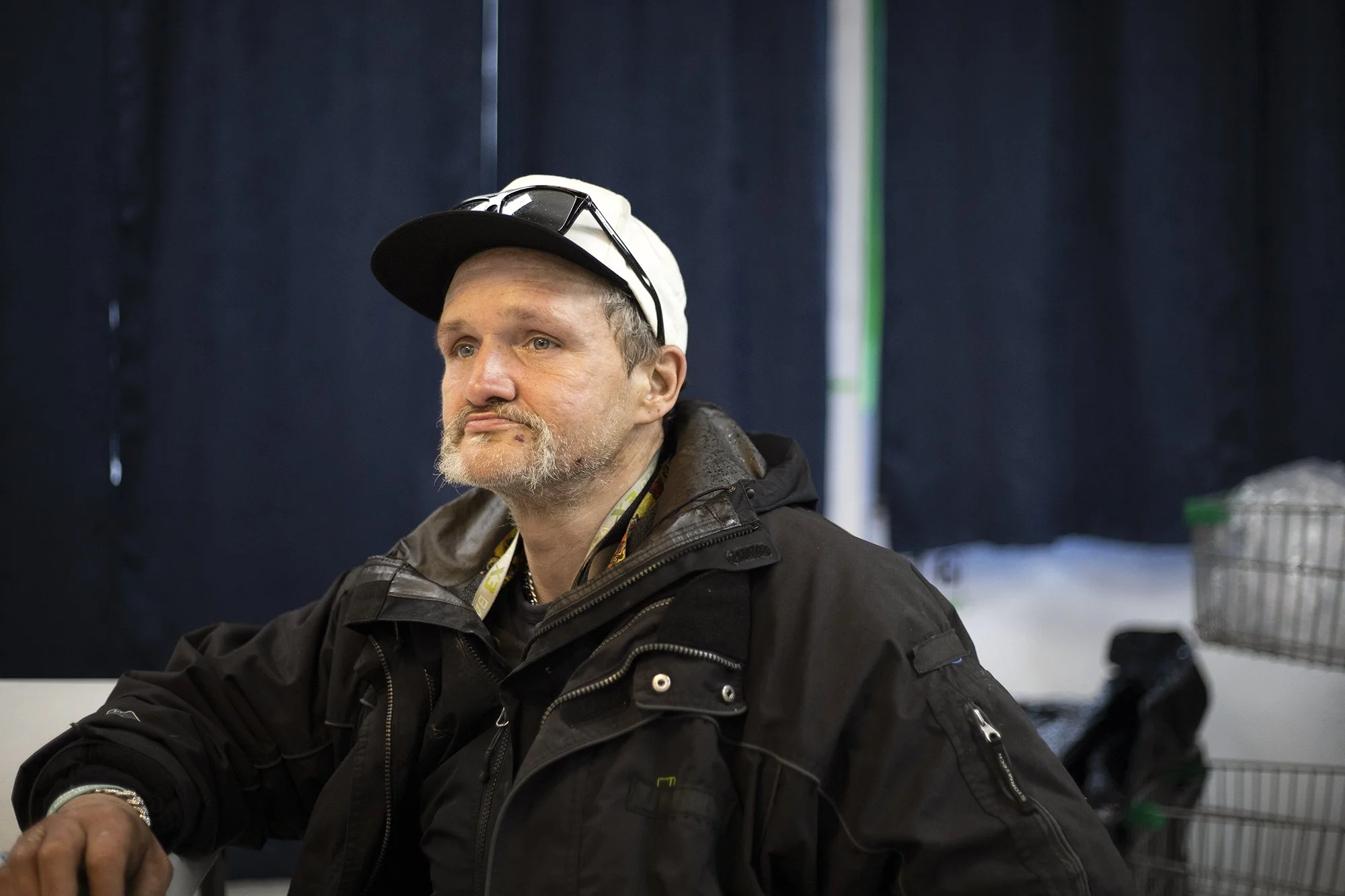
Henry (pictured) said as the Hub has become an important space for him and many other people, he said he couldn’t believe the news that the Hub will be closing. (Lauryn Mackenzie /CHLY 101.7fm)
Editor’s note: This is part one in a two part series covering the closure of the Hub. You can find part two of the story here.
On January 2nd, 2025, a year-round drop-in service hub opened in downtown Nanaimo, giving a space for those unhoused to access essential services. A little over a year later, they are now bracing for what will come next as the Hub is set to close.
Run seven days a week, and operated by Island Crisis Care Society (ICCS) in partnership with Nanaimo Family Life Association (NFLA), the Hub is a low-barrier space that allows street-entrenched people to access essential services and connections to community resources.
ICCS runs the daytime shelter during the hours of 9:00 a.m. to 4:00 p.m., and NFLA runs the nighttime shelter out of the same space during the hours of 5:00 p.m. to 8:00 a.m.
The daytime services were funded by the City of Nanaimo and federally supported by United Way BC through the Reaching Home program. The nighttime service was funded by BC Housing.
The Hub is located at 55 Victoria Road with the entrance located on Nicol Street.
While the Hub was set up to get street-entrenched people out of the weather and connected to medical aid and social services, many residents started to see an increase in social disorder affecting their nearby neighbourhoods.
In the summer of 2025, after public outcry from nearby residential neighbourhoods, Nanaimo City Council voted to end their funding for the Hub’s daytime services at the end of March 2026.
Now ICCS and NFLA are having to inform those who have come to rely on the Hub as a safe space, that they will have to find somewhere else to go at the end of March.
Lisa Clason is the Drop-in Hub manager for ICCS. CHLY met with her at the Hub as their morning programs were under way.
“It breaks my heart, because it's like, ‘what's going to happen to them?’ A lot of them don't go into other places, but because now they've gotten used to our team and the people that we are, and we're strict and sturdy, and we have rules, and we make sure we follow them, but we're loving and caring and compassionate,” Clason said. “They can come and just talk to us if they're having a bad day, and we can help them feel better.”
Clason said they can serve 30 people at the Hub at one time but they see about 150 to 160 people throughout the day using their services.
Along with being a warm space, with washrooms and food, the Hub also has an outreach worker that visits five days a week. They have an outreach care team that comes and does wound care, along with other community groups that will come by and offer beauty services and Hepatitis C testing.
As well, workers from BC Housing and the Ministry of Social Development and Poverty Reduction help Hub users sign up for income assistance or BC Housing programs to get them into housing.
Through this work, as of March 5th 2026, the City of Nanaimo said 51 Hub users have been able to find housing.
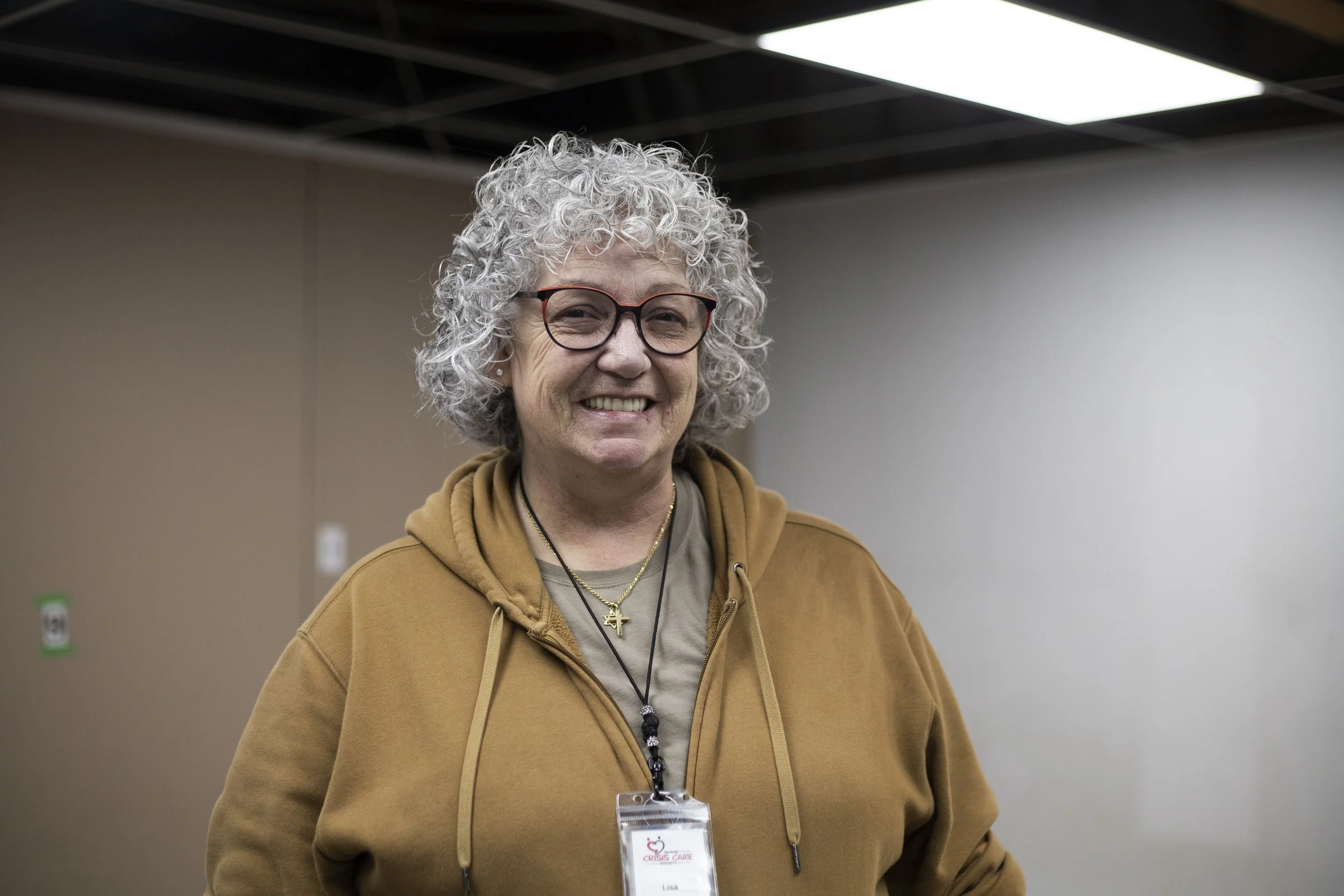
Clason (pictured) said the closure has devastated even the staff who have come to know the people they support. (Lauryn Mackenzie / CHLY 101.7fm)
“We had a fella that used to sweep our roads up and down constantly, and then people were saying to him, ‘Oh, you're doing such a good job.’ It gave him purpose. Well, we got him into housing at Newcastle [Place Supportive Housing], and now I see him riding his bike, huge smile on his face, because he quit dope and he just smokes pot because he had that purpose,” Clason said. “He had that feeling of being a person again, and people saying, ‘hey, great job. Way to go Kevin.’ That's all it took. That's what we need, we need somewhere where they can have dignity.”
As someone who has been working at the Hub since day one, she said the closure has devastated even the staff who have come to know the people they support.
“People come up and they're like, ‘can I hug you?’ and it's probably against all the rules, but my staff hug,” Clason said. “They're like, ‘yeah, you can have a hug,’ because sometimes they just need that human connection. They come in and you go, ‘hey, Frank,’ and they're like, ‘fuck, you remembered my name.’ They're people, they have dignity, they have a sense of safety here.”
Along with the services they offer, Clason said the Hub has become a connection point for people to connect with those living on the street.
“We get phone calls all day long, every day, from people looking for their brothers, people looking for their daughters, their sons. They send us pictures because we do see a lot of people, and we can connect them,” she said. “If you can phone and say, ‘hey, Lisa, has Mike been in today?’ And you go, ‘yeah, Mike was in this morning. He ate.’ That just takes a load off of them to know. We had a mother that used to come in here–80 years old–on her walker because she couldn't invite her son to her house, because he would take things and she can't afford to go to restaurants because she's on a very thin budget. So she would come here to have lunch with her son, so that she could still have lunch with her son.”
She said, while the Hub is set to end, it does not mean an end to the social disorder experienced in the area.
“It’s still gonna happen, except it's gonna be worse now, because 30 people are in here, and now they're gonna be out there, so there's gonna be more things happening,” she said.
As the Hub is closing and there is no transitional program, Clason said she worries for what will come next for those losing service.
Henry has been attending the daytime and nighttime services since the start of the Hub.
“I was here the first day that it opened up, and I believed that I had a place to go, get out of the cold weather, the rain, and a place to try to sleep at night,” Henry said. “I've been homeless for 20 years, and this place has helped me out a lot.”
He said the Hub has made a big impact in his life over the last year.
“[During the day] they give us food, they give us a warm, dry place to hang out. There’s a TV to watch, hot coffee all day long,” he said. “Then at four o'clock we leave, and at five o'clock we can register to come back and to spend the night, which opens up until seven in the morning. We get a supper and a warm bed to sleep in.”
He said as the Hub has become an important space for him and many other people, he said he couldn’t believe the news that the Hub will be closing.
“Oh, I'm devastated at their closing. I don't know what I'm gonna do, not a clue. I can't put a tent up anywhere,” he said. “Every time you put a tent up to tell you to take it down. I've been on a waiting list for over a year for housing, and still nobody's confirmed anything with me.”
Cece is another community member who is concerned about what will happen when the Hub closes.
“I was really concerned for the people that live here, it's going to be cold outside, and I guess the neighbours don't like them, but they're not going to like them even more when they're out here,” Cece said. “They're just used to being here and you don't leave that place right away, because it's always been your home for a while, so you feel at home here.”
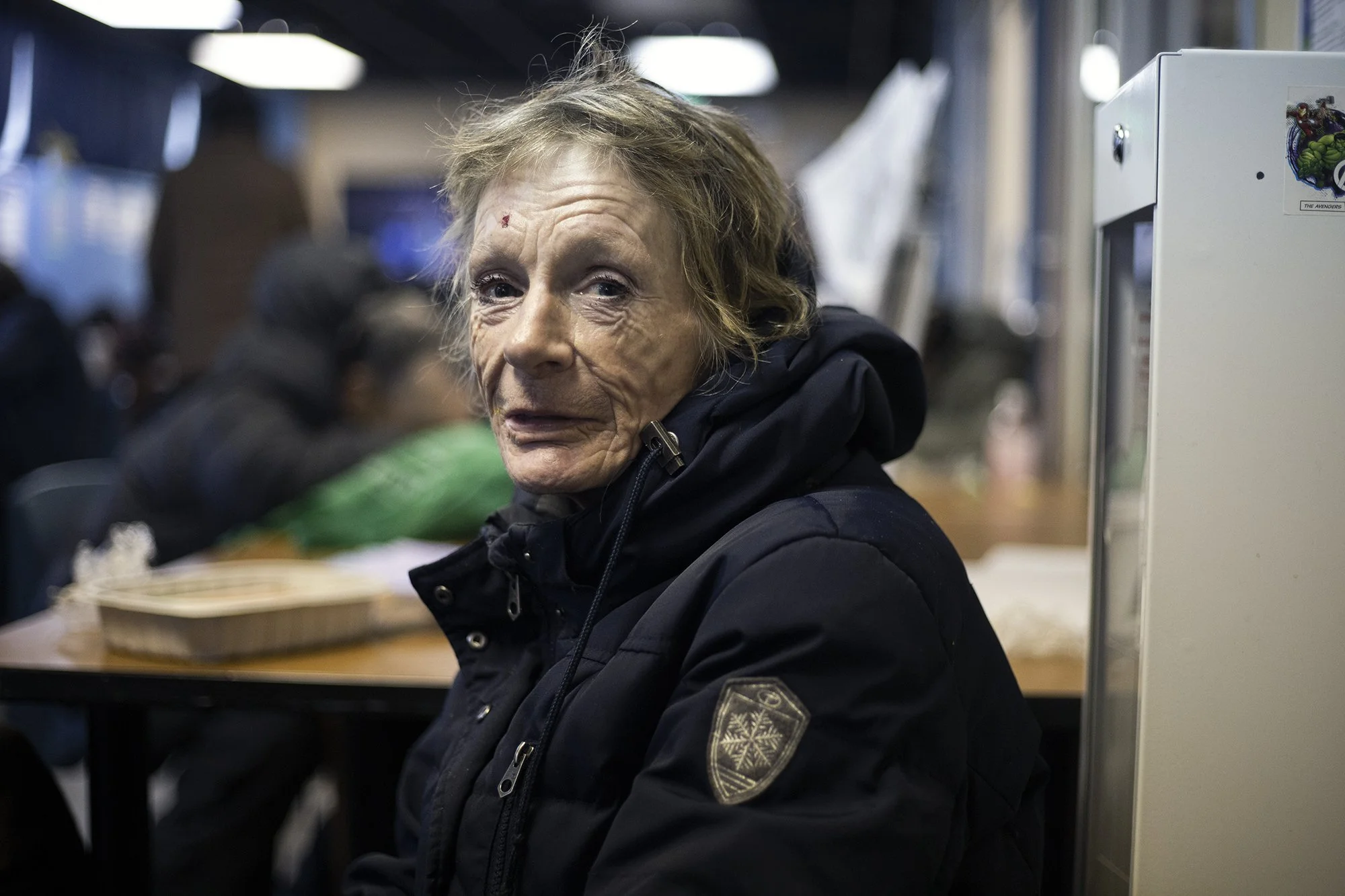
While Cece (pictured) has been working and waiting to get housing, She said she just doesn't understand why the Hub has to shut down. (Lauryn Mackenzie / CHLY 101.7fm)
While she normally stays at the Risebridge shelter, Cece said she and her children meet at the Hub for food, and a warm dry space to be together.
“We come here and we visit and get something to eat. We usually go back down to the library later to stay warm, because I'm going to be 70 in a few months, and I'm still homeless, and I don't know what's going to happen, I really don't,” she said. “I need to get into a place, and I want a place where my children can come and visit me too.”
While she has been working and waiting to get housing, She said she just doesn't understand why the Hub has to shut down.
“People need the chance to at least have something called their own, and a lot of us don't mind if we share it with somebody,” Cece said.
Erika Gagnon is the director of shelters and guest services for the Nanaimo Family Life Association. She oversees the nighttime shelter at the Hub. CHLY met with her as the space transitioned from daytime services to nighttime shelter services.
The nighttime shelter has 20 beds, but Gagnon said they turn away about 10 people every night.
As the City of Nanaimo is cutting funding for Island Crisis Care Society’s daytime service, Gagnon said as they both split the rent for the space, due to ICCS losing their funding, NFLA cannot afford to continue services at the current location.
Gagnon said she has been working with ICCS and the City of Nanaimo to try and find a new location for the Hub to continue their services.
“The reality is, there's not a lot of space that's available for services like this within Nanaimo. I know we've been looking for an alternative place to put the Hub. We've looked at 29 different places, I believe we're up to and for a myriad of reasons, they've just not been something that would work out,” Gagnon said. “Either they will need too much renovations, which we don't have funding for, or they're privately owned, and the people who own those places don't want a service like this in their space, and that's something they get to choose, as owners of buildings.”
Along with finding a space where someone would rent to them, she said it is hard to find space that is close enough to other services.
“If we put a Hub somewhere where there was no food, there would be no pharmacy with reasonable access, it would still get utilized, it would just get utilized by a different type of person,” she said. “It would be probably more utilized by people that are living in their vehicles, maybe seniors that are living in campers. I don't feel like it would be utilized as much as the current clients downtown, just because of the distance from survival needs.”
The building the Hub resides in, also has an outreach pharmacy, an addictions and recovery clinic, and the Nanaimo branch of Aids Vancouver Island.
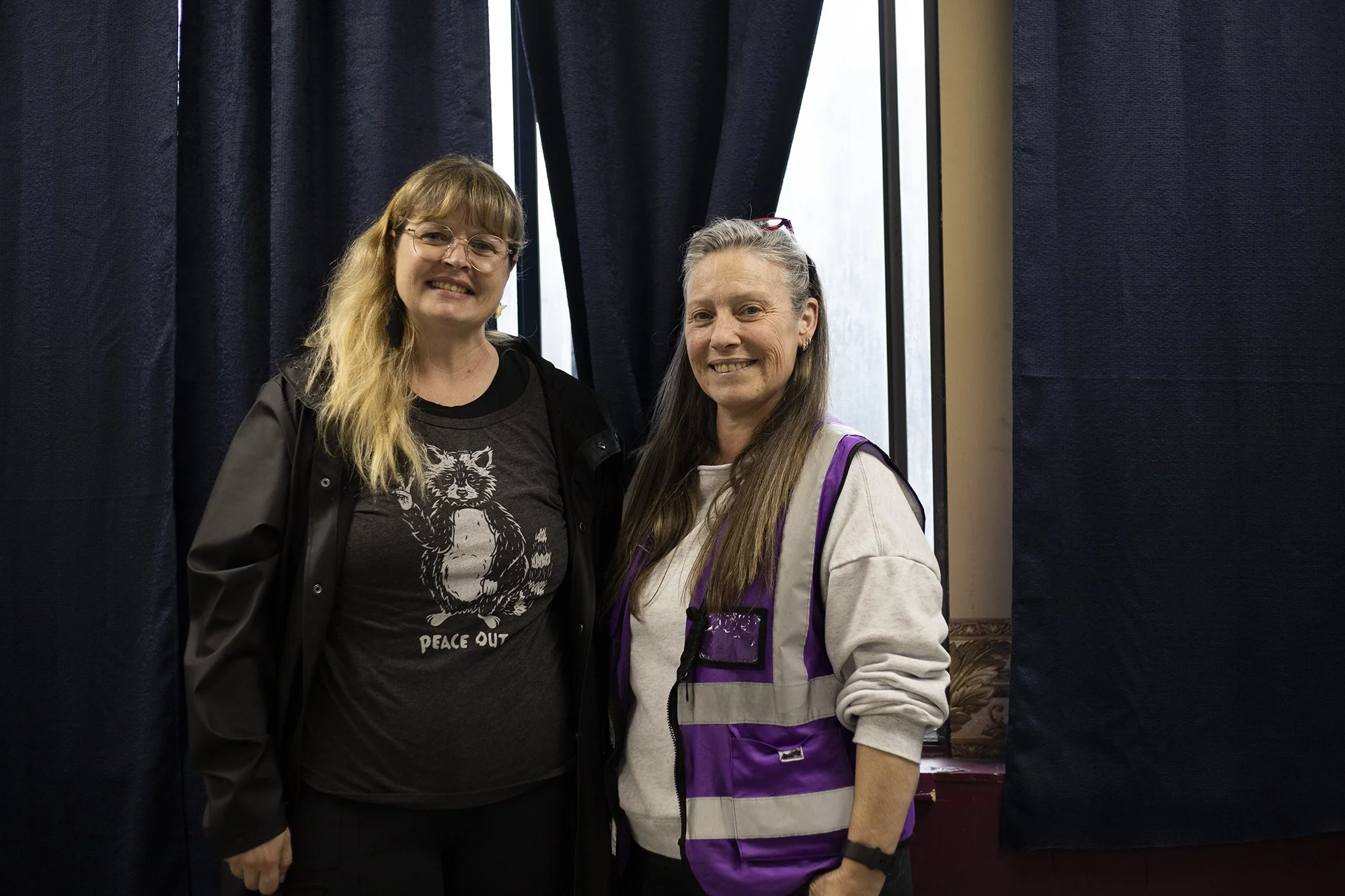
Gagnon (left) said as the Hub comes to an end she is worried about the safety of those who will no longer have the service. (Lauryn Mackenzie / CHLY 101.7fm)
Along with the nighttime shelter at the Hub, NFLA also runs 25 beds at the year round Unitarian Shelter and 60 beds at Saint Peter's Church during the winter. The shelter at Saint Peter’s is also set to close at the end of the month.
As the winter shelter at Saint Peter’s has been running for several winters now, Gagnon said she has seen what has happened when shelters shut down.
“Traditionally, what happens is the people that are downtown stay downtown. So what I have seen as someone who lives near downtown is that people just stay here. They kind of go back to either camping in the bush, camping in the parks. They sleep in doorways of downtown Nanaimo businesses,” she said. “Everyone kind of has their own little secret spot in the downtown core, and I imagine that's what will happen again, as I don't know of any of our clients that have plans to leave the city when the Hub closes.”
She said as the Hub comes to an end she is worried about the safety of those who will no longer have the service.
“When the Hub changes, there's going to be that many less eyes on people. Our staff notice overdoses. Our staff notice when people need medical care, when maybe they don't notice themselves that they need medical care,” she said. “When wounds are getting really bad, staff will say, ‘hey, let me call someone? Have you been anywhere? Do you need to go see a doctor? Let's connect you with case management.’ These are people that just aren't recognizing that they have that self-care need because of where they are in life. So the people are still going to be here. They're just not going to be inside and in my personal opinion, that is going to exacerbate every problem that they have.”
As the closure of the Hub comes soon, Gagnon said Island Crisis Care Society, Nanaimo Family Life Association and the City of Nanaimo will continue to work tirelessly to get a new location so they can reopen the Hub as soon as possible.
Funding Note: This story was produced with funding support from the Local Journalism Initiative, administered by the Community Radio Fund of Canada.