
Nanaimo prepares alignment of Off Street Parking bylaw with City Plan
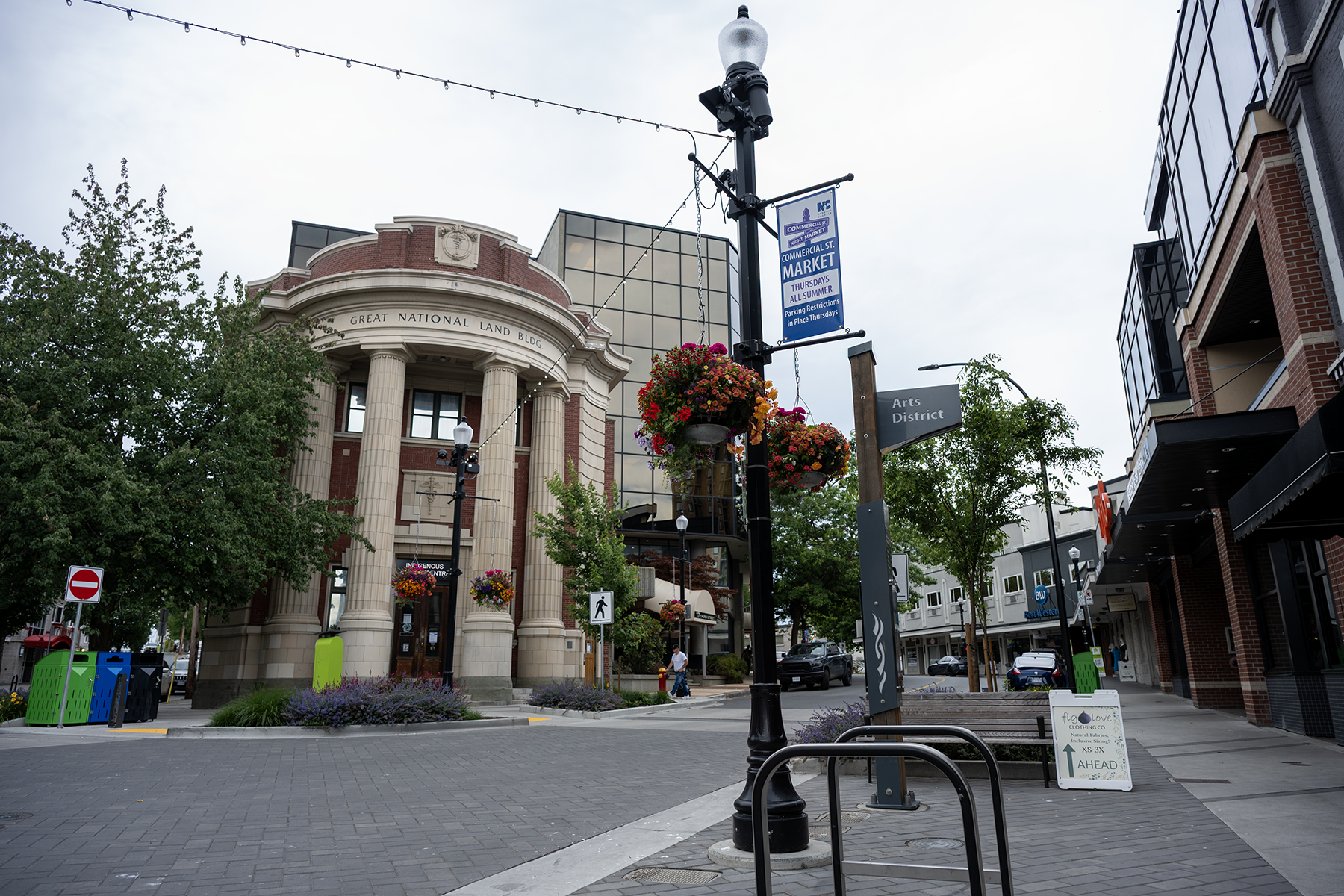
The bylaw update focuses on off-street parking on private property. It does not affect on-street parking, curbside allocation, or any parking fines. (Luis Zablah / CHLY 101.7FM)
The City of Nanaimo is updating its Off Street Parking Regulations, in a move aimed at making the city more friendly to pedestrians and transit users.
Last Monday, June 22 the City of Nanaimo’s councillors voted to update the 2018 “Off Street Parking” regulations. The bylaw’s update aligns with Nanaimo’s parking rules and the 2022 “City Plan,” which aims to reduce vehicle reliance, and promote walking, cycling and transit.
The bylaw update focuses on off-street parking on private property. It does not affect on-street parking, curbside allocation, or any parking fines.
As of now, the bylaw is part of the City's shift away from minimum parking requirements and toward development led parking. This allows developers to determine parking supply based on projected demand and location specific conditions, particularly in areas with strong transit access.
CHLY spoke with councillor Ben Geselbracht on the bylaw update
“The why we put in place this regulation, or that made the changes was really to better align the off street parking bylaw with objectives that we have in our official community plan, so you know, one big objective is housing affordability and development feasibility so with parking it’s expensive,” he said. “Basically, I think it’s like $65,000 a parking stall, and so you know, biggest complaint from developers is that you know, a lot of times with escalating construction prices is that the parking is costing a lot for the development, and that cost gets passed on to the purchasers.
According to the City, mandatory parking minimums have led to overbuilding of parking in some developments, especially in denser urban areas. This has reduced the number of housing units possible on a site, and increased overall project costs, even in cases where residents may not fully use all parking spaces.
The bylaw update has major changes with vehicle parking requirements varying across five Urban Centres in Nanaimo, based on walkability and transit proximity. It also introduces a new parking maximum in those centres to prevent over parking and separate visitor parking requirements from general resident supply.
According to Nanaimo’s 2022 City Plan, Urban Centres are designated growth areas intended to concentrate on housing, employment, services, and transportation options. Downtown is considered as a primary centre, and Woodgrove, Nanaimo North, Country Club, South Gate, and the University and Hospital area as secondary centres. A Primary Urban Centre is known as the city’s main cultural, economic and tourism hub, while a Secondary Urban Centre is a smaller regional hub focused on commercial activities like shopping, employment, and public institutions, while having excellent transit access.
These areas are prioritized under the updated bylaw because they are already serviced by higher frequency transit routes and contain a concentration of services and employment. This makes them more suitable for reduced parking requirements compared to lower density residential neighbourhoods.
Geselbracht explains the reasoning behind the maximum parking limit plan for Urban Centres.
“We’re trying to build greater density, which just makes it a more walkable environment, and it improves the streetscape and street life, and the viability of businesses,” he says. “One of the changes that we made was parking maximums in these really central locations, like the Downtown and the Woodgrove area, Country Club, whether it’s like a urban node where you know all the transit connections go to where there’s lots of commercial activity and then also where we hope to have greater density of residential."
By introducing parking maximums in these centres, the City is also aiming to shift building designs, creating more residential or commercial space instead of large surface or structured parking facilities.
Additionally, the bylaw would introduce a Transportation Demand Management (TDM) where bicycle parking requirements would increase by 20% in Urban Centres. New standards would also need a 15% space increase to accommodate non-standard bikes like cargo bikes with electrical charging. The City also plans on introducing a minimum parking rate for mobility scooters for the first time.
Geselbracht explains what the TDM actually means for residents.
“Another one is requiring baseline transportation demand management measures, such as, like for developers that have lower parking to also offer transit passes, car share, and bike facilities, some level of that within their development, so that people, if there’s no parking, there’s less vehicles, that there are… the other means of transportation are readily accessible.”
The bylaw also updates Electric Vehicle (EV) charging requirements, requiring that new developments have the electrical infrastructure needed to support future charger installations and can accommodate evolving technologies.
According to Geselbracht, EV changes are made to future proof developments as EV use increases, making sure buildings are prepared, without needing costly retrofits after construction is complete.
The City of Nanaimo is adding a “Consideration of Variances policy”, made to provide clearer guidance when site specific circumstances may need deviation from the new parking bylaw. Additionally, a new TDM reserve fund will be established to collect cash in lieu from developers. According to a staff report, rather than requiring developers to build a minimum number of parking spots they can instead pay into the TDM fund, which the City would use to improve public transit, build sidewalks and bicycle lanes.
The reserve fund is also intended to unify the contributions from many developments, allowing the City to invest into broader transportation and shared mobility services instead of limiting improvements to individual project sites. This avoids disconnected bike lanes at new developments.
Geselbracht says the bylaw’s changes only apply to off street parking for new developments, with the goal of improving housing affordability and encouraging more efficient use of land.
He adds that the overall goal of the bylaw update is to create more flexibility in how land is used in high growth areas, while also shifting transportation demand away from private vehicle dependency to more sustainable options.
Not every member of council supported the bylaw update, with councillors Ian Thorpe and Sheryl Armstrong opposing the change.
During the June 22 council meeting, Councillor Thorpe said the shift from traditional single vehicle transportation would affect traffic flow and parking availability in Urban Centres. Councillor Armstrong said she agreed with most of the changes, but voted against the update due to the addition of a maximum parking limit.
After going through first, second and third readings on June 22, it was anticipated to be adopted at the July 6 council meeting. The adoption of the bylaw however has been delayed to July 20th where, due to a technicality it will be amended before its anticipated adoption.
Further information is available at the City of Nanaimo’s website.
Funding Note: This story was produced with funding support from the Local Journalism Initiative, administered by the Community Radio Fund of Canada.
Newsroom Ethics • About our Newsroom • Report an Error • Corrections & Clarifications