
The City of Nanaimo gets to the root of ongoing invasive plants issue with bylaw amendment
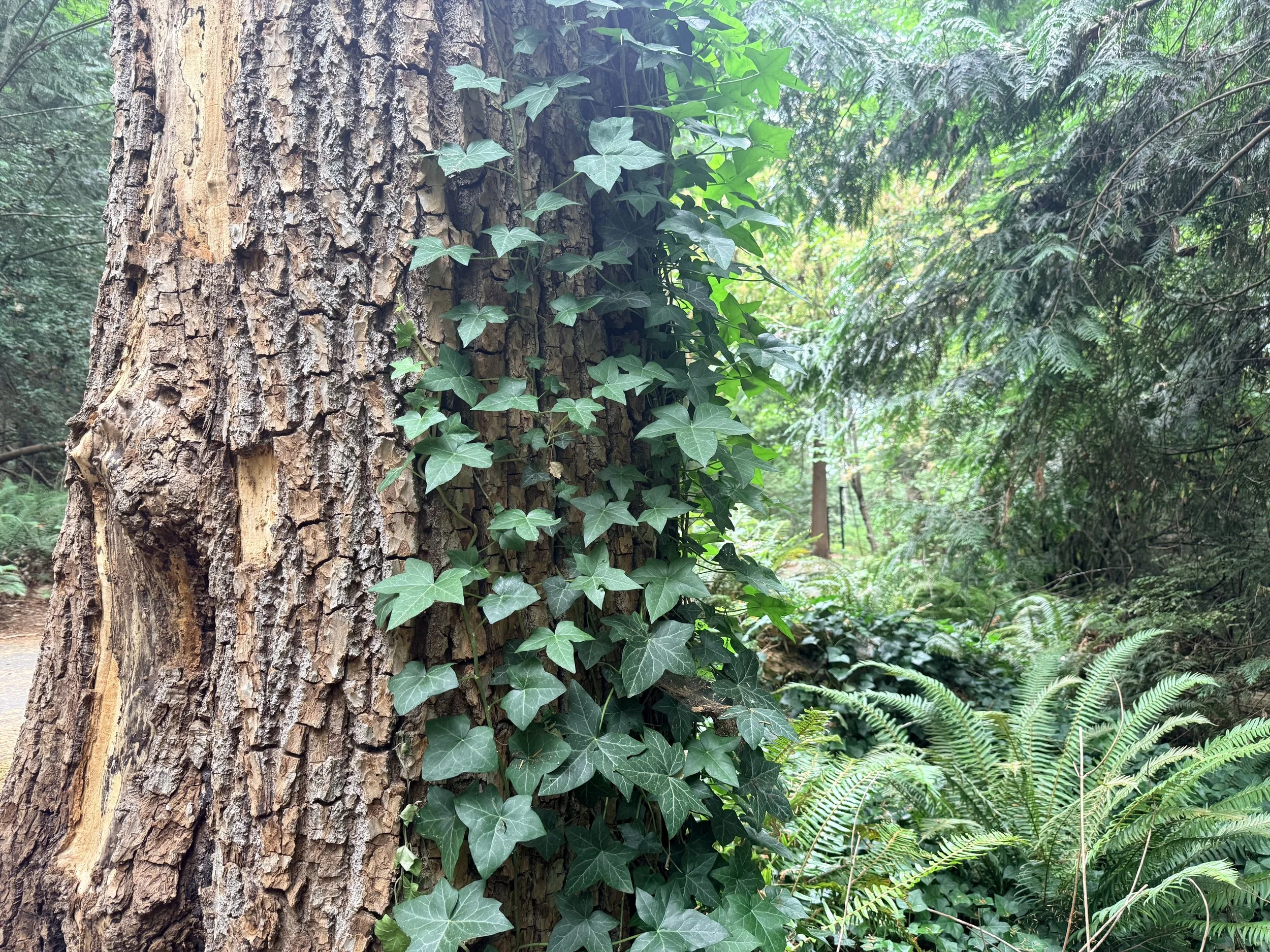
The City lists the Himalayan Blackberry, English Ivy, Scotch Broom, English Hawthorn, Gorse, Spurge Laurel and the Japanese Knotweed to name a few. (Luis Zablah / CHLY 101.7FM)
The City is taking a step towards banning the sale of invasive plants.
At a July 20th council meeting, Nanaimo City staff provided an update on the City’s invasive plant management work. Council voted to direct staff to bring forward amendments to the Business Licence Bylaw that would restrict the sale and distribution of invasive plants.
The move stems back to 2025 where the Governance and Priorities Committee recommended Council to begin drafting a bylaw that prohibited the sale and distribution of the invasive species listed by the Invasive Plant Council of BC. Additionally the committee recommended launching a public awareness campaign alongside local retailers, and updating the City’s overall invasive plant management strategy.
According to the City of Nanaimo’s Invasive Plant Management webpage, an invasive plant is a non-native plant with the ability to negatively affect the composition, structure and function of native ecosystems. The growth in number and spread of invasive plants has concerned professionals across British Columbia, such as ecologists, naturalists, residents and land managers.
There are currently ten key species of invasive plants that can be found in Nanaimo’s environment. The City lists the Himalayan Blackberry, English Ivy, Scotch Broom, English Hawthorn, Gorse, Spurge Laurel and the Japanese Knotweed to name a few. Additionally, there are also two species recognized as toxic invasive plants. The Giant Hogweed and Poison Hemlock. If their sap comes in contact with exposed skin it could cause hypersensitivity to sunlight, leading to irritation, blistering and dermatitis, with the possibility of scarring and blinding individuals.
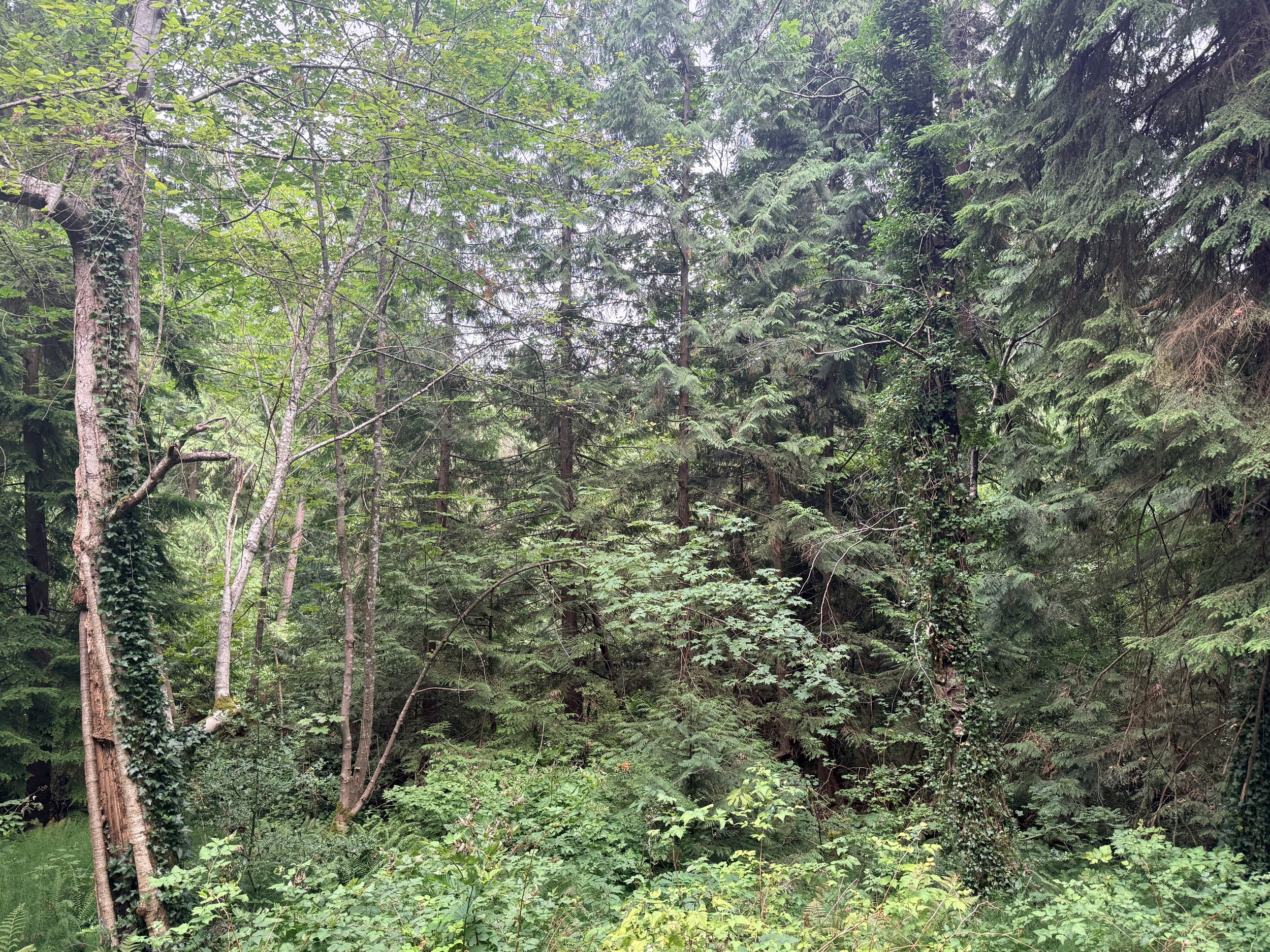
Local parks in Nanaimo often see growth of invasive plants like English Ivy and Holly. The growth in number and spread of invasive plants has concerned professionals across British Columbia, such as ecologists, naturalists, residents and land managers. (Luis Zablah / CHLY 101.7FM)
Charlotte Davis, the City’s deputy director of parks and natural areas said most local businesses are on board with taking action against invasive species.
“It was really heartening to see that many of the businesses in the Nanaimo are, or the ones we spoke to anyway, were so aware of the issues around invasive species, and obviously, I would say bastions against the spread of invasive species, even being able to advise the public on that as well,” said Davis.
In the last year city staff contacted 12 retailers to check their inventories against invasive species lists. Around 75 per cent of the businesses responded and reported they already had internal policies against selling invasive plants.
Additionally, staff have been completing targeted follow ups in the last month with a local big box retailer to address a plant of concern. Davis says the bylaw would help ensure future businesses and larger retailers also follow the same standards by providing a formal regulatory framework. She added the updated strategy prioritizes where invasive species are removed, identifies which species need more attention, and guides long term monitoring and maintenance.
City of Nanaimo Councillor Hillary Eastmure spoke on the importance of preventative measures.
“This is a proactive step that we can do that stops these plants from getting into the environment in the first place,” said Eastmure.
She said the proposed amendment is made to prevent invasive plants from spreading before they require extensive removal efforts, noting volunteers already spend significant time clearing invasive species from parks and natural areas.
“Having this in writing in a bylaw as an actual ban on the sale of invasive plants gives us added teeth if we need it, and I love to see that most local nurseries and retailers are voluntarily getting on board with this in the rare circumstance where we may need it. At least we have it as an option, and I think it speaks to how seriously we're taking the issue, so that we have a mechanism if it comes to that,” said Eastmure. “I see this ban on the sale of invasive plants as a commitment to doing what we can proactively upstream to stop these plants from getting into our environment in the first place.”
She said the community has been reaching out about the aggressiveness of the invasive plants around Nanaimo.
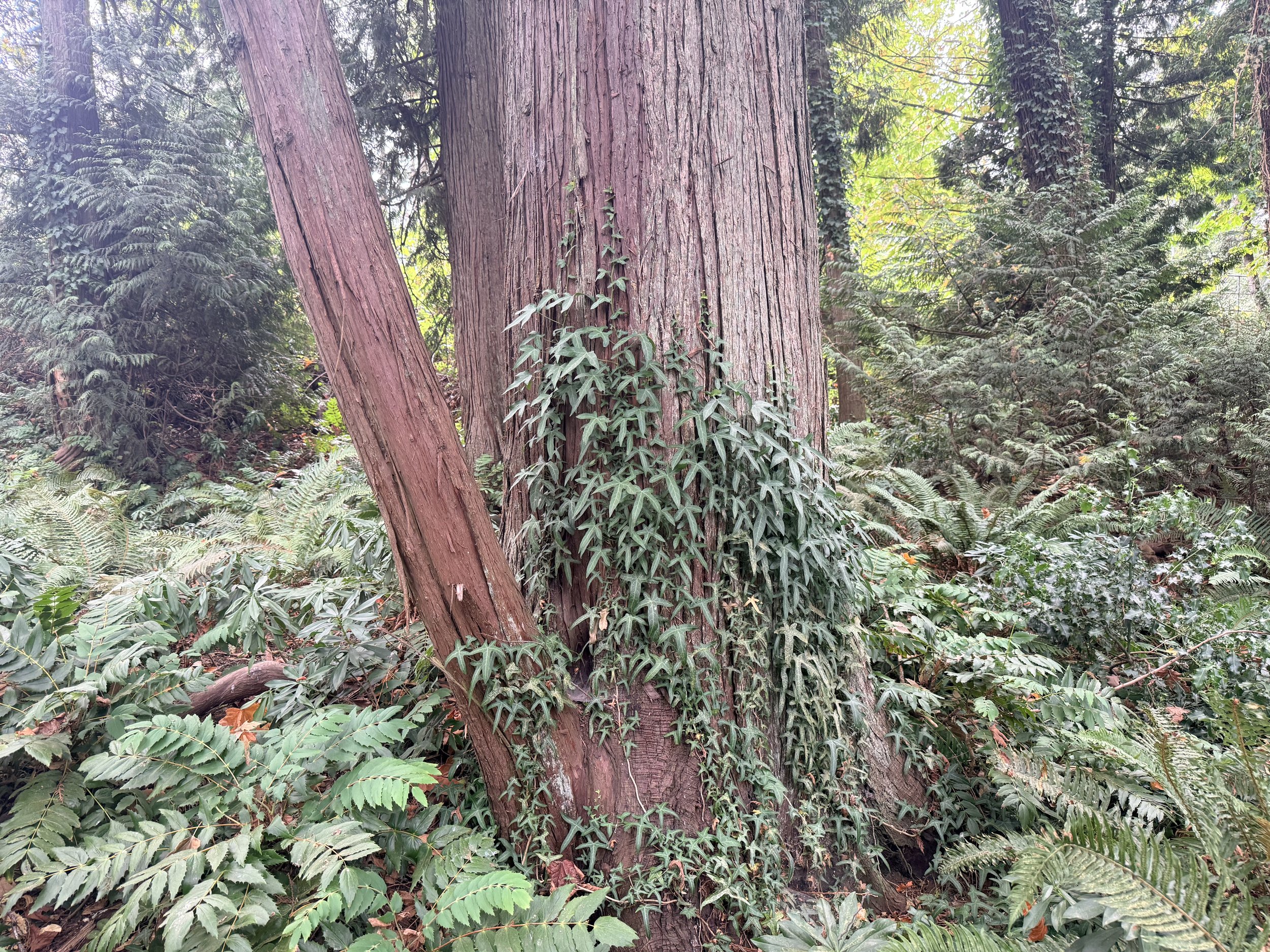
English Ivy is particularly hard to get rid of as it spreads easily through discarded cuttings. (Luis Zablah / CHLY 101.7FM)
“I was hearing from volunteers who were dismayed that after spending hours and hours removing English Ivy in parks, they were going to a garden center to buy a native plant and they were seeing English Ivy for sale,” said Eastmure.
Eastmure listed English Ivy and Foxglove as examples of invasive plants that just continue to appear in some retail settings, which threaten the native ecosystems. Additionally, English Ivy is particularly hard to get rid of as it spreads easily through discarded cuttings. She adds that species such as Scotch Broom and Holly also increase the wildfire risk due to their high flammability.
Eastmure commented on the City of Nanaimo’s commitment in working with the community in getting rid of the invasive plants that threaten the environment.
“In the absence of a time machine, what we do have now is proactive legislation to help us stop something similar from happening in the future,” said Eastmure.
She invites residents to learn about invasive species through the City’s website and to participate in invasive plant removal work parties. Eastmure is hoping the bylaw amendment will be completed in the fall. The City is also working on a new handbook, Controlling Invasive Plants, to aid residents.
Further information is available on the City of Nanaimo's website.
Funding Note: This story was produced with funding support from the Local Journalism Initiative, administered by the Community Radio Fund of Canada.
Newsroom Ethics • About our Newsroom • Report an Error • Corrections & Clarifications