
Imagining a new future for the Island Rail Corridor
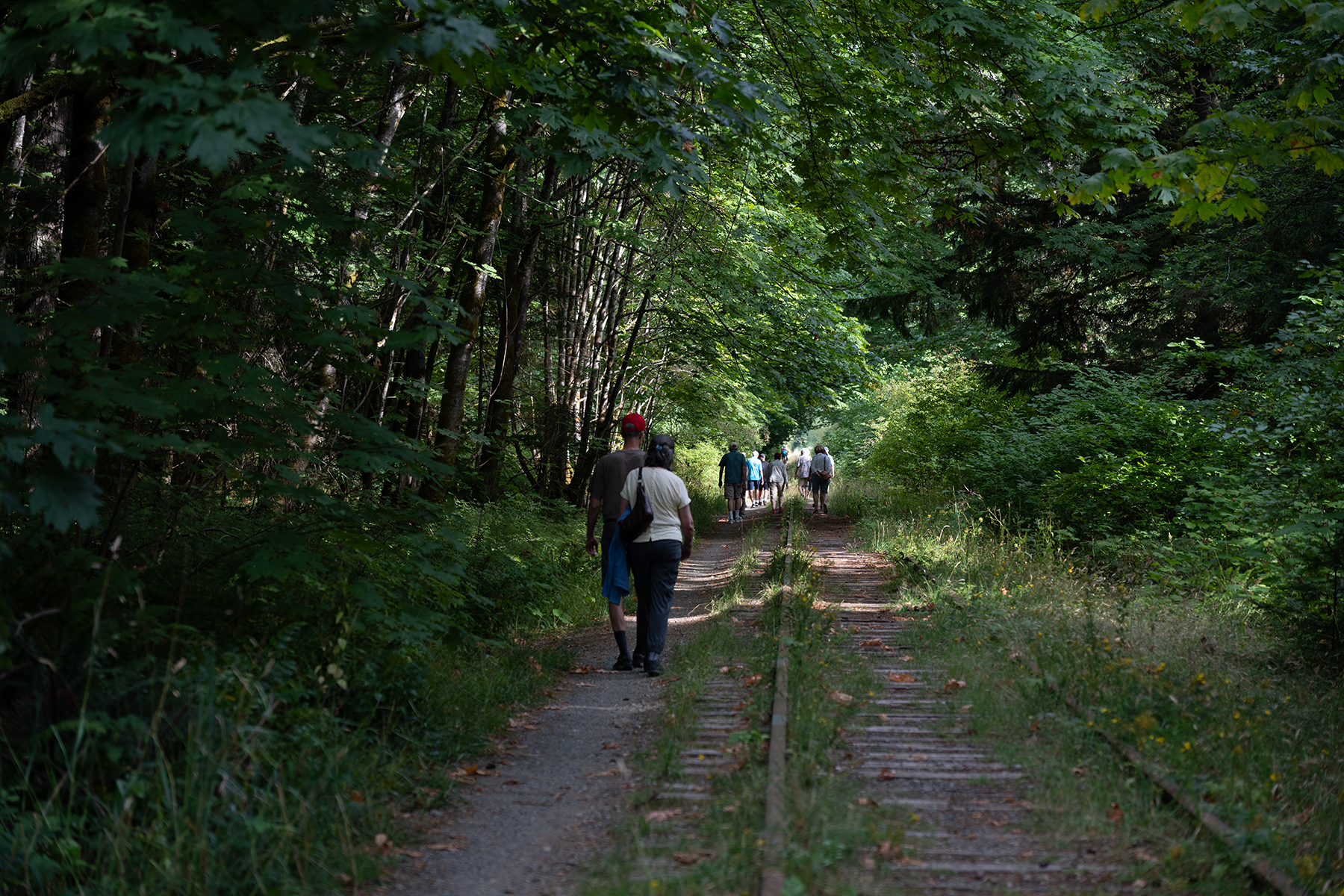
The Courtenay Rotary Trail is a popular trail for walking, running and mountain biking. (Jeannie Lin / CHLY 101.7 FM)
Comox Valley residents are being invited to discover a potential possibility for the Island Rail Corridor.
A community walk on July 23 highlighted the potential to transform a section of the corridor between the Courtenay Rotary Trail and Royston to be used as an active transportation route. The event was organized by the Comox Valley chapter of Friends of Rails to Trails Vancouver Island (FORT-VI), an organization founded in 2018 that advocates for converting the unused Island Rail Corridor into a continuous, multi-use active transportation trail.
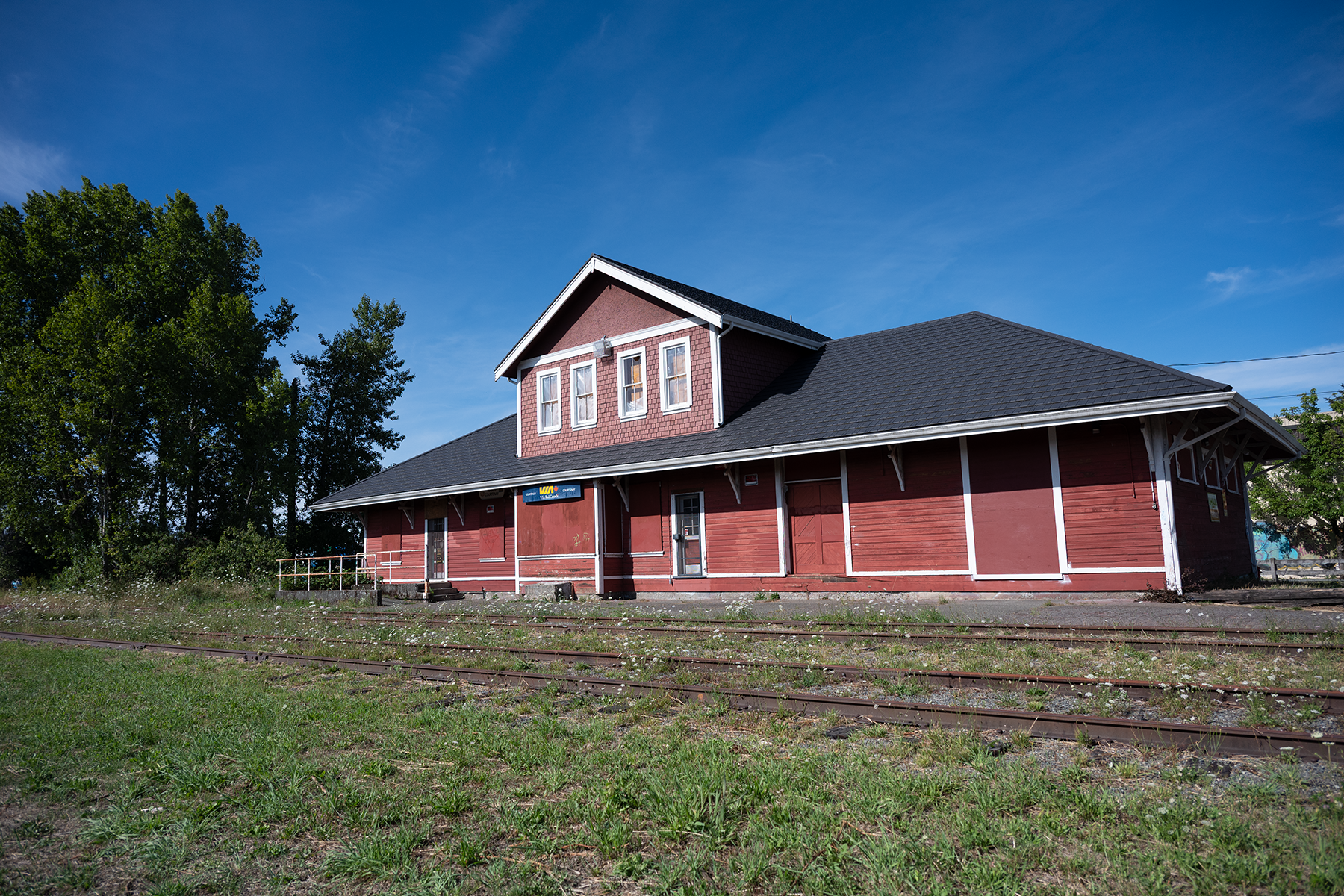
The Courtenay train station was given heritage status by the City of Courtenay in 2002. (Jeannie Lin / CHLY 101.7 FM)
“So the purpose of today is to come together and get this part of the Island Corridor, this four kilometers from the Rotary Trail to Royston, to get it usable, and our goal is within the year. So we have suggested that the best way to do this is by putting road crush on the rail bed,” said Dominique McGrady, the Comox Valley-based member of Friends of Rails to Trails Vancouver Island.
According to the organization, the stretch of the Island Rail Corridor connecting the end of the Courtenay Rotary Trail to Royston could be made accessible by adding a gravel surface over the existing rail bed, creating a route for walking, cycling, and other non-motorized travel.
The Courtenay Rotary Trail is already a one kilometer active transportation pathway that runs along the Island Rail Corridor through the city, following the railway line from 5th to 29th Street.
“So from the Rotary Trail that starts at the train station, so it goes almost to the, to Winners and to all this complex. And so the part that we're talking about is at the end of the Rotary Trail to Royston, and it's almost four kilometers,” said McGrady.
According to the Island Corridor Foundation, the Island Rail Corridor, formerly the Esquimalt and Nanaimo Railway, reached the Comox Valley in 1914 with the construction of the Courtenay train station. The rail line was intended to continue north to Campbell River, but construction was halted by the First World War. In 2011, passenger rail service ended, and freight transportation has gradually decreased to a minimum amount in the Nanaimo area. Today, the Island Rail Corridor spans approximately 290 km from Victoria to Courtenay, connecting 13 First Nations territories and five regional districts.
“ When you look at active transportation in the bigger picture, it's what we call triple A infrastructure. So that means all ages and abilities, and we like to add the word safely after that. And what rail trails do is that they provide those opportunities of safety, so people can ride on it from age five to age 85 safely and be in nature, right? That's the bigger piece of it. It's about commuting, it's about tourism, but it's also about people's physical and mental health, and that's a big aspect of also what it is that we're trying to advocate for,” said Barb Sharpe, a Victoria-based board member and a lifelong hiker and cyclist.
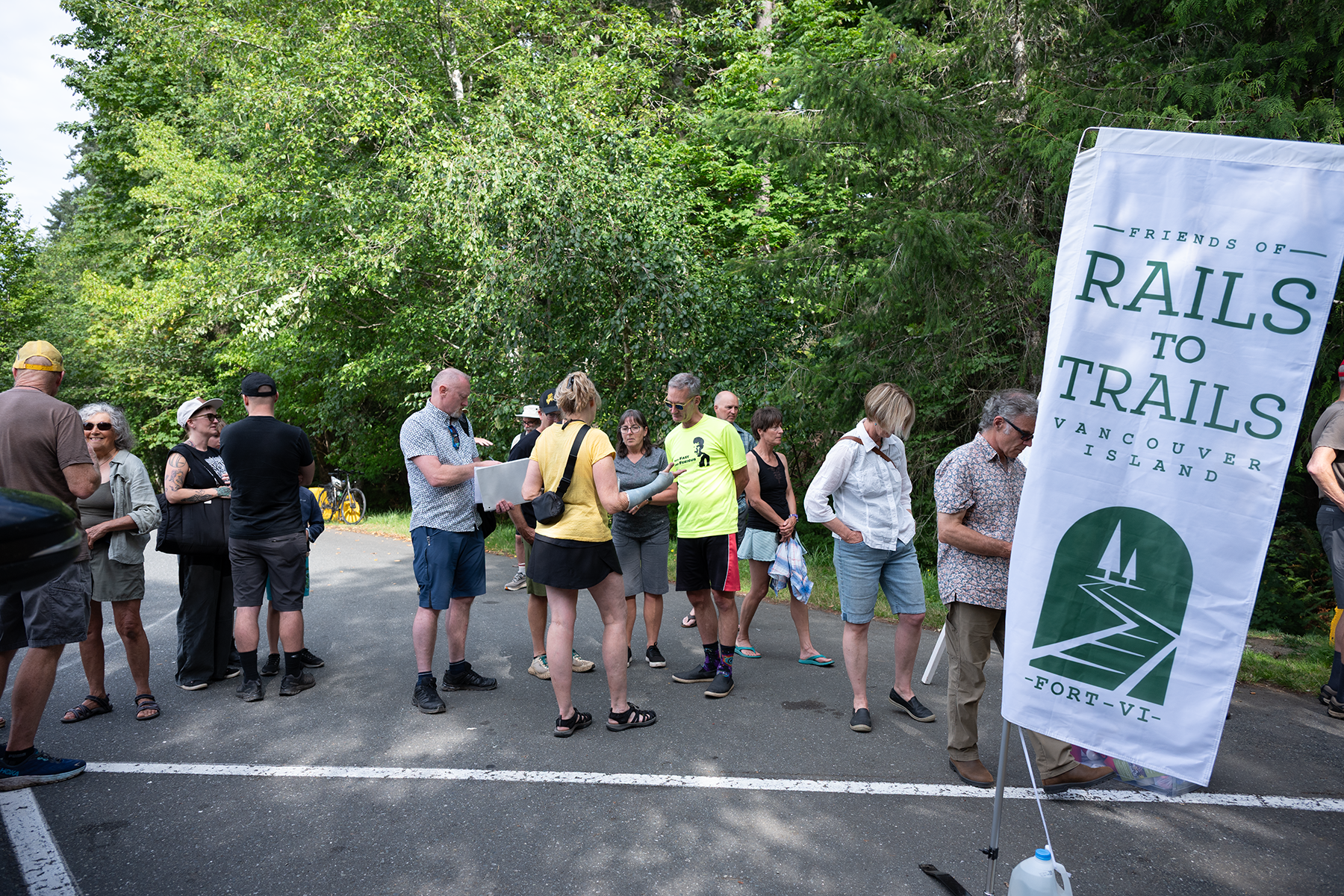
Participants gather to learn about the FORT-VI proposal. (Jeannie Lin / CHLY 101.7 FM)
McGrady talked about what she envisions for the railway line in the Comox Valley.
“I just envision people who live at the Royston Ridge riding their bike into town and just allowing cyclists and walkers to be able to recreate in a really safe way and be off of 19A and just enjoy. There's so much beauty here. There's the Millard Creek and there's some huge trees here, and it's just an amazing corridor that we should be using,” said McGrady.
Sharpe said converting the rail corridor into an active transportation network could bring additional benefits to the region by attracting visitors and supporting tourism.
“The really interesting thing about the rail corridor is, when it was designed and built, on average, there’s communities almost every 10 kilometers. So people can use it as a way to commute, connect with friends and family, and also the ability to take a day trip on it, right? Like, if you're walking or hiking. I mean, pilgrimage walks is another big tourism aspect of that. So they were very popular in Europe where people go on multi-day hikes,” said Sharpe.
Daniel Arbour is the Comox Valley Regional District Area A director and a former board member of the Island Corridor Foundation, a non-profit organization formed in 2004 that owns and manages the rail corridor. He explained that the foundation is concerned with preserving the railway so it remains available for potential future train use.
“There are a number of issues that have arisen around that over the years, primarily that the Island Corridor Foundations to date has not supported a full conversion, so they have had a policy to support trails, beside the rail. There is still a lack of resolution around preserving the train opportunity. And so the ICF, the Island Corridor, would have to vote on granting an exception for something like that,” said Arbour.
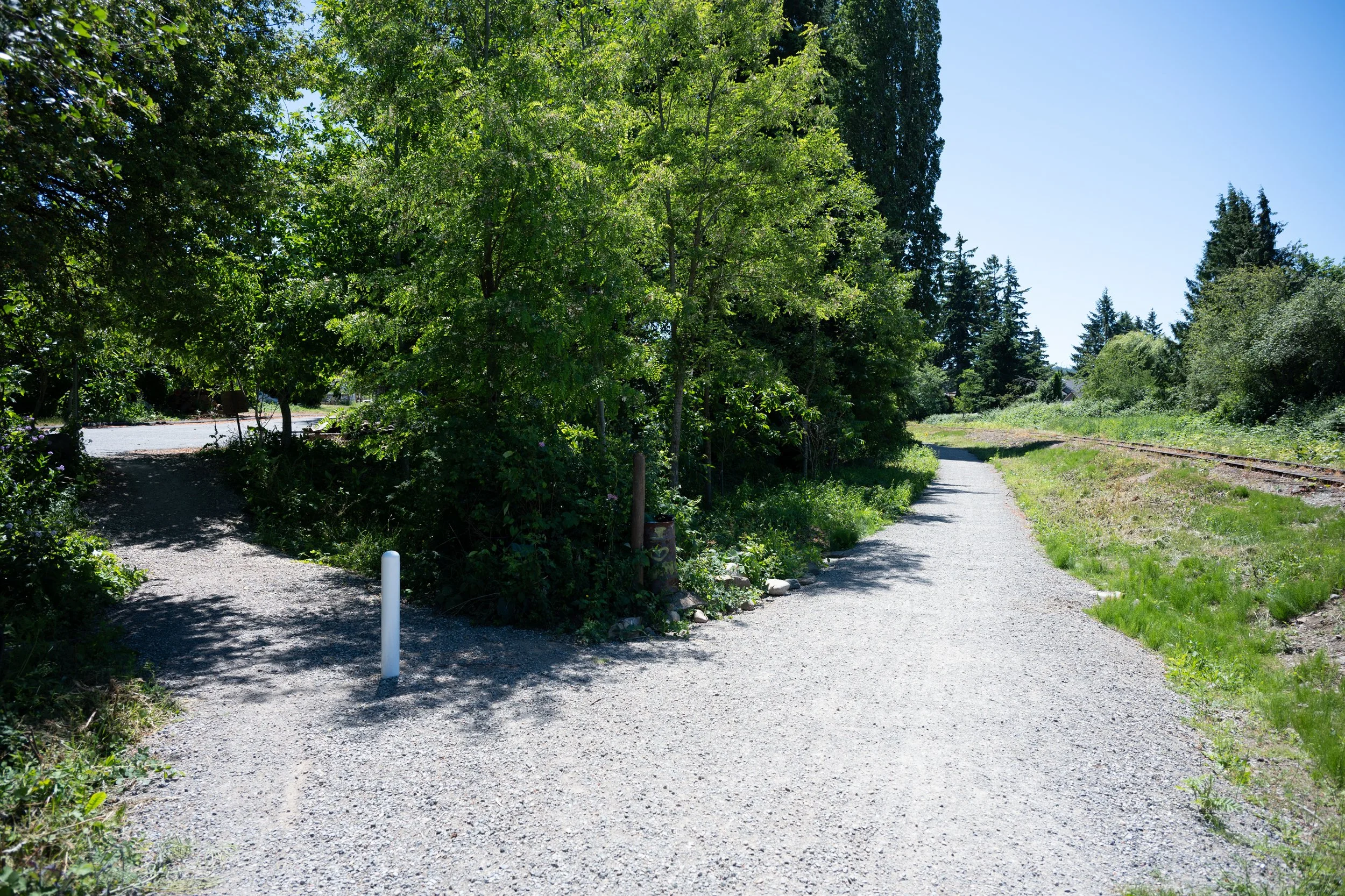
Part of the Island Rail Corridor at the end of the Courtenay Rotary Trail. (Jeannie Lin/CHLY 101.7 FM)
Thomas Bevan is the CEO of the Island Corridor Foundation. He said that instead of fully converting the old corridor, it is completely possible to build a functioning active transportation trail, beside the rails.
“I think getting a trail to Royston is an absolutely good idea and should be a priority for all parties and levels of government who are involved in planning up there. I think that the rail corridor can do many things. And so I think having an active transportation corridor beside the rail line is absolutely feasible,” said Bevan.
On April 18 this year, the City of Nanaimo, partnered with the ICF, opened a new active transportation trail connecting Hecate and Seventh Street, built alongside the existing rail corridor.
“We've been having great success in Nanaimo with nature paths beside the rail. The Seventh Street connector just opening this spring. We were able to do an almost two kilometer long trail for just about $200,000. Can we follow this approach in other places like from Courtenay to Royston? I think so,” said Bevan.
According to FORT-VI, in 2018, they conducted a petition with more than 3,000 signatures that was delivered to the B.C. legislature to support the conversion of the rail corridor.
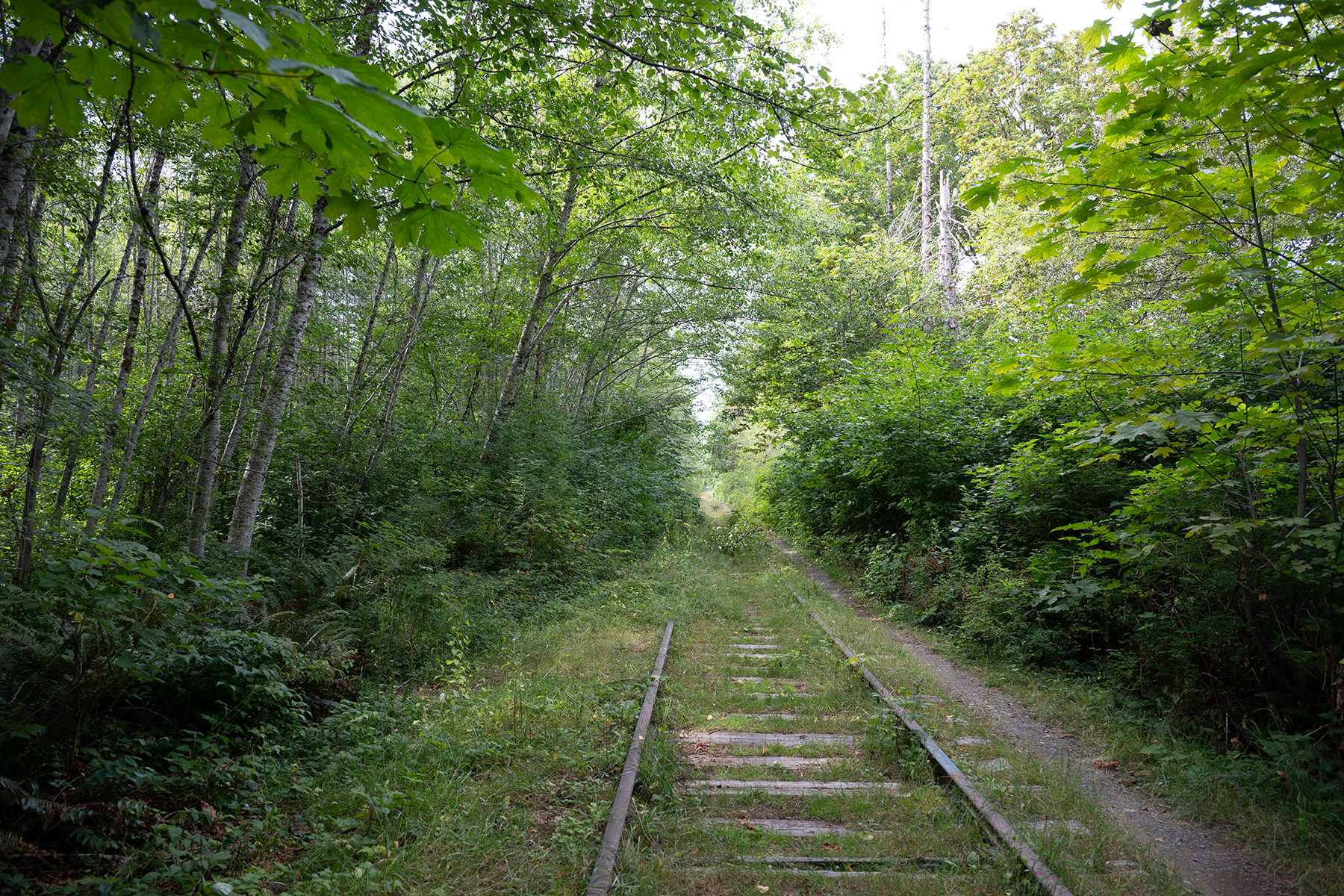
Part of the Island Rail Corridor at the end of the Courtenay Rotary Trail. (Jeannie Lin/CHLY 101.7 FM)
“From our perspective, because we see it as a public asset that is not being used. And to hold politicians to account, we need to be able to bring this in front of them and say, ‘This is a public asset that has a lot of economic and health benefits to Vancouver Island and to the province.’ And so it is part of our job to get it in front of politicians,” said Sharpe.
FORT-VI is encouraging the public to experience the railway corridor themselves and engage with local officials to raise awareness. Arbour said that some leadership from the Province can help guide a cohesive goal for all groups involved with the corridor’s future.
“All these regional districts and First Nations co-own the corridor. And there's different goals that we have to reconcile. Some of the nations have pulled out the tracks, and they may not want either a trail or rail on it. So everyone has different kind of outcomes coming out of that visioning process. The question of what's the overall long-term solution, and for that one, I think we'll still need the province to show some leadership to bring us all together. We'll need some leadership in the next few years for them to clarify that,” said Arbour.
Funding Note: This story was produced with funding support from the Local Journalism Initiative, administered by the Community Radio Fund of Canada.
Newsroom Ethics • About our Newsroom • Report an Error • Corrections & Clarifications