
Habitat for Humanity and BMEx celebrates one year of reducing building material waste
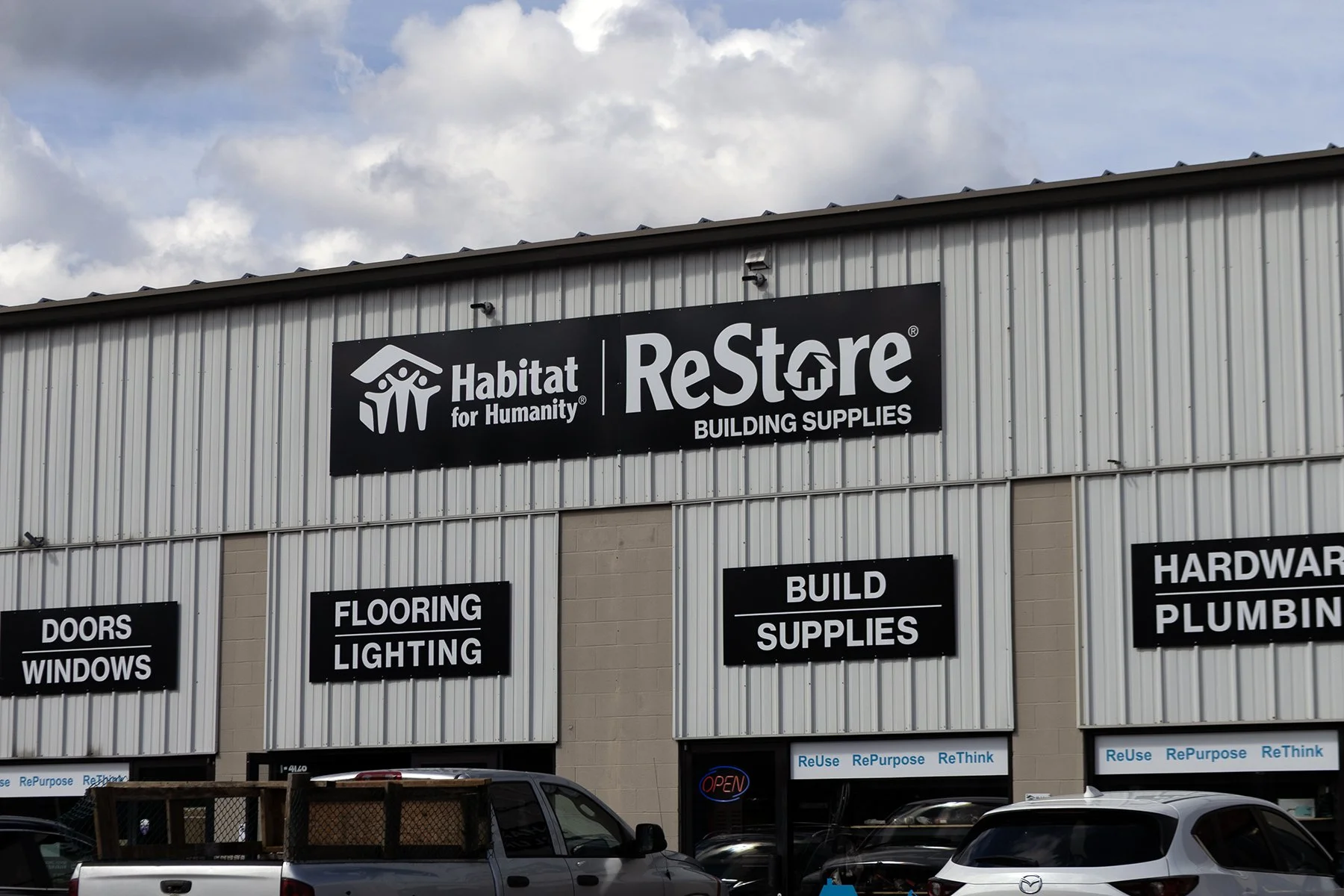
All the proceeds from any items sold at the ReStore go to Habitat for Humanity Mid-Island. (Lauryn Mackenzie/ CHLY 101.7FM)
It has been one year since two organizations decided to team up and save surplus building materials from the landfill.
This time last year, Habitat for Humanity Mid-Island’s ReStore opened the building material section of its store. In this section, builders, contractors, and suppliers can donate surplus or reusable salvaged materials to be resold.
This new area was created in collaboration with Light House, a non-profit that finds ways to reuse building materials to eliminate waste. Light House created the Building Material Exchange, also known as BMEx, to help connect builders and contractors with reusable materials.
The space allows the ReStore to sell the building materials for lower costs then they would be bought new. The materials can be used for building construction, home improvements, household projects, or art.
All the proceeds from any items sold at the ReStore go to Habitat for Humanity Mid-Island. CHLY spoke with Ava Campbell, Circular Impact Lead for Light House and Abigail Shakespeare, CEO for Habitat for Humanity Mid-Vancouver Island.
Shakespeare said the new area has allowed them to grow and diversify what they can sell at the ReStore.
“We've been able to see a real increase in things like salvaged kitchens, appliances, lumber, flooring, a tonne of different materials that have come in,” Shakespeare said. “But it's also allowed us to have an increase in furniture as well, which the community has really liked.”
Campbell said they have been spending a lot of time speaking with contractors and builders about this program and teaching them about sustainability, circularity, and reusing materials.
“One thing that we've been doing is holding a lot of site visits and visiting local businesses. So suppliers of building materials, subcontractors, trades, [are] going directly into their warehouses or their retail spaces to see what they have available that could be donated,” Campbell said. “A lot of it is this like invisible inventory or materials that just kind of get forgotten about, collect some dust.”
She said they have also started a delivery pick up service for those who want to donate materials.
Currently Habitat for Humanity and BMEx are wrapping up a six-week long building material drive. Shakespeare said the drive is to encourage more people to donate materials.
“We don't necessarily have enough to do an entire multifamily development from the ReStore,” Shakespeare said. “But for those contractors that are working with local customers who might be doing bathroom renovations, kitchen renovations, cosmetic renovations throughout their house, it's been a neat way for us to get them in there and educate them so they can then pass those savings on to their customers. Which, in an economy like this, of course, everybody is quite happy to hear.”
Shakespeare said they can never seem to get enough donations of exterior doors.
As well they are currently seeking donations of appliances that are still in good working condition.
“That's an area where it's incredibly expensive for them to dump it, and we have the space for it,” Shakespeare said. “We have the ability to test the appliances, ensure they're safe, and warranty them as well.”
She said on top of saving appliances from the landfill, donations also save the contractor or builder the cost of disposing of them.
Campbell said it can be a big misconception that the ReStore only takes in donations that are of salvaged materials from past builds. She said they also take in surplus materials a crew may have left over.
“So a lot of times when I'm chatting about materials that can be donated, minds will instantly go to salvage. So materials coming out of a deconstruction or a demolition–used materials, which includes amazing things like old growth wood sometimes and kitchen salvage,” Campbell said. “But it also goes back to all the surplus materials that are brand new, and when those are donated, ReStore customers are getting a brand new material or product at a fraction of the cost.”
While the building materials drive is now wrapping up this week, materials can still be donated to the ReStore year round.
Campbell said this collaboration at the ReStore helps build a new circular system that allows people to reuse materials that would otherwise end up in the landfill.
“I think it's a win for the environment. It's a win for the business and also for the community,” Campbell said. “This is kind of the rare story where there's both the environmental and the social benefit that is happening through the Restore and through supporting Habitat's mission.”
She said people who make a donation can also receive a charitable tax receipt from Habitat for Humanity.
Shakespeare said the money they make from items sold at the ReStore goes toward community projects they are working on including a single-family house they are renovating in the Nanaimo University District.
“That is entirely driven by drives like this, both on the cost side, for us being able to sell those things that come into the store, that's actually what's fueling this renovation, as well as us meeting new people through this project,” Shakespeare said. “The number of people that we've had stepped up and said, "Hey, I want to volunteer at the house. I want to volunteer all the plumbing labour, the flooring labour,’ that's been directly tied to the work that's been done through this exchange.”
The full list of items that can be donated to the ReStore, along with directions on how to request curbside pick for donations can be found on the Habitat for Humanity Mid-Vancouver Island website.
Funding Note: This story was produced with funding support from the Local Journalism Initiative, administered by the Community Radio Fund of Canada.
Newsroom Ethics • About our Newsroom • Report an Error • Corrections & Clarifications