
Vancouver Island University Students’ Union takes legal action against the University amidst breach of contract
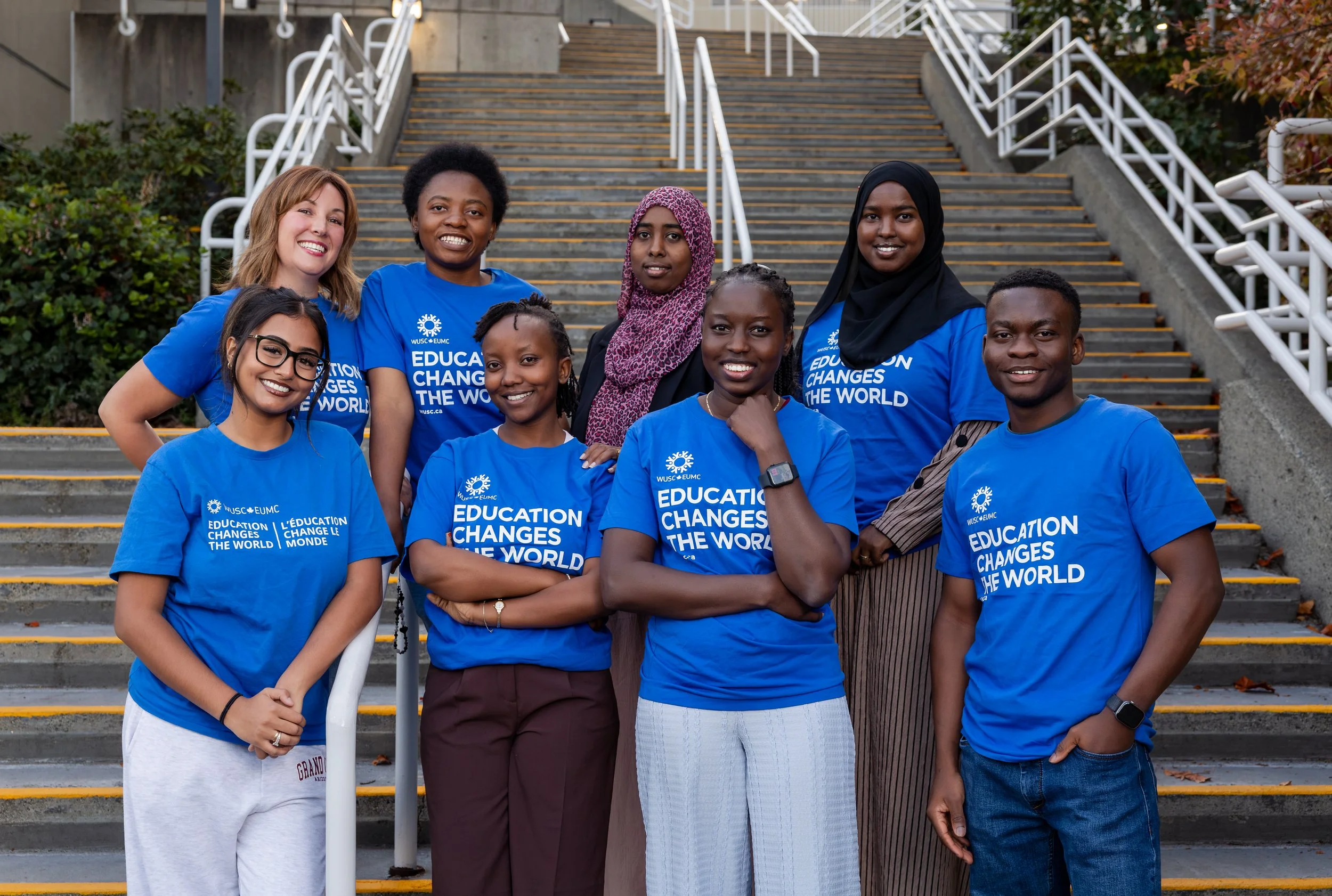
Group shot of graduates and current students of the WUSC Student Refugee Program stand alongside members of Vancouver Island University’s WUSC committee. (Photo provided by VIUSU)
Vancouver Island University Students’ Union (VIUSU) is suing VIU over a funding cut to a student refugee program that the union says breaks commitments and disrupts plans for the fall.
The World University Service of Canada Local Committee (WUSC), is a campus-led group dedicated to supporting students, through the Student Refugee Program (SRP). The initiative helps student refugees integrate to Canada and adjust to social and academic life. The group organizes many fundraising events and engages the campus and community on migration issues.
Since VIU’s local WUSC was founded back in 2008, the program has sponsored two student refugees per year from countries such as Somalia, South Sudan and Syria, and helped them settle-in Canada and begin their studies at VIU.
For years, the program has been supported with contributions from VIU, fundraising events, and student fees. That financial support allowed the group to keep helping students adapt and learn.
According to VIUSU’s campaign website, back in 2013 and 2018, VIUSU and VIU agreed to share the cost of keeping the program going, with students voting in referendums to match the university’s commitments. This agreement would be reinforced in October 2025, when VIU’s former vice president Carolyn Rusell reportedly confirmed in a meeting with the VIUSU Board of Directors that VIU would honour their commitments to the program. But in February 2026, Russell communicated VIU would withdraw funding from the program.
In May 2026, VIUSU called on VIU to honour the partnership and restore the financial and staff support. Now, elected student representatives are pursuing legal action urging VIU to reverse their decision to withdraw from the program.
Matthews Tharakan, organizer for member services and outreach with VIUSU commented on the union’s initial reaction to the news.
“The reaction from both the local committee and the students' union was one of shock. Um, that communication and that stance from the university was not expected.”
He explained the sudden reversal affected the union and the program’s staff, as VIU had already reaffirmed their commitment to the program during a meeting back in October 2025. The program had continued preparations to sponsor the next two students for Fall 2026. However, with February's news, the group was between a rock and a hard place as the sponsorship process was already well underway.
Tharakan explained what the loss of support means.
“Withdrawing such support means that this program can no longer sustainably be managed for future years, which means we at the local committee and the students' union are unable to ensure support for students in the coming years. This also means that the support that is provided to the current students who are pursuing their education at VIU is also in jeopardy.”
He noted the committee and board of directors are looking into ways to make sure that these student’s education is not affected. Tharakan added the reasoning behind VIUSU’s decision to take legal action.
“Our position is that the notice came too late when VIU decided to withdraw their support. VIU's obligation for twenty twenty-six and twenty twenty-seven intake was already rolling. We have communicated with the administration at VIU in multiple occasions about these commitments and how we feel they were breach of commitments made in the previous years.”
CHLY tried contacting VIU for a comment. In a statement the University said it is aware of a legal claim filed by the Vancouver Island University Students’ Union regarding the Student Refugee Program, but will not comment further as it is an active legal matter. Alongside the legal claim, VIUSU launched a public campaign calling on the university administration to reconsider pulling support from the program.
“ The second part of the campaign being a public-facing experience for the community at VIU and for Nanaimo at large to create awareness on how valuable this program is and how life-changing they are for refugee students every year.”
CHLY spoke with Sarah Bollinger and Kiyara Armogam, who served as co-chairs of VIU’s WUSC from 2022-2023, about their experiences with the program and their reactions to the university’s funding decision.
Bollinger noted her initial reactions.
“Oh, I was so shocked. I mean, now I'm living in Toronto. I'm doing a PhD here, and my research for my PhD focuses on Canadian resettlement organizations, which was inspired by my experiences with WUSC,” said Bollinger. “ I think it's a testament to how deeply I was impacted by my experiences with WUSC and how much I care about the organization that three or four years later, in a different province. I wanted to get involved and speak out when I saw what the university was doing.”
Armogam, who is now studying law at the University of Victoria, also expressed surprise. She added her involvement with WUSC began when she was an international student from South Africa looking for a meaningful way to participate in campus life.
Both former co-chairs described the program as more than just a financial support system. Alongside helping refugee students settle into Canada, volunteers organized activities such as ice skating and visits to pumpkin patches allowing students to explore Nanaimo and foster new friendships.
Beyond social activities, Armogam said volunteers helped refugee students with everyday challenges.
“It's like Sarah was on the phone with dentists trying to figure out how to help one of the students manage her dental pain for over a month. She was on the phone with people from the Interim Federal Health Plan and trying to get this sorted out. We were getting BC Services cards for them. It's all those day-to-day things that can be really overwhelming in a new place, and that having someone there just takes the load off.”
She adds losing the support could make it harder for future refugee students to establish themselves in Canada, especially when navigating institutions and services.
Bollinger explained the committee's impact can go further than just a student’s sponsorship. She comments on lasting effects from the program.
“I think the heart and soul of WUSC is community building and establishing friendships,” said Bollinger. “The most important part of the WUSC committee is previous SRP students who have stayed on, who felt the support themselves, and then have wanted to carry that forward. Showing the new students around and helping them find a church or a mosque in Nanaimo, taking them to their favorite restaurants and I think that it really helps students feel like they're not alone when they come.”
As of recording, VIUSU continues to call on the university to honour what the union describes as its “existing commitments" and restore financial and staffing support for the Student Refugee Program.
Further campaign information is available on VIUSU’s website.
Funding Note: This story was produced with funding support from the Local Journalism Initiative, administered by the Community Radio Fund of Canada.
Newsroom Ethics • About our Newsroom • Report an Error • Corrections & Clarifications