
Grandmarmots? Retirement not the end for Vancouver Island Marmots
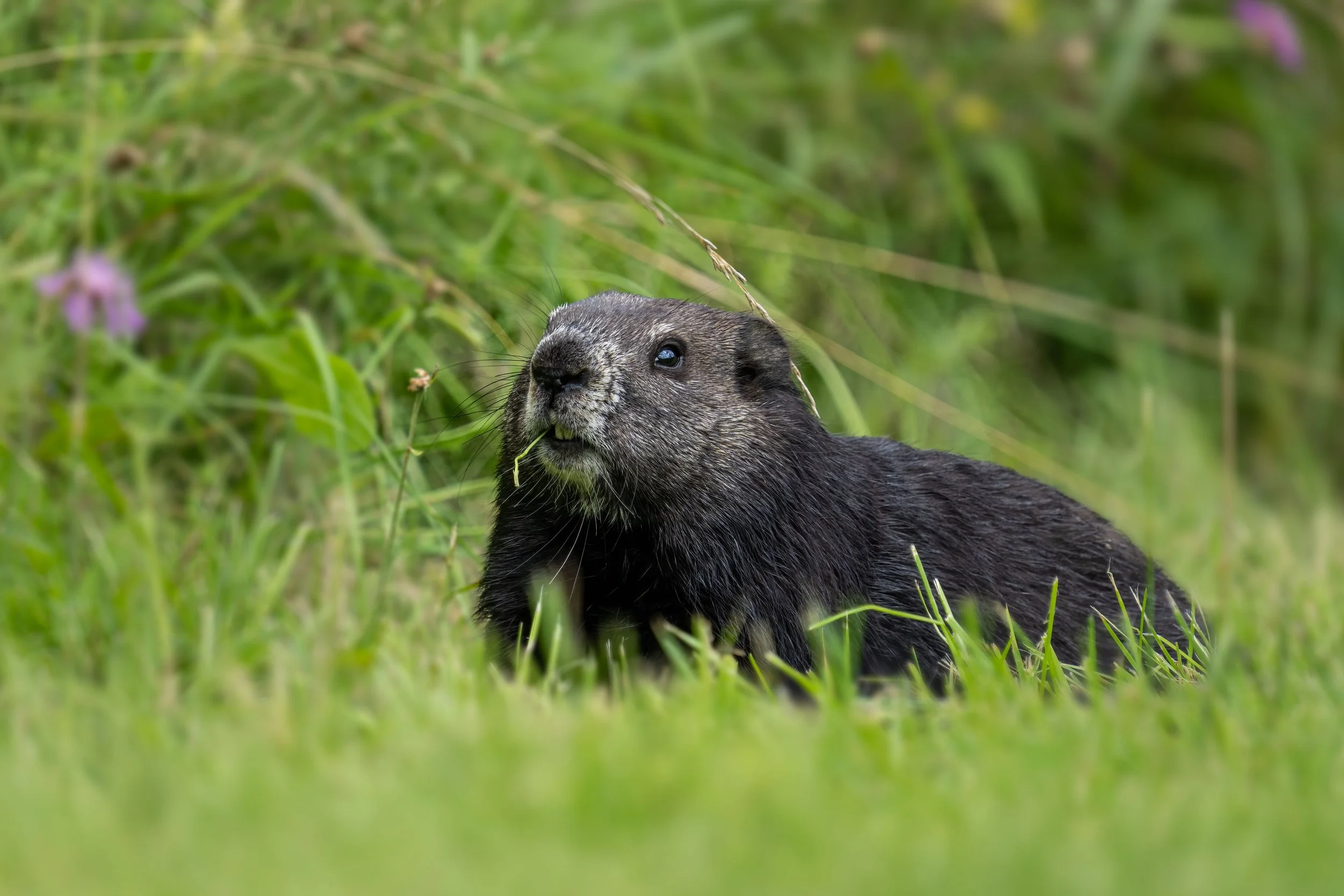
Vancouver Island's Tony Barrett Mount Washington Marmot Recovery Centre welcomed 40 new marmots from The Calgary and Toronto Zoos ahead of this winter, bringing the centre’s marmot population to 117. (Photo by Skyler Ewing / Pexels)
A trio of Vancouver Island Marmots are getting ready for a new phase of life.
Marmots Fiona, Keats, and Cheri are spending the winter mentoring pups as grandmarmots!
Vancouver Island's Tony Barrett Mount Washington Marmot Recovery Centre welcomed 40 new marmots from The Calgary and Toronto Zoos ahead of this winter, bringing the centre’s marmot population to 117.
The Marmot Recovery Foundation is an organization focused on recovering the wild population of marmots on Vancouver Island. The group focuses on conservation, releasing marmots into the wild, restoring habitats, providing food, relocating, breeding and monitoring marmot populations .
Marmots are born over the summer and are known as “pups”. However, once they emerge from their first hibernation they are known as “yearlings”, up to their second year. The centre is set to release up to 67 yearlings into the wild summer 2027.
Of the 40 new arrivals, 23 came from Calgary, including three adults and 20 pups, while Toronto contributed 17 marmots, with one adult and 16 pups.
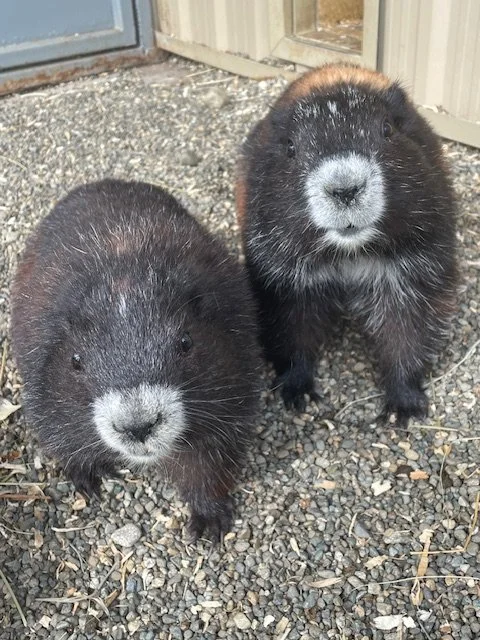
Grandmarmots Fiona and Keats. (Photo by Tawny Molland, provided by Malcolm McAdie)
The centre is also highlighting three senior marmots: Fiona, Keats and Cheri who are nine to ten years old. Having spent the last few years at the Wilder Institutes’s conversation breeding programs, they are officially set to retire. What’s next for their silver years? Helping young marmots hibernate.
Malcolm McAdie, the project veterinarian and captive breeding coordinator for the Marmot Recovery Foundation spoke on the relationship between the two marmot groups.
“So we bring them up to the center, and they are actually the mentors for these young pups that are coming from Toronto and Calgary. And it's been found that, uh, if you have larger experienced marmots, so adults with the pups, the pups have a much better hibernation.”
Older marmots do not do well in the wild after spending years in the conservation breeding program. So the retiring marmots will become “grandmarmots”, given a new task of co-hibernating with young marmots who were separated from their parents at birth. During hibernation, the company of grandmarmots becomes vital as older marmots have an established hibernation rhythm which the younger marmots can pick up on. With steadier hibernation protocols, young marmots sleep longer and wake up in better shape, making them far more prepared for the wild.
McAdie explained how the marmots face their first winter after being released during the summer.
“So every two to three weeks, the whole group of marmots that are together warm up and they cool down together as well. And so when you have the older, larger marmots with the pups, that whole process is much more effective and efficient.”
McAdie describes marmots as intelligent, social rodents with very distinct personalities. He adds young marmots generally get along with older animals, particularly older females that have previously raised pups.
He described the relationship between the marmots.
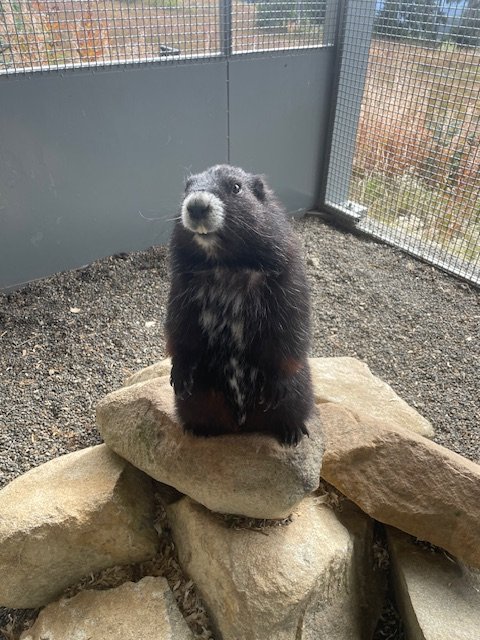
Fiona the Grandmarmot has a future after retirement. During hibernation, the company of grandmarmots becomes vital as older marmots have an established hibernation rhythm which the younger marmots can pick up on. (Photo by Tawny Molland, provided by Malcolm McAdie)
“So a lot of these older females that come to us, they have had, in previous years, their own pups, so they have these sort of maternal instincts. So they, they get along quite well, but the one thing that we see is the, uh, the, the pups, you know, when they come out of their hibernation, we categorize them as yearlings, and they're still behave like pups. But as the summer progresses, they become sort of like these surly teenagers, and they start challenging the adults.”
The foundation is preparing to release 67 marmots into the wild next summer. Before their release, the animals must have a successful hibernation and become used to natural conditions, such as weather and food. McAdie added the foundation generally targets early July for release, giving marmots the time to establish burrows and gain enough weight before their next hibernation.
He explained how the summer’s releases will help the ecosystem.
“And we found that, um, the odds of them surviving are better if we release them earlier in the summer. So generally we aim for sort of early July as our target to release them, and that gives them enough time to transition to the wild.”
The Vancouver Island marmot population has been recovering since the 2000s, with McAdie adding the estimated wild population grew from 22 animals in 2003 to approximately 420 in 2025 thanks in part to the conservation breeding and release. Nevertheless, the species is still deemed vulnerable, and continued intervention is needed to establish a sustainable population.
McAdie spoke about the progress made over the years and the long road ahead.
“By being able to have this annual release of marmots from captivity to the wild, it allows us to continue building up this population. And so it means that moving forward the population is going to experience growth, and we're gonna make it even more robust and sustainable than it is,” said McAdie. “So we've rescued the species from extinction, and now what we're doing is building up the wild population so that it can survive on its own into the future.”
McAdie says low population numbers, hard winters and predators continue to threaten the species. He added young marmots must find or dig burrows, get enough food and accumulate enough body fat to survive the seven months of hibernation.
He noted predators such as cougars are a major challenge, especially as they follow deer and elk into higher ground during the summer.
McAdie commented on the challenges ahead, but is hopeful for the future.
“So I think that that's probably the biggest challenge. Just the marmots transitioning, the marmots being able to survive their first winter in the wild, and then also trying to avoid predation as well,” said McAdie. “ I think as long as we're able to replace the losses and build up the population, I think we're going to be okay.”
Further information on the Marmot Recovery Foundation is available on their website.
Funding Note: This story was produced with funding support from the Local Journalism Initiative, administered by the Community Radio Fund of Canada.
Newsroom Ethics • About our Newsroom • Report an Error • Corrections & Clarifications