
100 years of change with the Royal Canadian Legion anniversary
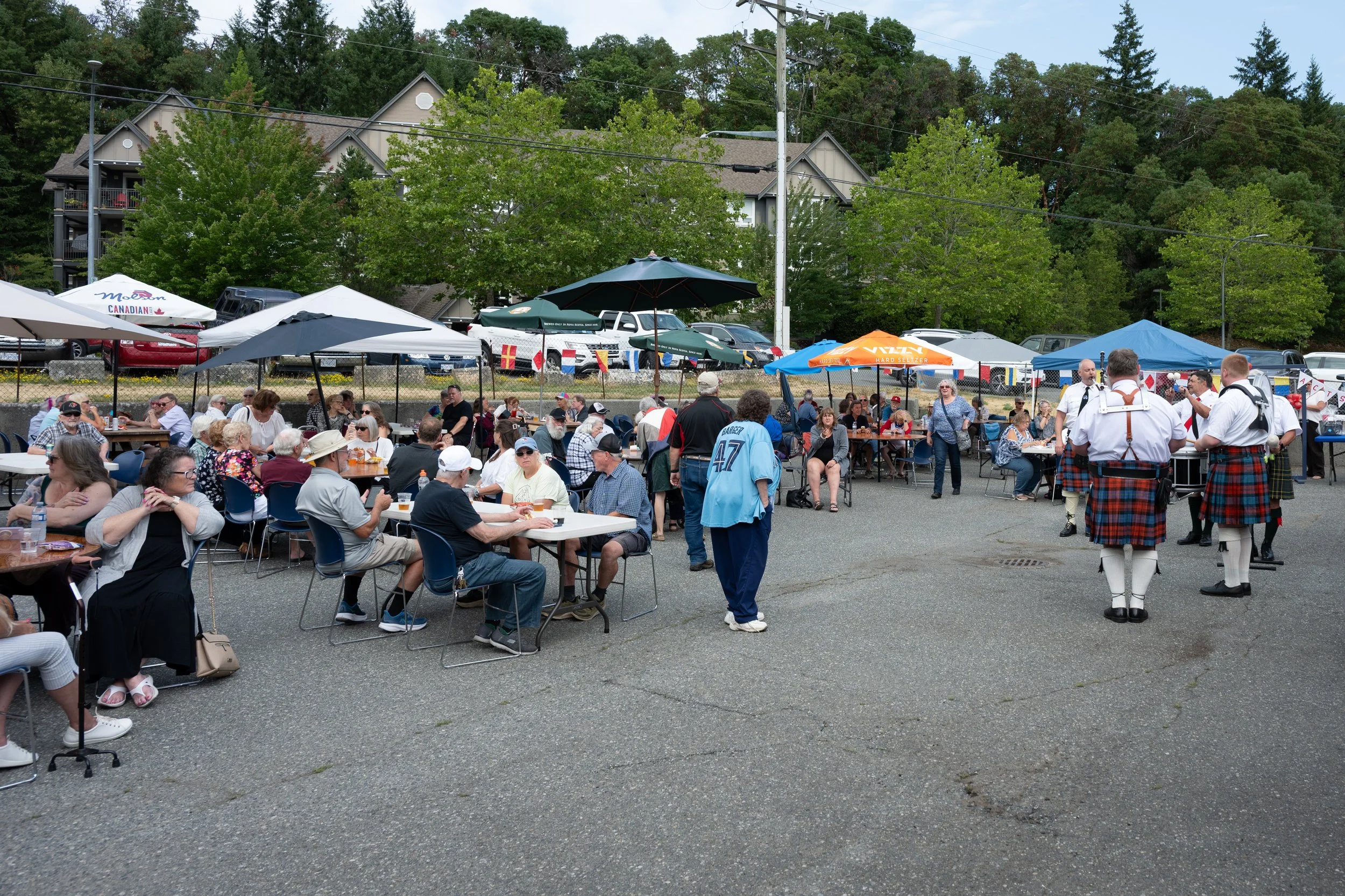
BBQ goers at Mt. Benson Branch 256. (Nadia Fontaine / CHLY 101.7FM)
The sun was shining, hot dogs were on the grill, and 50/50 tickets were being sold at the Legion’s 100th anniversary barbecue at their Mount Benson 256 branch on July 18th. Anniversary events for the Legion were held at branches all across Canada, honouring the sacrifices of veterans from the First and Second World Wars and other conflicts through to today.
Amidst the celebrations, the Legion is facing a sharp decrease in membership. Down to approximately 270,000 members from over 600,000 in the 1980s, the last high point after a previous decline in membership after the Second World War.
Legion 256 Vice President Lewis Forth spoke to the history of the Legion in Nanaimo and Lantzville and responses over the years to declines in membership.
“Into the '70s and '80s, we started losing a lot of our members from the First World War veterans. They were passing on. Then again, the Second World War veterans and the Korean veterans were also starting to pass on, or they were getting to the age where they weren't as much involved in the Legion anymore,” said Forth.
Forth said the Legion ultimately had to make a decision to keep the branches running. In the mid 80s, membership was opened to veterans’ spouses, often windows. It also allowed relatives of veterans to become associate members. He explained further efforts to keep membership up.

Lewis Forth at the Legion BBQ for Mt. Benson Branch 256. (Nadia Fontaine / CHLY 101.7FM)
“Then we also brought in the affiliate members, which is anybody that is a member of an, … allied country, not necessarily, a veteran or related to a veteran, but an allied country, a friendly country can also join. You just have to be 18 years old, of age or older sort of thing. At one point, I think we had a youth membership as well, but I can't find any information on that.”
Forth also shared that Branch 256 was a breakaway branch that formed in 1956 from Branch 10, located in Nanaimo’s Harewood neighbourhood. Forth said this came from some disagreements around membership and who was considered a veteran. Another rift came in the 80’s when memberships became more open to family members of veterans.
“When we started opening it up in, in the '80s there, that, that ticked off a lot of members because they didn't think that was, that was a, an appropriate move sort of thing,” said Forth. “But if you look at the flip side of it, … we're losing branches. If we can't operate a branch because we don't have enough veterans. For example, the first branch that I joined was 156, and there was only eight veterans in the community.”
Despite this, the makeup of the Legion has shifted over the last century, and Forth touches on the involvement of women, a change from the early days.
“We got a lot of women involved. As a matter of fact, I'm also on the honours awards committee, so we're—every year we do an honor and award to recognize the volunteers for what they do within the branch,” said Forth. “I'd probably say about 75% of the volunteers that we were honoring were women. … So yeah, there's, … quite a balance flip there. From back in the old dark ages where it was always male dominated. … Our executive I think is about 50/50,” said Forth.
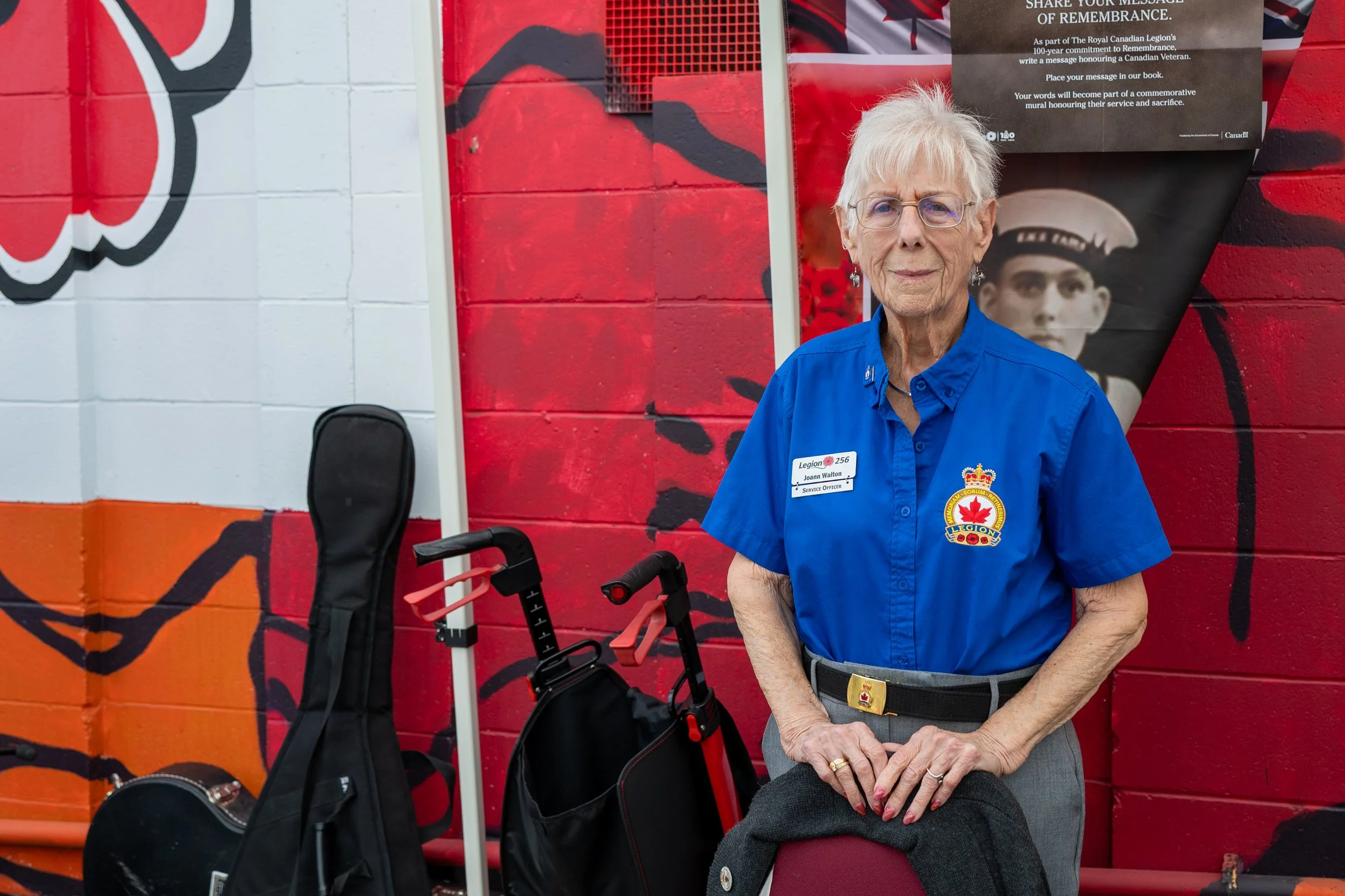
Joann Walton is a service officer for Mt. Benson Branch 256. She’s concerned about the future of the Legion. (Nadia Fontaine / CHLY 101.7FM)
Since its beginnings, the Legion has made many changes. The Legion was formed from multiple smaller groups advocating for veterans care and benefits after the First World War, forming the Legion. The Legion’s purpose was to advocate for better support for traumatized and ill veterans returning home. Advocating for veterans first and foremost, the Legion opened its membership to families and supporters in 1982. Since 2014, the Legion has been working to redefine what a ‘veteran’ is, with branches such as Mt. Benson including RCMP and peacekeepers in their definition. Joann Walton, Legion Service Officer at Branch 256 explains.
“A lot of people don't realize that, the people that serve on the UN peacekeepers, that's a misnomer because we lost people in the peacekeeping, and I almost lost my husband in Cyprus. I don't have the stamina to do the work itself, and we need to get the word out there that, we recognize you all. Some branches still don't. … That's the bad part. But this branch here recognizes every person once they join the armed forces. They're a veteran in our eyes,” said Walton.
Joann Walton acts as a service officer at the Mt. Benson location. Service officers help veterans acquire disability, housing and appeal hearings. Even with the celebration of the Legion’s 100th anniversary, she is apprehensive about the future of the Legion.
“For the veterans, we can't seem to entice them to join, and they don't know, especially with my job as service officer, what I can help … veterans with and it's to try to get them to come in that door, and that's where we're really falling down on,” said Walton.
With membership in decline again, the Legion has been responding to this low number in a variety of ways such as offering new members their first year free. Nationally, diversity has also been top of mind with the Legion resolving to be a more inclusive organization, committed to equity, diversity and inclusion. In 2019 they banned branches from affiliating with groups that promote hatred.
In their EDI statement they say: “The philosophy that ‘a Veteran is a Veteran’ must be clearly understood to include the statement ‘regardless of age, ethnicity, race, nationality, disability, economic status, gender identity, sex and sexual orientation.’ This will ensure that all Veterans and non-Veterans will know that they are supported and served by The Royal Canadian Legion regardless of their association with any equity-deserving group. This is the future of The Royal Canadian Legion.”
The Legion, nationally, has also worked to better recognize Indigenous Veterans and reconcile difficult history. Forth touched on this.
“When you consider the, during the First and Second World War that 20 to 30% of male Indigenous men of age volunteered to fight for a country that didn't even recognize them. And after the war was over, they went back to not being recognized, and it was years later before they even got the vote.” [Forth]
The right to vote in federal elections for status Indigenous people did not come until 1960, 42 years after the end of the First World War. Forth says that the Legion now offers pins honouring Indigenous veterans, and that they have tried to involve Indigenous veterans at their branch.
Nanaimo Mayor Leonard Krog was at the barbecue with Lantzville-Nanaimo MLA George Anderson. Krog shared what he hopes to see for the next 100 years of the Legion.
“I trust and expect that the Legion will still be with us and a very important part of every community in which there is a Royal Canadian Legion,” said Krog. “You will find in many small communities, it is the, … center of, community help, … the center of community generally. It is where people gather, and it's the organization that often promotes various causes or, … responds to various challenges in every community.”
While the future of the Legion isn’t clear, veteran advocacy will remain a central mandate to their organization.
Funding Note: This story was produced with funding support from Canada Summer Jobs, and our supporters. Support our nonprofit newsroom with a donation today.
Newsroom Ethics • About our Newsroom • Report an Error • Corrections & Clarifications