
SPCA summer camp not just fun for kids, but impactful for animals
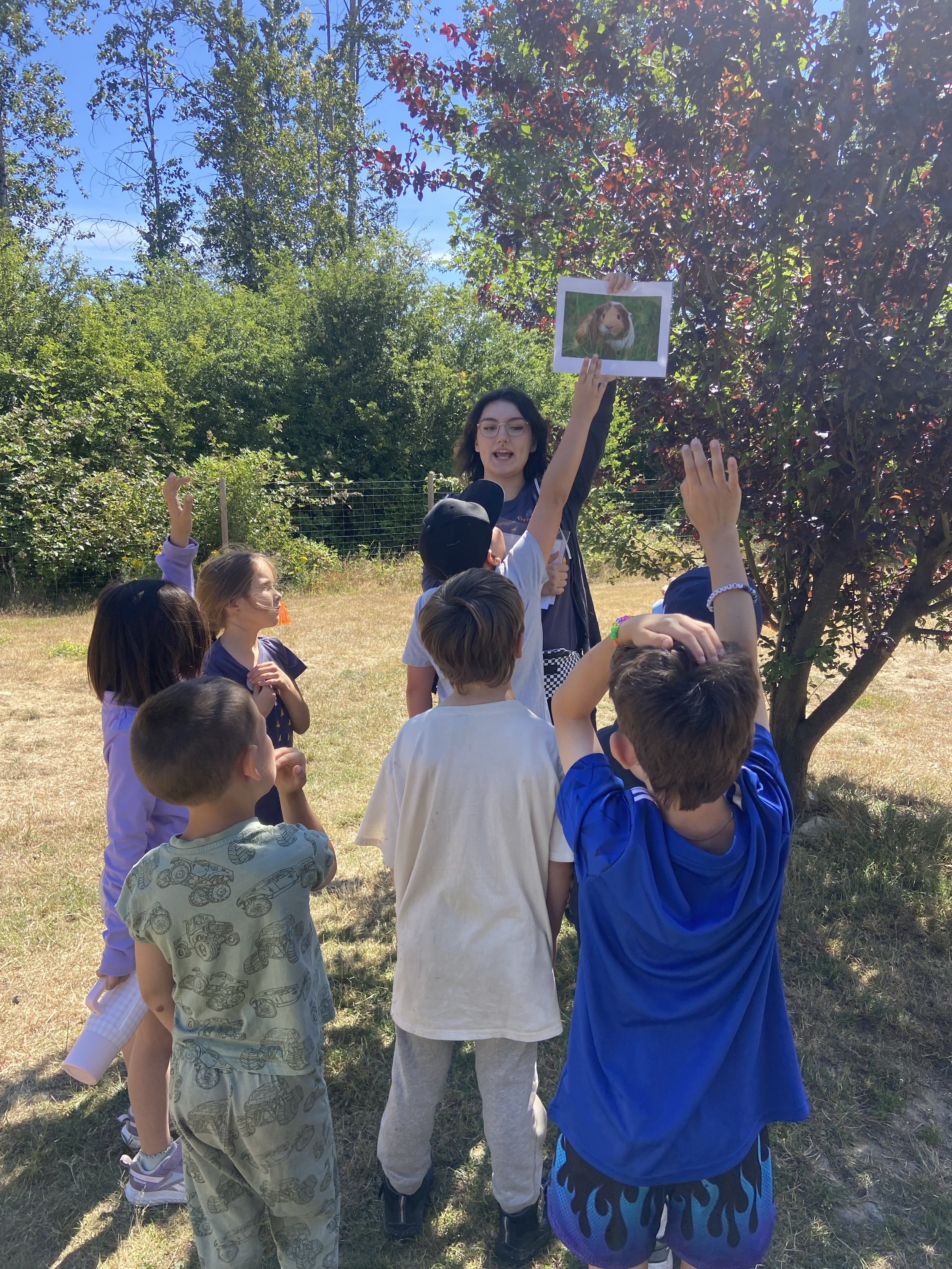
Hands up for the Guinea Pig. (BC SPCA Nanaimo)
Nanaimo’s SPCA’s summer camps are teaching the youth about animal life.
It started with only a few summer camps in the early nineties, and has since evolved into 10 major cities offering summer camps across B.C. These camps, for ages six to 14, allow for children to gain knowledge on animal care and how to coexist with companion animals and wildlife. All of this is packaged with fun activities to keep the youth engaged.
Paige Quinn, is one of the staff members at the BC SPCA in Nanaimo who works in the humane education department.
“The whole goal of summer camp is to teach kids about how animals and people can thrive together. And so it entails a lot of activities, games, crafts, um, that all teach kids about being kind to animals, [and] empathy for animals,” said Quinn. “We talk about the work we do at the SPCA, but it's a lot of learning kind of hidden throughout our games and activities. Um, so also when the animals are seeking interaction, we do spend time with them, so a lot of visits with cats or smalls like guinea pigs or whatever we have in our care. And we have guest speakers who come as well to kinda expand their learning.”
Quinn helps coordinate the summer camps and their curriculum. The camp focuses on activities that help teach youth empathy towards animals, their care, and how to coexist with them, whether they be companion pets like cats or dogs, or outdoor wildlife such as raccoons and deer.
Most of the activities in the camp focus on the internationally recognized five freedoms for animals.
“BC SPCA believes all animals should enjoy at least five essential freedoms. So freedom from hunger and thirst, freedom from pain, injury, and disease, freedom from distress, freedom from discomfort, and freedom to express behaviours that promote well-being. And so we break it down with kids through games and activities,” said Quinn.
The BC SPCA website also highlights another goal of the camp: “wanting to leave kids feeling more knowledgeable about animal issues and more empowered to make a difference”.
Quinn said that each year the organization makes sure that the curriculum is up to date and makes changes accordingly: “We're definitely doing our best each year to modify what we're teaching to be very inclusive, um, in terms of, like, best practices and language, um, staying current, you know, with, um, the best language and practices to use with, um, anything related to animals because it's kind of an evolving field, we find.”
Quinn also expressed how important it is to the organisation to be as accessible as possible when it comes to the summer camps, offering bursaries and financial assistance to low income families. They also offer virtual sessions for those who don’t have immediate physical access to one of the locations that is offering the program.
The camp also has a whole week specifically for neurodivergent youth. These groups have smaller group sizes along with more staff members for extra support with the options for youth to bring a support worker or parent with them if they need it.
“What we do is we decrease the number of kids who can attend that camp just so that our staff-to-participant ratio can be better. So for example, this past week, we ran a three-day full-day camp for neurodiverse kids. We had eight kids, four staff, a volunteer, and then I'm there as backup. We have a little bit more time in between activities for decompression time. We have a slow start, so making sure kids have that time and space to decompress and feel comfortable in the space, just because it can be harder with some transitions sometimes. We're keeping most of the activities the same because they're all filled with learning and fun,” said Quinn.
The results and impact from this summer camp can be seen on multiple levels. Quinn expressed how teaching the children helps, in turn, inform adults on how to care for animals and how knowledge is being transferred.
“We do see an impact for sure with the kids teaching their adults. For example, after our camp is done, some of the kids take their adults into our center and go say hi to the cats, and I'll overhear the kids saying, ‘Mom, you have to let the cat come to you. You can't go in its space.’ So there's little things like that that show our programs are helping kids and adults learn, which is really great.”
The summer camp also touches on advocacy for animals. For example, educating the campers on exotic cat breeding, captivity, and trafficking that was happening within B.C. They emphasise how writing a letter to their local MLA or MP can aid in the creation of laws against this type of animal trafficking.
“Last year The SPCA was working on having a ban on captive breeding, transport, and future ownership of all exotic cats, including servals, caracals, leopard cats, ocelots, and other non-native, non-domestic cats. So we educated our kids about this campaign, and then our kids could choose if they wanted to write a letter to someone in power,” said Quinn. “And so that definitely made an impact with that decision in government. So it's cool. We're doing, you know, simple activities in camp, or we're doing activities like this that can actually help make an impact.”
When the summer camp is not in session, the BC SPCA and staff like Quinn visit schools to help educate children and youth about animal well being, what the organization is about, and to promote the summer camp to a new group of kids.
“I did about 90 school presentations this year in Nanaimo. All year I was promoting our summer camps. I was talking about the SPCA, discussing various topics in classrooms, so teaching kids about the work we do and sometimes going beyond that. And so that in-school promotion has helped teach a lot of kids about what we do, but also how to be a good companion animal owner.”
The BC SPCA will continue to offer these camps until the week of August 17th. More learning opportunities offered by the BC SPCA can be found on their website for those who may have missed the camp or are still interested in learning more about animal care.
And of course, the camps will be offered again next year for those who are able to wait.
Funding Note: This story was produced with funding support from Canada Summer Jobs, and our supporters. Support our nonprofit newsroom with a donation today.
Newsroom Ethics • About our Newsroom • Report an Error • Corrections & Clarifications