
City of Courtenay pauses Bear James Park Trail Project due to community concerns
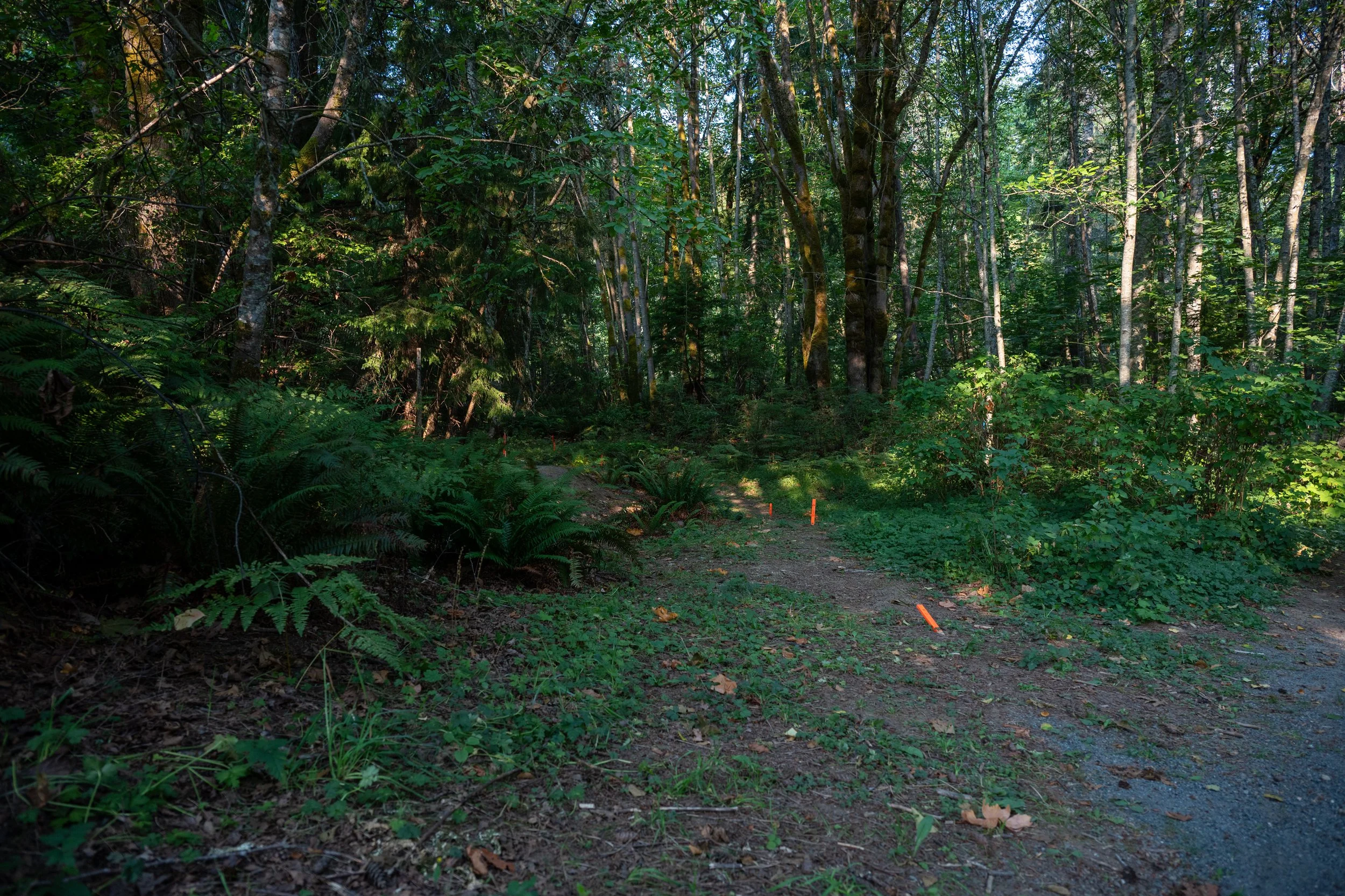
The proposed trail extension at Bear James Park. (Jeannie Lin / CHLY 101.7 FM)
A group of Courtenay residents is raising concerns about the City of Courtenay’s plans to build a trail extension in Bear James park.
“They’re building a road that’s unnecessary, and in building that road or pathway, as they like to call it, it is destroying the last, one of the last intact riparian zones in that park,” said Michele Roy, a local resident who was part of a group that gathered at Bear James Park on the morning of August 10th to protest the planned construction, leading the construction crew to stop work.
According to the City of Courtenay, the city planned to construct a 75-metre soft-surface trail to improve park access. The trail extension project was intended to connect to the existing trail network and provide access for infrastructure maintenance and emergency response.
Roy explained why building gravel roads can damage sensitive riparian zones.
“This is deemed by the City of Courtenay, it's deemed a sensitive ecosystem, and all sensitive ecosystems in Courtenay include freshwater springs, creeks, rivers, and of course riparian zones. Wetlands, low-lying floodplains, all those kinds of things. It's sensitive because there's fish habitat, there's spawning, salmon spawning and a rearing channel that goes through it. If there's graveled pathways near it, or any kind of sediment near those and the rain comes, that sediment goes into the streams and when the eggs are there, it can kill the eggs because eggs need oxygen. And if sediment comes from, into the stream from pathways, from too much activity around the riparian zones, those eggs can be killed,” said Roy.
She said that it’s very hard to bring back a riparian zone after it’s been damaged.
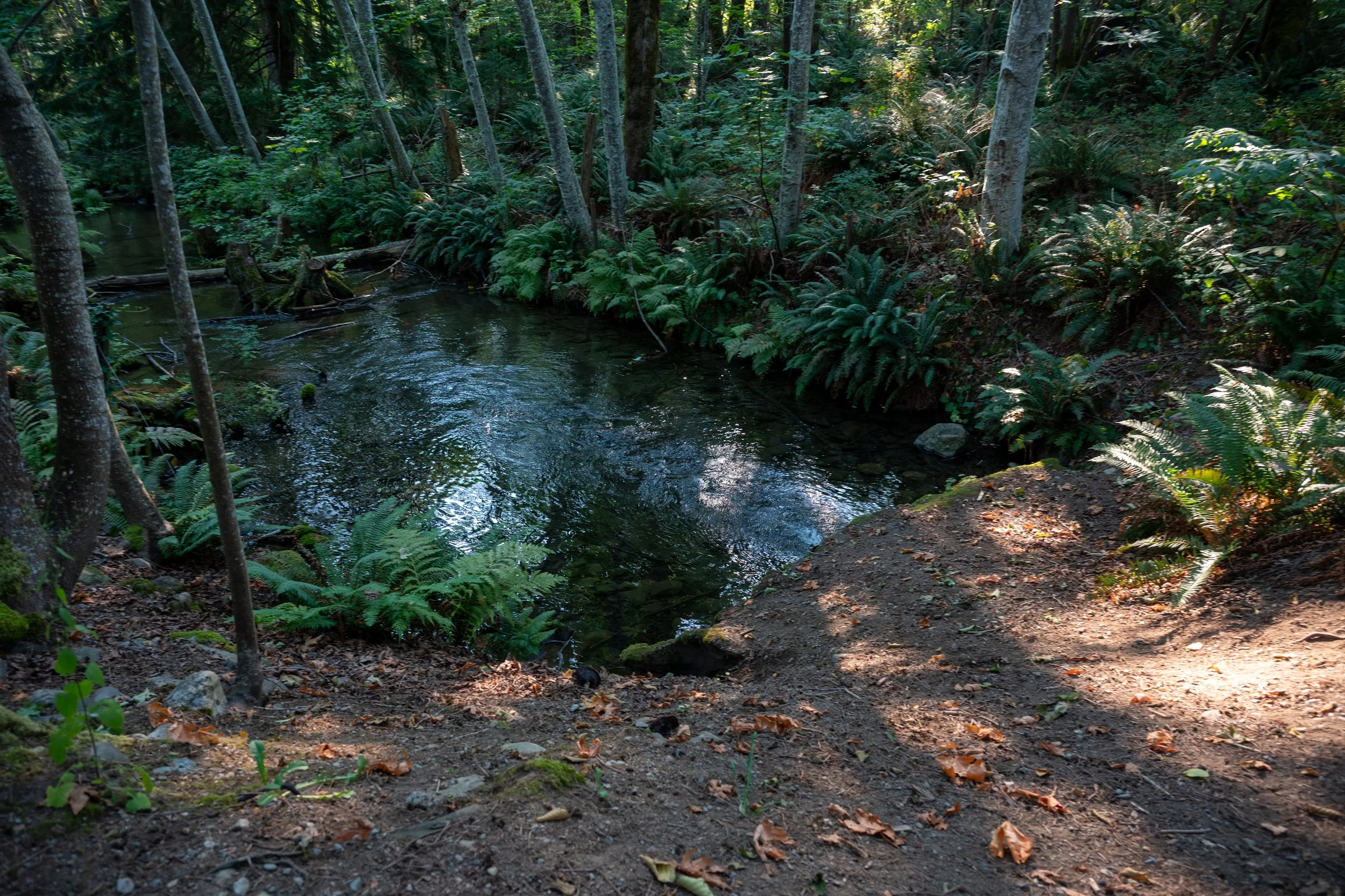
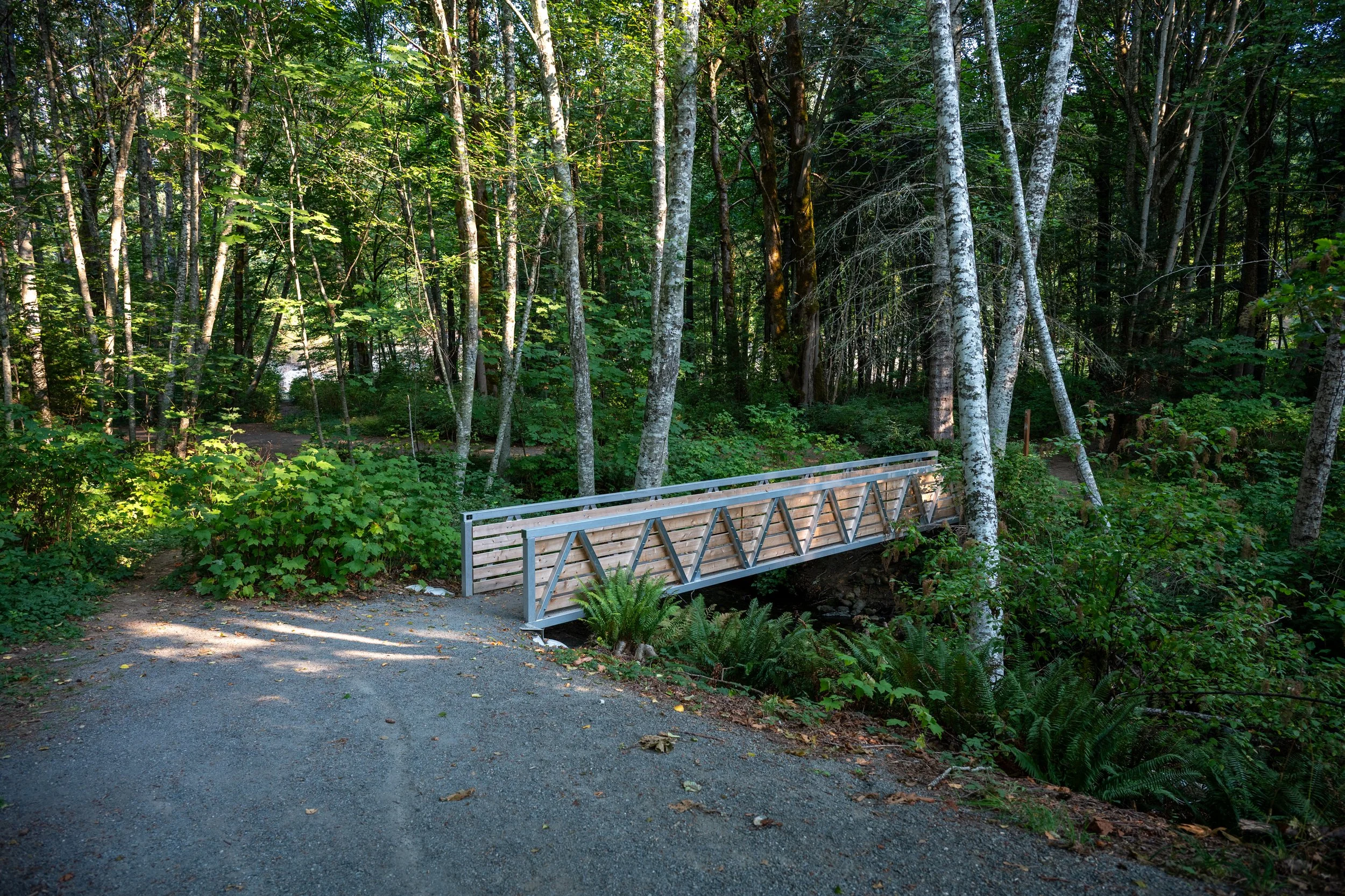
“The important thing to need to remember, as soon as you build a pathway, people come and use it, and the riparian zone gets damaged, not only from the building of this pathway or road, it's from the traffic that will ensue from having that pathway available near the spawning channel, the salmon spawning channel. So there needs to be barriers, there needs to be protection of that area,” said Roy.
Roy said that Bear James Park contains a part of the Jack Hames Side Channel, a vital part of the Puntledge River ecosystem, that has been recognized by the Pacific Salmon Foundation as a salmon-spawning destination.
She said that there is already an existing road that the city is currently using, from the nearby River Heights Church on Robert Lang Drive.
“There already exists a road right down from a church, a private landowner, and they have a road already that the church owner has already given permission for the city to use, and the city has used it on many occasions as well as BC Hydro and the fire services. We asked the city to delay the project and begin conversations with the River Heights Church,” said Roy.
Roy said that this project goes against the City of Courtenay’s Official Community Plan (OCP).
“I do wanna mention that's really important, is that this is part of the OCP plan, is to conserve and to mitigate, any development around these sensitive areas, and it requires a 30 metre setback from stream boundaries, any kind of build. They got, sure, they got an exemption from DFO to do this, but it's still not right. Just because you got a permit doesn't mean that it's right. The setback will impact, they're overriding their own rules on their OCP plan,” said Roy.
The City of Courtenay has since paused the trail extension project, in response to community concerns. The city will undertake a broader review of works within the park, and any plans for the park will be deferred to 2027.
Roy said that the riparian zone in the park has been damaged through the years, and the city needs to focus on projects dedicated to restoring the ecosystem.
“You know, a new fence needs to be put in. Some plant life needs to be restored there, and the fence to protect those plants so the traffic doesn't go down to the channel. Right now, pets and people are walking down to the channel looking and, you know, I mean, you get 100 people a week going through the park with their pets. They need to put a fence to help you know, allow that plant life that they will put there to allow it to grow and to take hold,” said Roy.
Funding Note: This story was produced with funding support from the Local Journalism Initiative, administered by the Community Radio Fund of Canada.
Newsroom Ethics • About our Newsroom • Report an Error • Corrections & Clarifications