
Grief Fire held at Vancouver Island University 10 years after toxic drug crisis declared
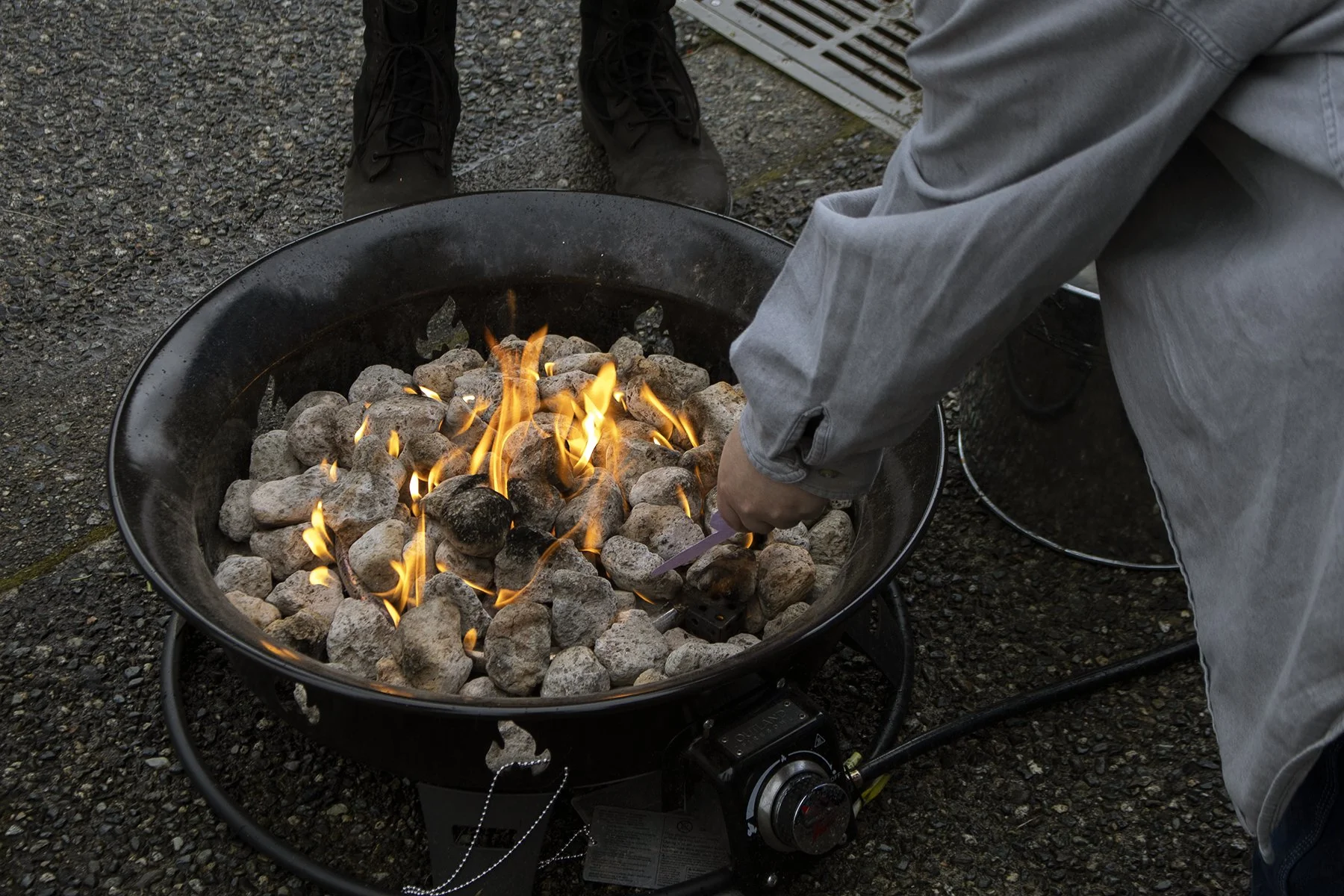
Lovegrove said they started hosting the Grief Fire on campus to expand people’s understanding of harm reduction and what it entails. (Lauryn Mackenzie / CHLY 101.7fm)
On April 14, 2016, the Government of British Columbia declared a public health emergency in response to the increase in toxic drug deaths happening across the province.
Between 2016 and the end of January, 2026, 616 people have died due to unregulated drugs in Nanaimo.
To reflect on this day and give space to those who have lost loved ones to the crisis, the Vancouver Island University Harm Reduction Alliance held a Grief Fire at the Nanaimo campus on Tuesday, April 14.
This was the second year the Grief Fire was held at VIU.
Participants were encouraged to write messages to lost loved ones, and release them to the fire.
“I know deeply, and I'm sure most people around this space do, loving someone who uses substances, someone loving someone who uses drugs, loving someone who has lost their life to toxic drugs, is an extraordinarily lonely experience, simply because of the stigma of substance use,” said Sarah Lovegrove, a nursing professor at VIU and a co-founder of the VIU Harm Reduction Alliance.
She told the crowd on the very rainy day that the Grief Fire is a space for people to come together to support each other.
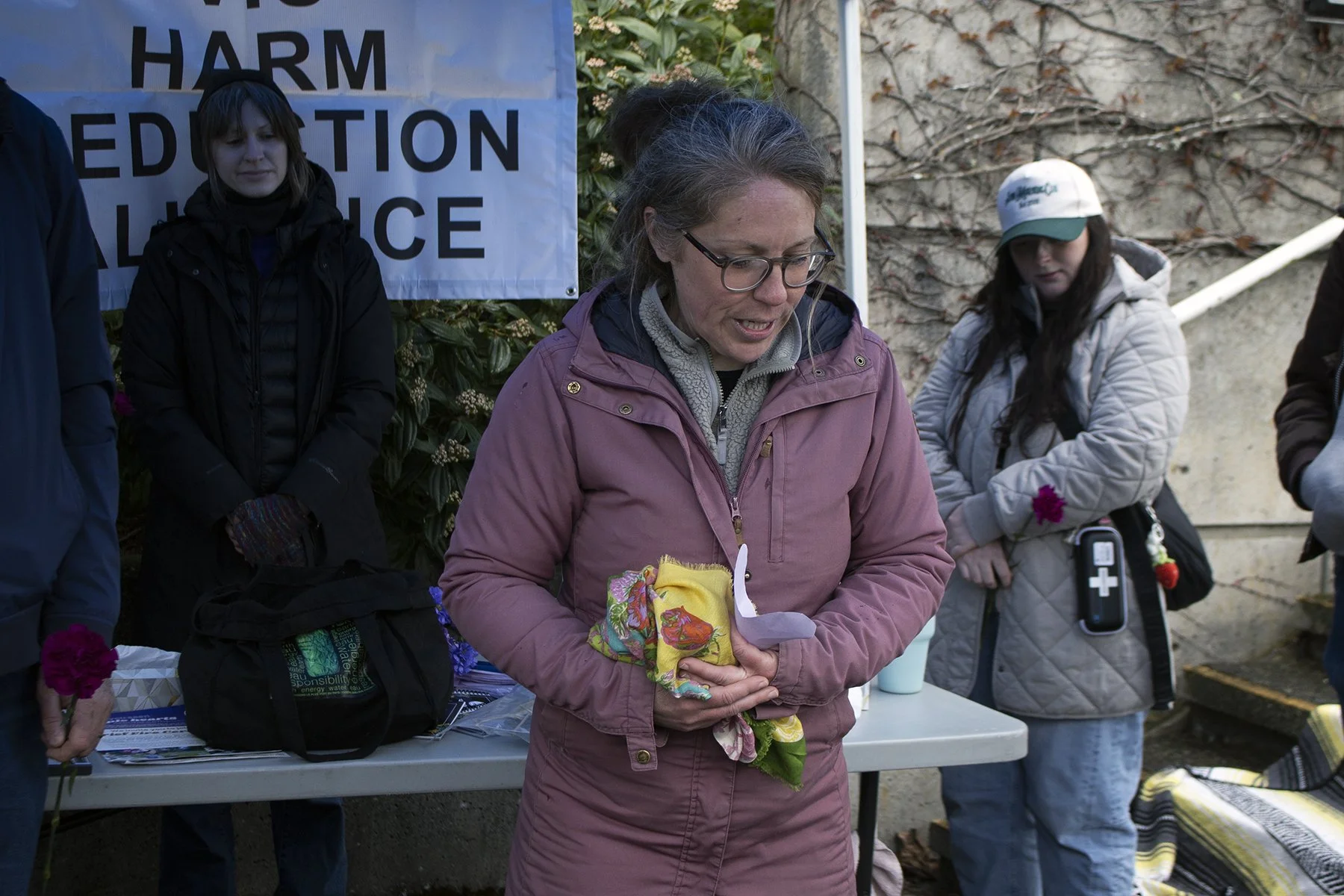
As someone who has been in harm reduction advocacy for eight years, she feels devastated with how the work of ending the toxic drug crisis has gone backwards. (Lauryn Mackenzie / CHLY 101.7fm)
“We really need to shoulder each other up and bring each other together in order to survive this crisis and become a community and recognize that many people in our community need support and need love,” Lovegrove said.
CHLY spoke to Lovegrove as people gathered around the fire.
She said as the toxic drug crisis hits its tenth anniversary, this year feels a lot heavier than previous years.
“I think both just being the 10th anniversary and simply all of the backwards movement that we're seeing in the harm reduction world, it's quite devastating and heartbreaking to see all the hard work that advocates have been doing for the past 10 plus years just get rolled back because of politics, because of misinformation and because of public opinion,” she said.
Lovegrove said they started hosting the Grief Fire on campus to expand people’s understanding of harm reduction and what it entails.
“We've been advocating to improve established harm reduction interventions and opportunities on campus,” Lovegrove said. “We really want people to know that harm reduction is a valid option and that people have the right to access harm reduction for their own substance use, for their families, for their friends, to keep them alive and keep them safe.”
As someone who has been in harm reduction advocacy for eight years, she feels devastated with how the work of ending the toxic drug crisis has gone backwards.
“The toxic drug crisis has only gotten worse because the implementation of the interventions that have happened have been partial, have not been well established, not well thought out, not what people who use drugs have been asking for and haven't worked in the way that they're supposed to work,” Lovegrove said. “Decriminalisation was not done properly, it was not done fully, and it was done in a way that was set up for failure. Safe supply, prescribed alternatives were not offered in the proper way, and because of public opinion and public outcry, we saw a complete reversal of those interventions.”
She said health care providers, advocates and people who use drugs have been calling for a movement in the direction of creating a regulated supply of drugs and establishing legalisation of substances. Something she said we are moving further away from.
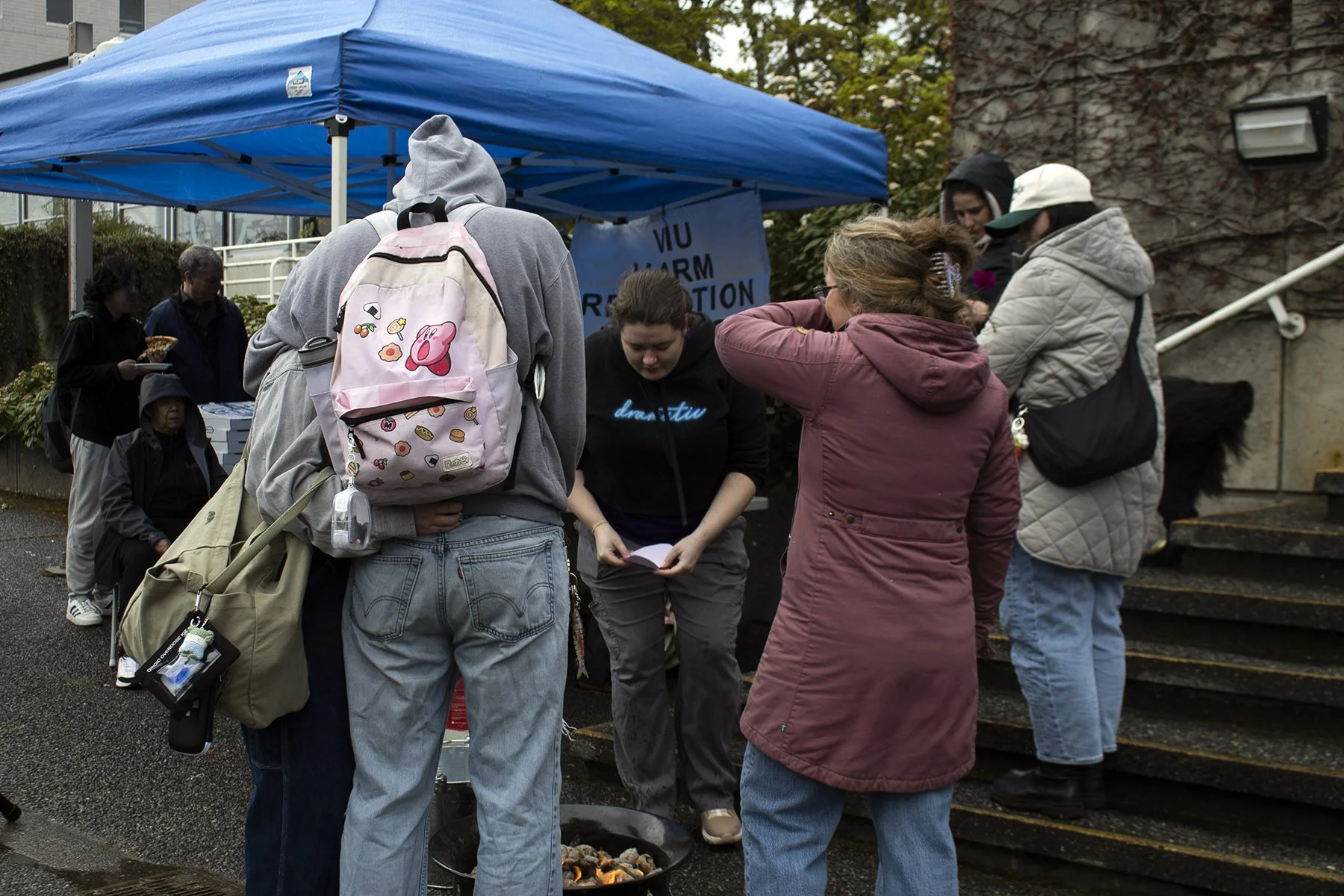
Between 2016 and the end of January, 2026, 616 people have died due to unregulated drugs in Nanaimo. (Lauryn Mackenzie / CHLY 101.7fm)
“As a result of that, the drug supply is only getting more toxic. So we're seeing more people die. We're seeing more people being injured,” she said. “We're seeing more complex overdoses causing trauma and responders, whether that's police, fire, peers, nurses, ambulance, everyone, not a single person in our community has been saved from impact as a result of this. So what we're seeing is a ripple effect of trauma and grief permeating our community.”
Lovegrove said she is unsure what to do now as she says she feels like politicians are not listening, while the crisis becomes more and more urgent.
“I'm a human being with a broken heart, and I don't know how to fight through that anymore. I think I fought for as long as I could, and now I need to take a moment to recalibrate and figure out how to move forward. I think a lot of people are there too,” she said. “Most people that I have been advocating and being activists with when I first started in 2018, they've either quit because of burnout, relapsed in their substance use, or died as a result of toxic drugs and or suicide.”
But as a nursing professor, she still has hope in the next generation of health care workers.
“I think there is an entirely new generation of people who have been impacted by this, lost parents, lost friends. An entire generation of young people who grew up at a time with it, they never knew a drug supply that wasn't toxic,” Lovegrove said. “So I think it is bolstering the next generation of people fighting for what's right and I hope that as those people come to an age of voting and creating change that we can turn the tides a little bit. But I'm going to keep digging into that hope as much as I can.”
Michela Brown is a psychology student and Hillary Nester is a social work student at VIU, who joined the VIU Harm Reduction Alliance to educate fellow students on the toxic drug crisis and harm reduction. CHLY spoke with them and fellow co-founder of the alliance and social work professor Carmen Lavoie during the fire.
Lavoie said as a harm reduction advocate she feels discouraged to see this crisis enter its tenth year.
“It's just so draining to see that as a community that we haven't really addressed this that just continues on, and every day people are dying and nothing's being done about it is deeply discouraging,” Lavoie said.
Brown said while they also feel discouraged, they see hope in a change with seeing people come out for the Grief Fire.
“I really appreciate everyone that showed up in the rain, and we're here to acknowledge the lives lost from the toxic drug crisis,” Brown said. “I am really encouraged by people around me right now because nobody had to show up. We're all a little cold and wet, but this has been a really good ceremony, and I hope that we can all celebrate and grieve together.”
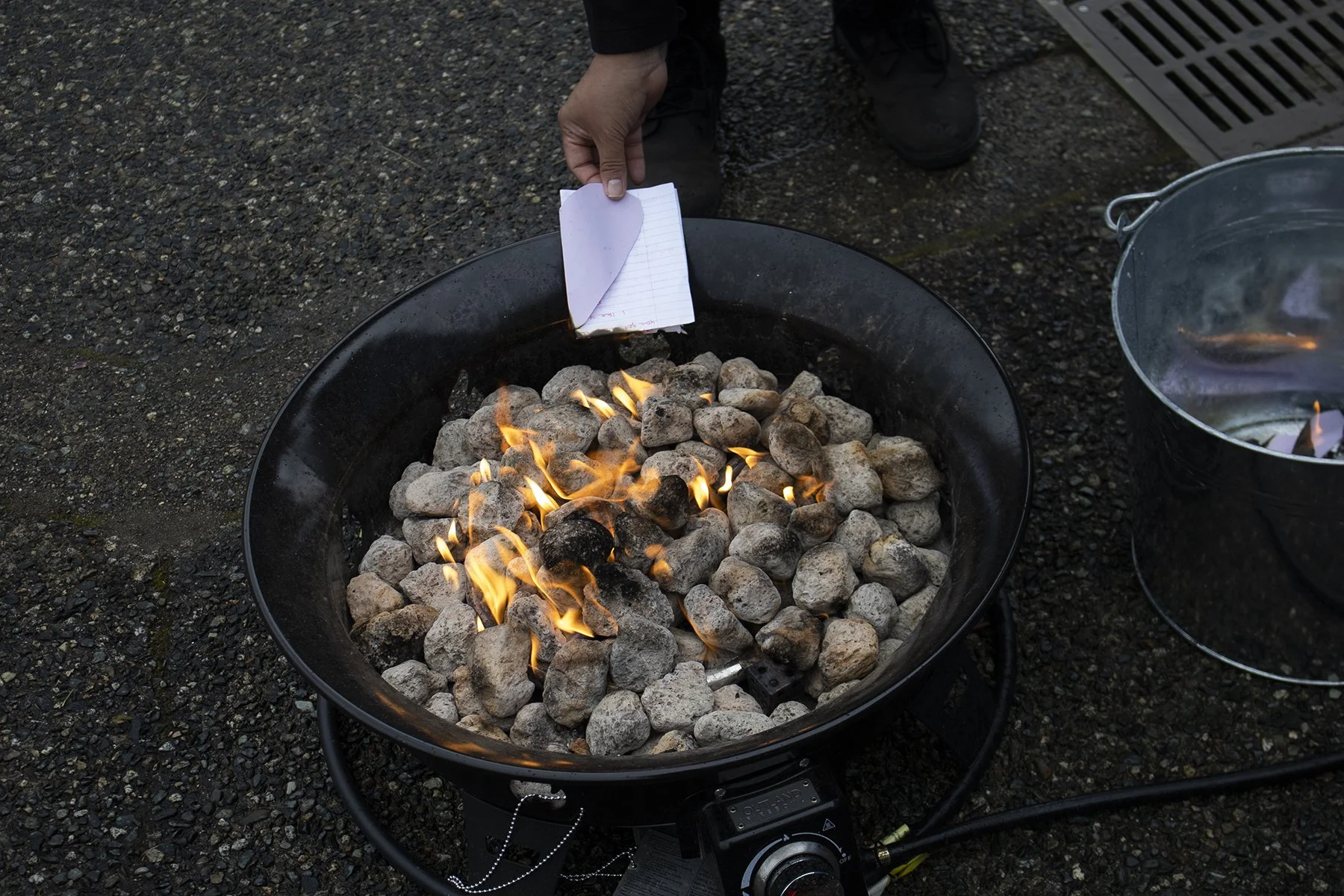
Nester, who is newer to harm reduction advocacy, said it is hard to not be angry with how everything has gone. They want to protect people from the toxic drug crisis. (Lauryn Mackenzie / CHLY 101.7fm)
Nester, who is newer to harm reduction advocacy, said it is hard to not be angry with how everything has gone. They want to protect people from the toxic drug crisis.
“There's been so much really great research and political activism happening over the last several years, and it kind of just feels like screaming at a brick wall,” Nester said. “So that's one of the reasons we decided to do this instead of any sort of political event, though it is political, just by virtue of being about drugs, is because we kind of need to focus more inwards now, maybe because people are burnt out.”
As the three are prepared to continue advocating in this space, Lavoie said she does this work as it's important that the toxic drug crisis and the deaths caused by it, are not normalized.
“People don't even realize this is an issue that we need to keep bringing these issues to the forefront as best we can so we don't become complacent,” Lavoie said. “I think to challenge the stigma too, because I believe that that's what underlies it all, is stigma. So I think this is the best way we can do it is to gather publicly, because it kind of confronts those ideas of stigma.”
As a professor, Lavoie also said she sees hope in the students she teaches who are better educated and interested in harm reduction.
Nester said what needs to be done is a major shift in public opinion, something they believe is happening.
“The political side, it's not getting better anytime soon, but I do think the public opinion is shifting. I think that the media coverage I've seen in the last six months of the toxic drug crisis, people are becoming more aware of it,” Nester said. “Harm reduction is definitely becoming more normalized, just because people know. So that's my hope is that even if things are very slow to change politically, if they're going even if they're going backwards, that people will start to care.”
Since the start of the public health emergency in 2016, more than 18,000 people have died in the province due to the toxic drug crisis.
Funding Note: This story was produced with funding support from the Local Journalism Initiative, administered by the Community Radio Fund of Canada.