
Cyclists take to the streets for Critical Mass in Nanaimo
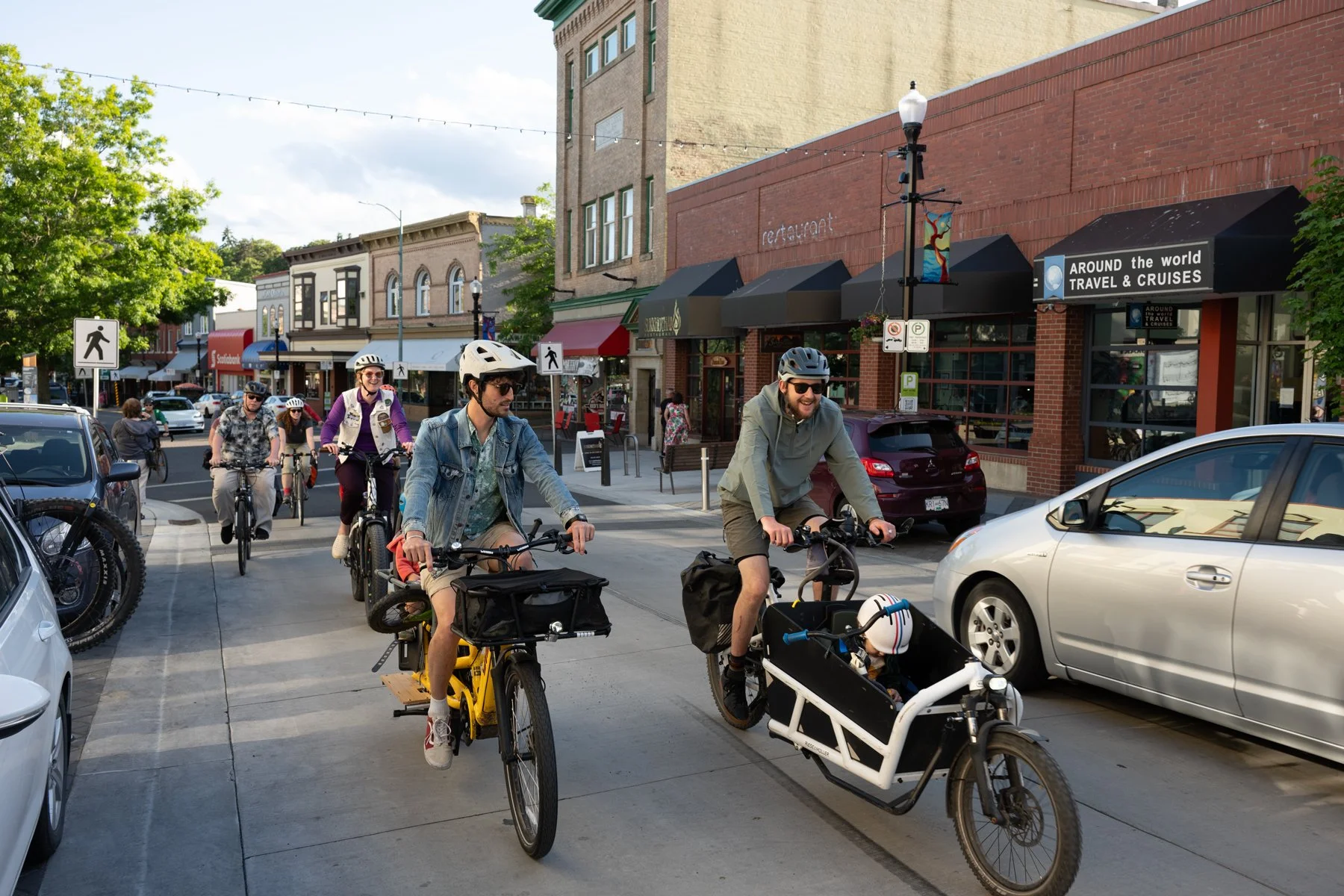
The Critical Mass movement started in the 90’s in San Francisco as a protest and way for cyclists to meet each other and ride safely in solidarity. (Jesse Woodward/ CHLY 101.7FM)
Around 50 cyclists took to the streets around Nanaimo's downtown Friday evening to spread awareness for rider safety.
Cyclists met at Diana Krall Plaza before riding around the downtown and Old City Quarter areas as one big group focusing on streets that lack proper cycling infrastructure in a movement called Critical Mass.
The Critical Mass movement started in the 90’s in San Francisco as a protest and way for cyclists to meet each other and ride safely in solidarity.
On Friday May 29, the first community-run Critical Mass bike ride was held in Nanaimo since before the pandemic.
“I have always lived in very bike-centric cities, and when I moved here five years ago, I essentially stopped riding my bike because of fear. It felt scary here, and I was looking for other cyclists, and I just recently, in the last couple years, started commuting again by bike, and that inspired me to create a community around it,” said Raquel Douchant, an avid cyclist in the community who rides daily for commuting and errands.
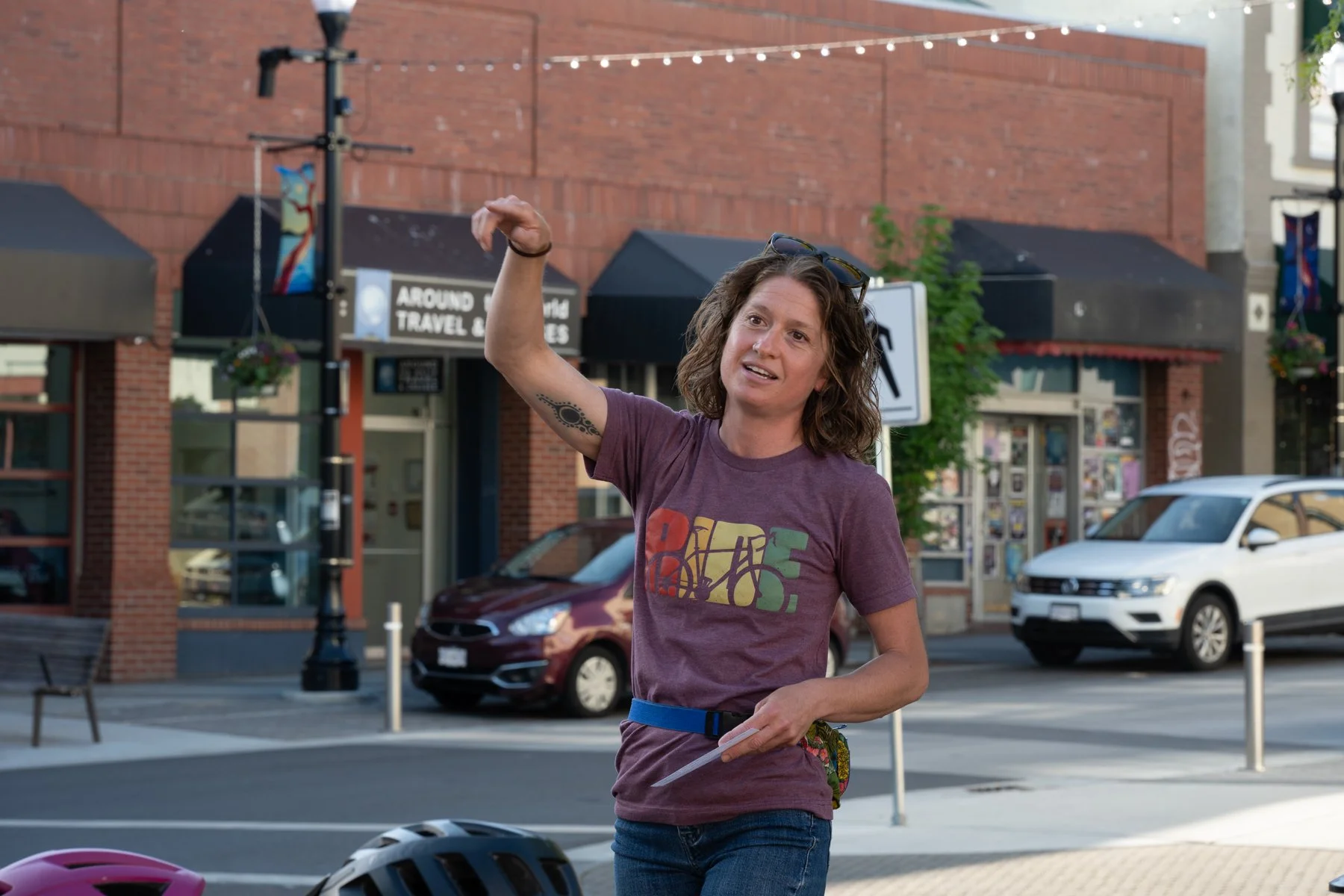
Douchant (pictured) brought the Critical Mass movement back to Nanaimo as a way for other cyclists to make some new friends and bring visibility to how big the cycling community is in the city. (Jesse Woodward CHLY 101.7FM)
She brought the Critical Mass movement back to Nanaimo as a way for other cyclists to make some new friends and bring visibility to how big the cycling community is in the city.
“I actually see new bike lanes going in and infrastructure coming in all the time. It's coming, it's coming slowly, and that's totally normal,” Douchant said. “My hope is to maybe train the motorists how to behave around cyclists when there isn't infrastructure in place.”
Erica Mackinnon has been regularly riding her bike for almost five years now. When she moved to Nanaimo less than two years ago, she found cycling to be a bit nerve-racking with the lack of protected bike lanes in some areas and the speed of motorists.
“Riding on Bowen [Road] was a little scary. There definitely needs to be more protected bike lanes and better biking infrastructure,” Mackinnon said. “There are clear signs that show sharing the road with cars and bikes, but there's no bike path at all, and there the cars get so close to you. It's really scary.”
She said there need to be more protected bike lanes in the city.
“I had cars going so close to me, even though there are signs that clearly said it's a shared road for bikes and cars,” Mackinnon said.
In 2024, the Government of British Columbia added new rules to the Motor Vehicle Act where drivers must keep a one metre distance from cyclists when passing. The limit increases to 1.5 meters when the speed limit is above 50 km/h.
“I’m here to advocate for better bike infrastructure, better visibility of cyclists on the roads, and you know we also belong on the roads,” Mackinnon said.
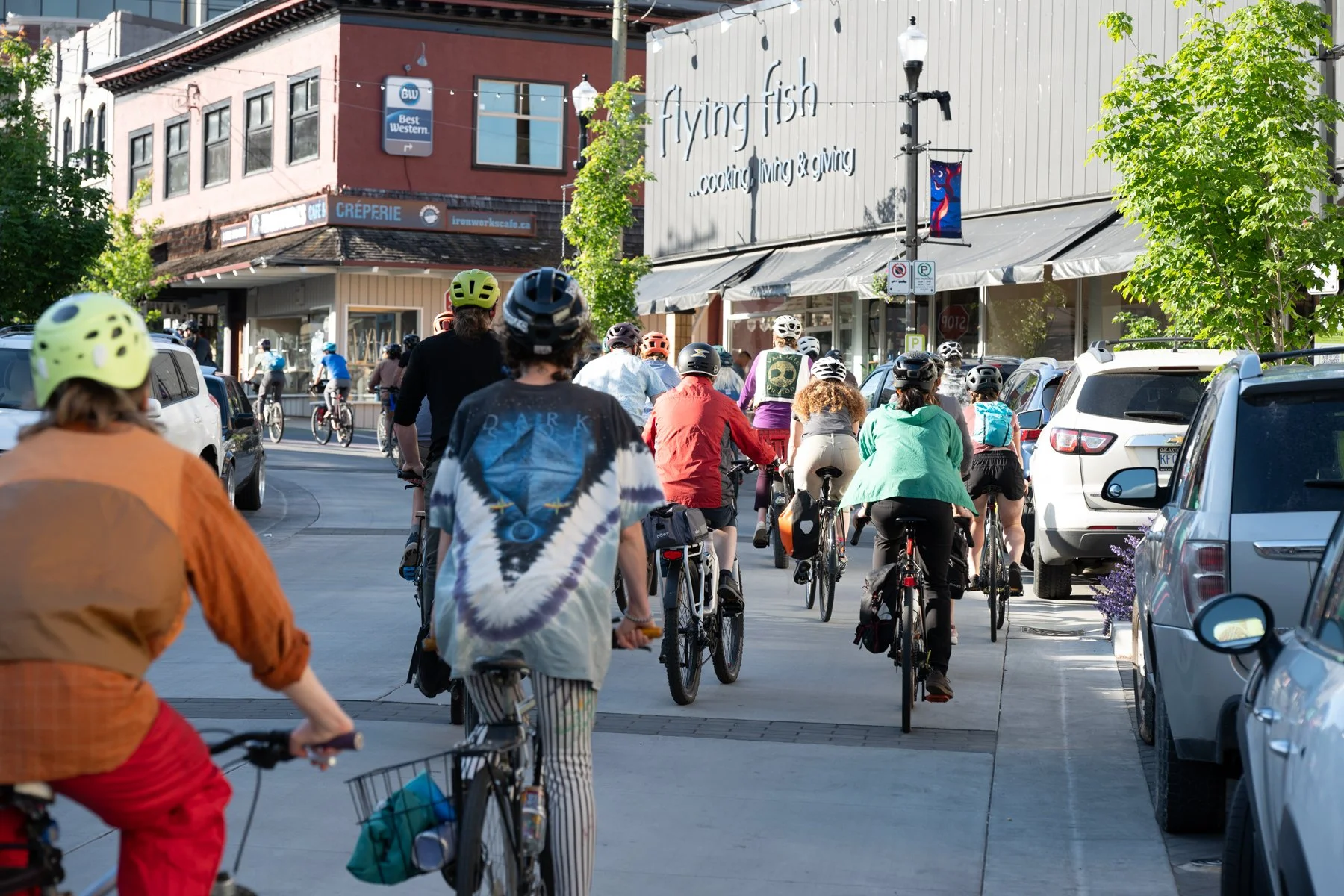
Nanaimo’s Critical Mass saw 50 people participate in the ride on May 29th. (Jesse Woodward / CHLY 101.7FM)
Levi Hildebrand attended the bike ride with his toddler Frankie who rode along on Hildebrand’s cargo eBike.
Hildebrand has ridden for over 25 years. He said once you ride with a child, the roads look a lot different.
“You realise that from a car's perspective, children are very hard to see, so your vigilance towards street design goes up in a pretty dramatic way,” Hildebrand said.
He explained his family is ‘car light’ meaning they have one vehicle for the whole family and use the cargo bike as a secondary vehicle.
He said his family does a lot of commuting and errands by bike around Nanaimo and bought the cargo bike so they can continue to bring Frankie with them.
“I'm definitely choosing my routes more carefully when I have Frankie on the back with me,” Hildebrand said. “It's just something you have to consider, because drivers in Nanaimo are not accustomed to bike traffic, so I will choose routes that go in less traffic to areas when I have the kid on the back with me.”
Also in attendance for the ride was Nanaimo City Councilor, Hillary Eastmure.
“I brought a bike with me to Nanaimo when I moved here in 2013 I did the Tour de Roc in 2015 so I haven't topped that number of kilometres in many years since, but this year I got my road bike back on the road, and it's fun to be out and about in Nanaimo,” said Eastmure.
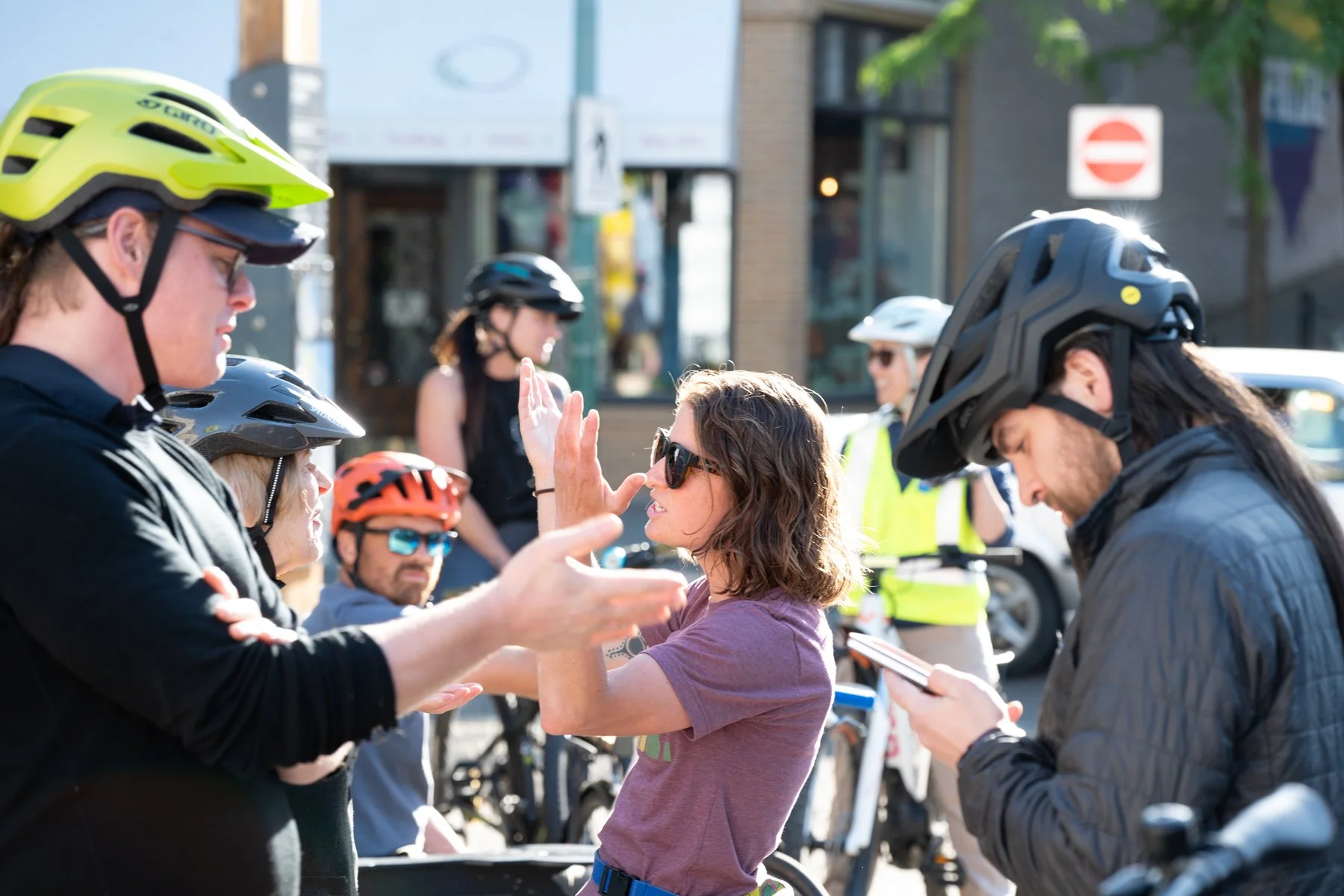
Following along with the wider Critical Mass movement, the local rides in Nanaimo will happen the last Friday of each month leading up to October. (Jesse Woodward / CHLY 101.7FM)
She said she mostly rides her bike around her neighborhood but is wanting to try out cycling to council meetings and community events.
She said she would like to see people be able to get from one end of Nanaimo to the other on a protected bike lane.
“I really appreciate the safe cycling infrastructure that we have in a few areas of the city, and I'm looking forward to working on connecting those,” Eastmure said.
Outside of adding more infrastructure, Eastmure said education is a critical part of keeping riders safe.
“I think education for drivers, I think education for cyclists as well, because we see certainly bad behaviour from all kinds of folks on the road on all types of wheels,” Eastmure said. “I think it's about playing it safe, looking around, keeping your eyes up, and understanding that everyone needs to get to where they're going safely, and people on bikes are the most vulnerable. So cars would do well to kind of look out for folks and be good, safe neighbours.”
The next ride will take place on June 26. Following along with the wider Critical Mass movement, the local rides in Nanaimo will happen the last Friday of each month leading up to October.
More information of where the next ride will take place will be posted on the Nanaimo Critical Mass Instagram @criticalmass.nanaimo.
With files from Jesse Woodward.
Funding Note: This story was produced with funding support from the Local Journalism Initiative, administered by the Community Radio Fund of Canada.