
Eco Team in the Comox Valley sorts event litter out
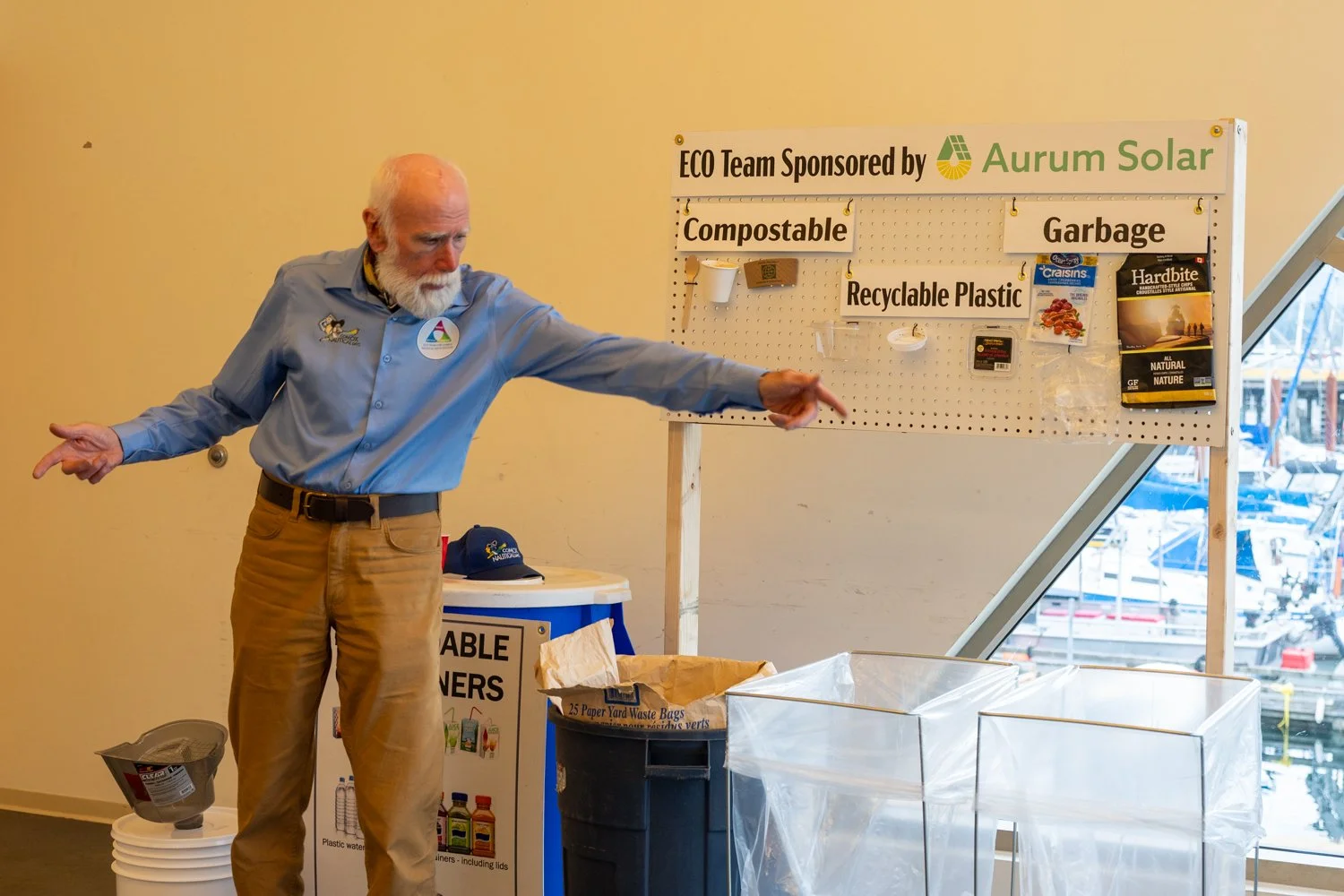
Bowen showcases each station, which include dedicated containers for liquids, compostable food waste, cans and paper, recyclable plastics and garbage. (Jeannie Lin / CHLY 101.7FM)
Community events often bring large volumes of people together, but they can also generate a lot of waste. Comox Nautical Days is one such event, featuring family-friendly activities, live music and food, while attracting thousands of visitors each year. The event has run since 1958 at Comox Marina Park, during B.C. Day long weekend. Facing the waste from the event last year, Bob Bowen volunteered as a member of the Nautical Days Green Team, sorting through trash to eliminate as much waste as possible from the landfill. He encountered challenges with handling waste management.
“We volunteered, when we got here, we discovered there was not really a system to deal with the waste so we tried to wing it. There was three waste streams here last year. One was the town had their own waste stream, and it went to the dump. And then the vendors had another waste stream that went to the dump as well, all unsorted. Whereas we were tasked to deal with mostly food vendor waste, and we had different depositories, compostable and recyclable plastic and garbage. So we stood there in front of these bins and tried to direct people to the right bins, but it was very challenging because there was signage, but it was confusing. It was not absolutely clear on where things should go and it was challenging,” said Bowen.
Last year, Bowen founded the Nautical Days Eco Team, composed of some former members from the previous Green Team. The Eco Team has been recruiting volunteers since then to help with this year’s waste management.
In preparation for this year, Bowen designed a series of waste disposal stations to make waste sorting easy for attendees. Each station includes dedicated containers for liquids, compostable food waste, cans and paper, recyclable plastics and garbage. Each container is labeled with examples of the types of waste that belong inside. There will be approximately six stations, and two volunteers are at each station throughout the days.
“So what I tried to do this year is get more people, more volunteers, and what I call intuitive signage. So in front of all the bins will be, they will be labeled, and all the various material that a person is likely to be holding will be directed to that specific bin,” said Bowen.
Last year as the Green Team, Bowen and two other volunteers faced challenges handling the massive volume of waste that was disposed of inappropriately.
“Well, it was very hard last year. We did a lot of handling of it. We were dumpster diving and sorting, taking plastic out of compost and compost out of plastic. It was a challenge. It was a messy job. It was no fun. Not a fun thing to do to, deal with somebody else's garbage, right? So that's why I want folks to deal with their own garbage. They can place it away, and then it doesn't have to be touched again,” said Bowen.
Lindsay Cunningham worked alongside Bowen last year to eliminate waste. Since then, she has been recruiting volunteers to support this year’s effort. Organizers initially aimed to have 33 volunteers, each covering a three-hour shift. So far, two dozen have signed on.
“I'm very pleased with the number of volunteers we have managed to get so far. Anybody who has volunteered knows that it is very hard to find good, committed volunteers. So the number we have, I'm ecstatic about. I think we've got, for the most part, most of our shifts covered. You know, things happen. Everybody has, you know, things going on. We may lose a few or, you know, they might only show for one shift. To have extras would be great,” said Cunningham.
Bowen talked about why he thinks it’s important for Comox Valley residents to be mindful of their trash disposal behaviour.
“The landfill is filling up. It's filling up too fast, and there's too much inappropriate material going in there. Compostables should not go in there. It generates methane, which apparently is worse than carbon dioxide, so they've got to siphon that off and burn it off. And it's just filling up. And we're just gonna run out of space. We've got too much waste in the first place. So this is to me, a small token of what can possibly be done. And I'm hoping the town and the regional district can take a lesson from this and maybe expand on how it's getting done. I know there's apartments in town that don't have access to these, so all of their waste is going to a landfill. It's just filling up a big hole,” said Bowen.
According to Comox Strathcona Waste Management Service, on average each person in the region generates 551 kg of waste annually, compared to the provincial target of 350 kg per person. Cunningham said that one of the goals of the Eco Team is to enable the public to make good choices in dealing with their waste.
“I think getting the community on board, just having people take pause and see what we're trying to do. Kind of maybe then go back and say, ‘Okay, well, like I don't do that at home. Could I do this at home?’ You know, coming to the event with as little disposable garbage as they can, right? Like bring your own cutlery, bring your own napkins, that kind of thing, so that you're not having to use things that are gonna end up in the garbage or the landfill. I think it's just engaging the community. I think that that's gonna be a big thing,” said Cunningham.
Comox Nautical Days runs from August 1 to August 3 this year at Comox Marina Park. The Eco Team has a goal of reducing waste from the landfill by 50 per cent.
Funding Note: This story was produced with funding support from the Local Journalism Initiative, administered by the Community Radio Fund of Canada.
Newsroom Ethics • About our Newsroom • Report an Error • Corrections & Clarifications