
Local Chinese Canadian groups differ in views over what to do with last standing Chinatown buildings

Representing the foundation (pictured), Olivia Spiden, Sonja Ferg, Sherron Soo and Gina Lump, were in attendance at Monday’s council meeting advocating for the two buildings. (Luis Zablah / CHLY 101.7FM)
Local Chinese groups differ in views over recognition of two former Chinatown properties on Hecate St.
During Monday’s October 5th council meeting, the Nanaimo Chinatown Heritage Foundation presented a delegation seeking to have buildings located at 880 and 997 Hecate St. added to the City of Nanaimo’s Community Heritage Register. The foundation argued the buildings are the last two physical reminders of Nanaimo's Chinatown, which was destroyed by a fire back in the 60s.
Sherron Soo, chair of the Nanaimo Chinatown Heritage Foundation spoke to CHLY following the delegation about why the foundation is seeking recognition for the two buildings.
“ This area is not just about saving buildings. It's about the people who've lived here and who have family here and who have history here.”
The foundation’s delegation included historical research, supporting letters from architectural and academic professionals and a petition with more than 250 signatures. The delegation’s handout identified the properties’ former uses, including connections to Chinese immigrants and the Chinese Freemasons.
Soo explained the 1960s fire destroyed a majority of Nanaimo’s Chinatown, leaving only some buildings standing. She goes into detail about the Hecate buildings and their significance.
“These two last buildings still remain in Chinatown, and the only visible evidence of Nanaimo's Chinatown, so I think they deserve heritage protection and added to the heritage registrar.”
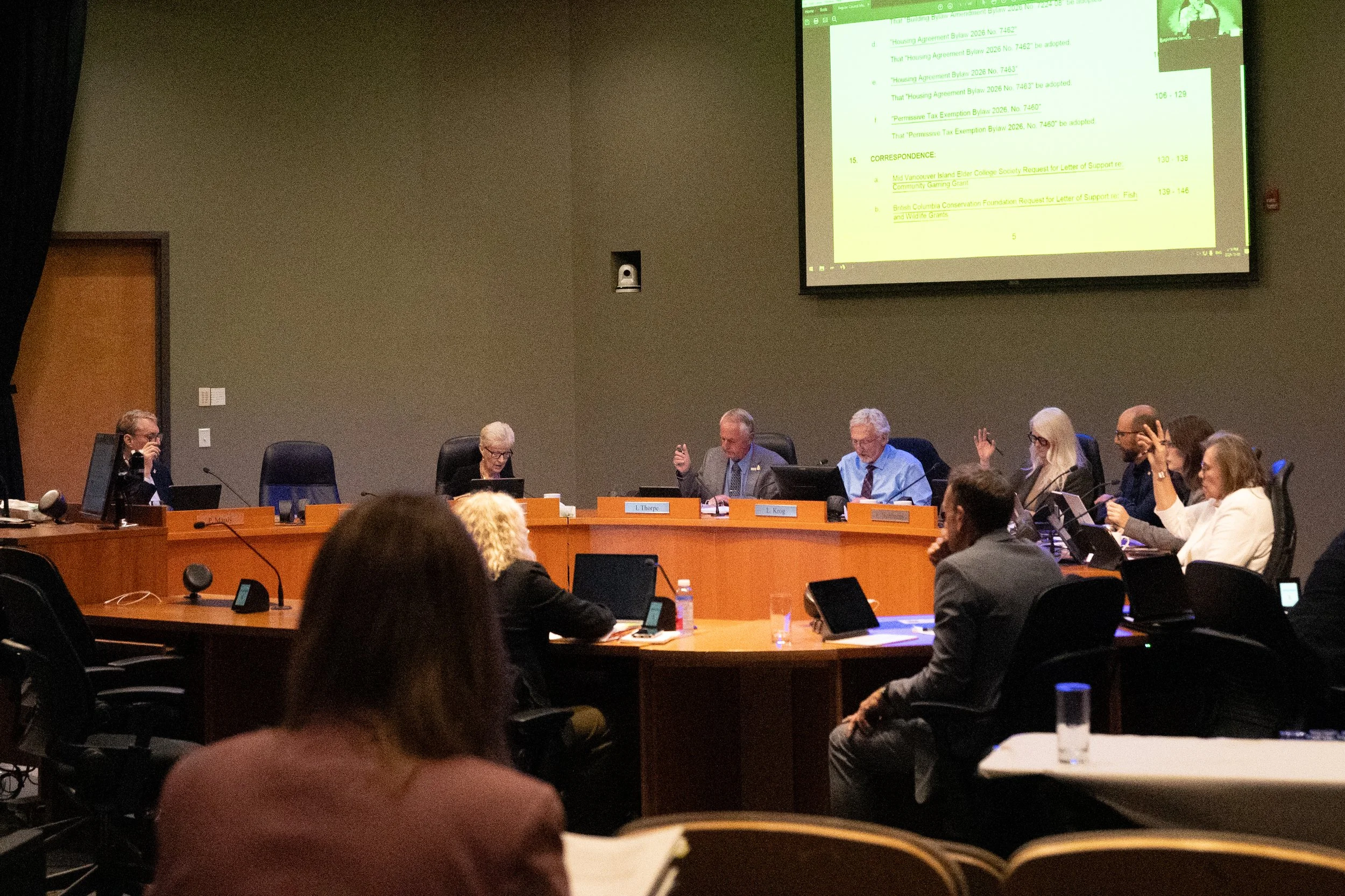
The foundation’s delegation included historical research, supporting letters from architectural and academic professionals and a petition with more than 250 signatures. (Luis Zablah / CHLY 101.7FM)
According to the City of Nanaimo, the Community Heritage Register is a list of heritage buildings and suites that have heritage value in the community. It protects the chosen structures and informs owners of heritage factors that impact potential development on the property.
Attending supporters noted that they hope to develop these buildings into a multicultural community space where residents can share traditions, learn about one another’s histories and strengthen connections across generations.
Among the foundation’s supporters is Olivia Spiden, a fifth generation Nanaimo resident who speaks about the delegation’s aftermath.
“ I was really happy to have the chance to speak about this today because I think it's very important, too important to just let it get away from us again, and I hope that city council is open to letting us have this space to share our culture and make some new memories.”
However, not all in the local Chinese community of Nanaimo share the desire for a heritage designation for the Hecate St. buildings. The Nanaimo Chinese Cultural Society (NCCS) disagrees that the properties warrant a heritage recognition.
Jerry Hong, chair of the NCCS argues that their former use by Chinese owned businesses and organizations does not necessarily establish their historical significance.
“We didn't think that this building was important enough for council to focus on or for our Chinese community.”
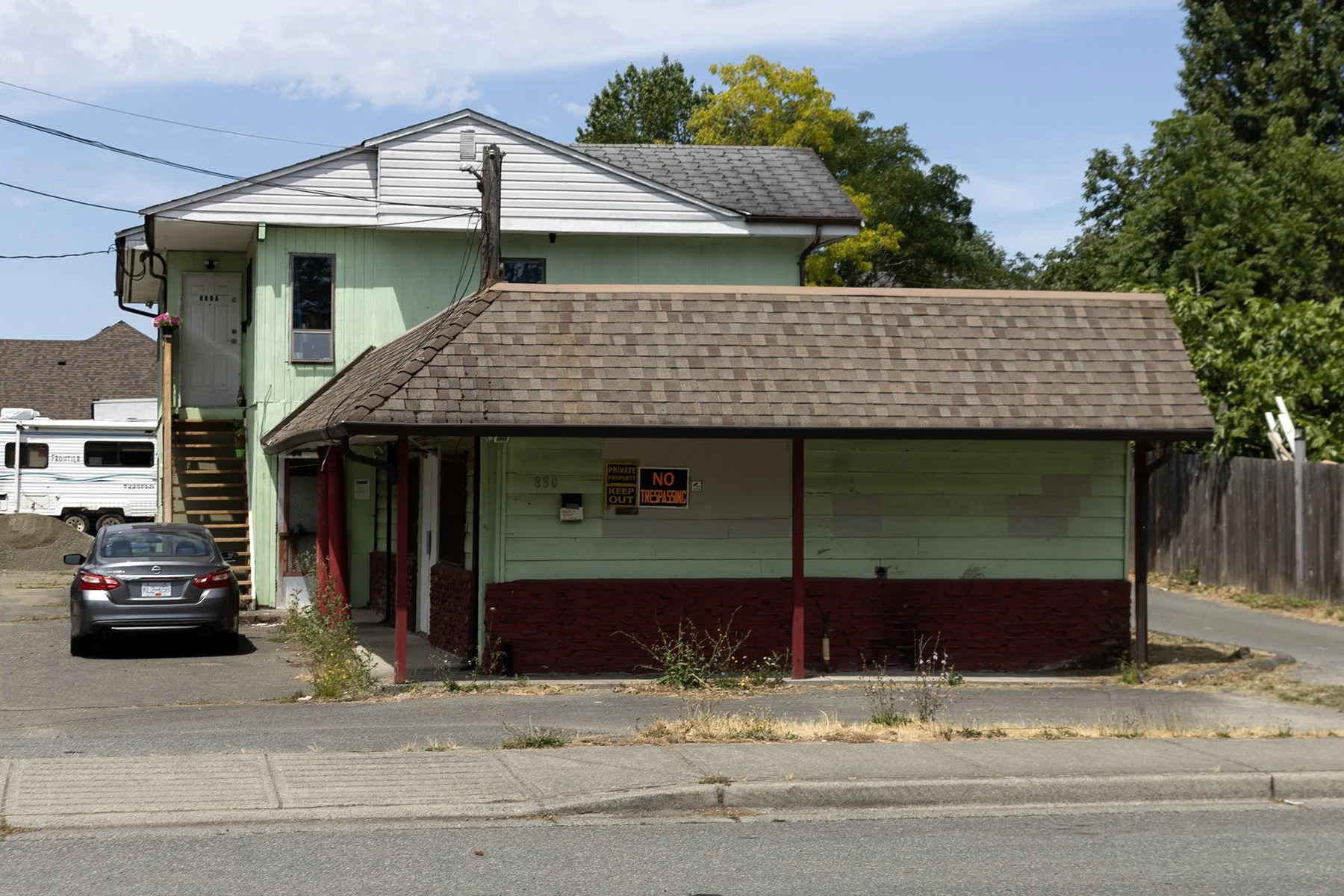
Not all in the local Chinese community of Nanaimo share the desire for a heritage designation for the Hecate St. buildings. (Lauryn Mackenzie / CHLY 101.7FM)
He explained that the Chinese Freemasons previously occupied both Hecate Street buildings, but eventually sold 880 and relocated to 253 Milton Street. According to Hong, the organization considered the building too costly to maintain and no longer suitable for its needs.
Hong prefers to focus on other aspects of Chinese Canadian cultural preservation of spaces, like the Townsite Chinese Cemetery located on Townsite Road, or the China Steps, located in downtown Nanaimo.
“If there's money that the city has to put into preserving something, we would rather see it going towards the cemetery, right? We would rather see it going towards China Steps and redeveloping the first area of where Chinatown originally was.”
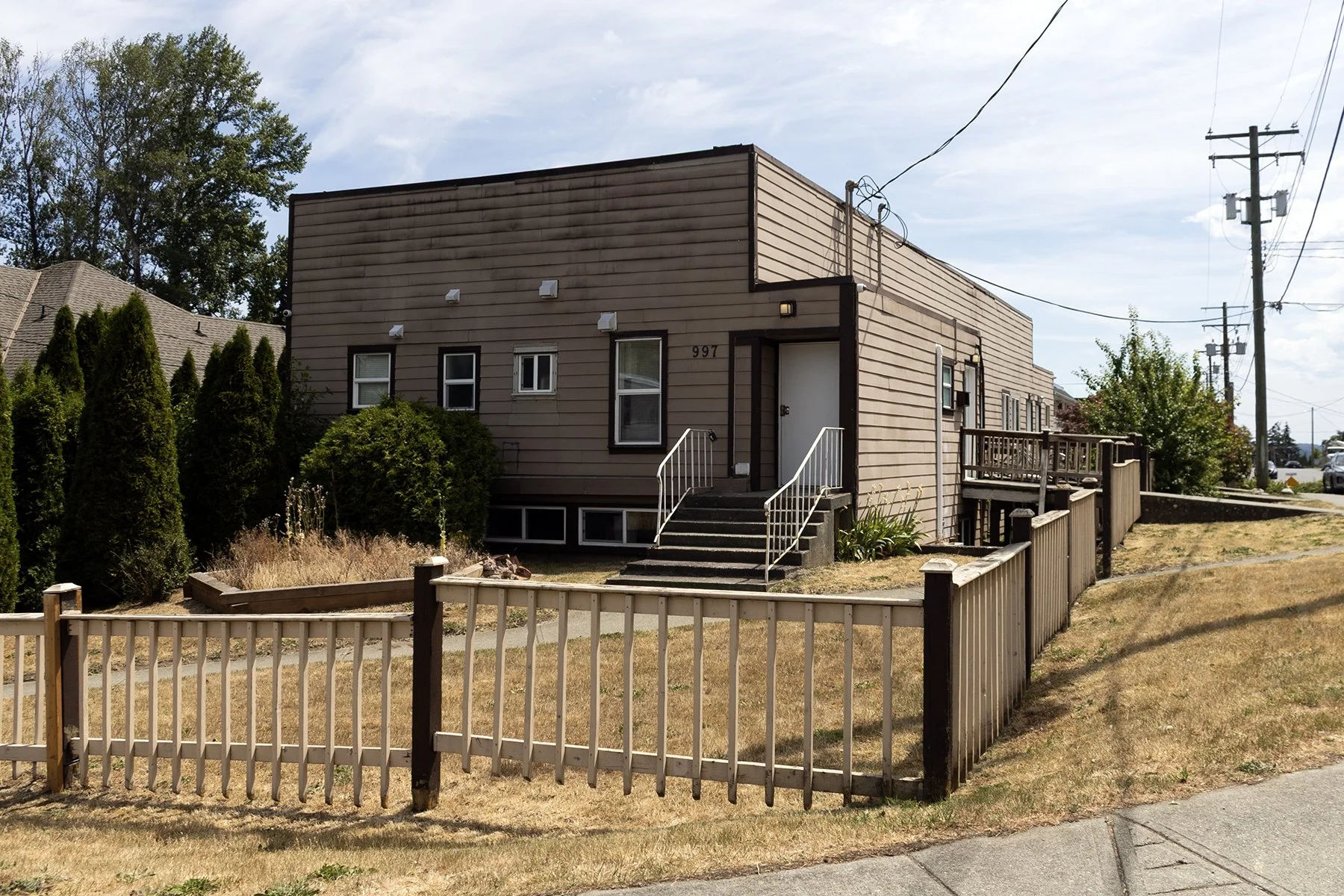
No official decision was made on the building’s being added to the registrar at Monday's council meeting. (Lauryn Mackenzie / CHLY 101.7FM)
Beyond restoring the Townsite Chinese Cemetery and China Steps, Hong suggested historical plaques, public art installations and other markers could help mark the city’s former Chinatowns without preserving the Hecate Street buildings.
He described the historic Chinese cemetery, originally built in 1924, as the society’s preservation priority, arguing that restoring an existing cultural landmark would give a more meaningful connection to the community’s past than investing in the Hecate Street properties.
He also questions the buildings’ conditions, and wonders what the long term costs of preservation could be.
“ We just don't see the rationale for it, and we don't see the financial implications of it. You know, the city preserves the building, then what? What are the next steps? Who pays for the building? Like, as a Chinese community, we would feel bad taking money from the residents of Nanaimo's taxation to pay for a building that doesn't mean anything to us.”
Adding a property to the City’s Community Heritage Register requires an assessment of its heritage value, along with a written request from the property owner and an evaluation before the matter can be considered by Nanaimo City Council. There are no active demolition permits issued for either building according to Nanaimo’s Director of Development Approvals Jeremy Holm.
While both organizations emphasize the importance of recognizing Nanaimo's Chinese Canadian history, they remain divided over whether the Hecate St. properties should be part of the preservation effort.
No official decision was made on the building’s being added to the registrar at Monday's council meeting.
Funding Note: This story was produced with funding support from the Local Journalism Initiative, administered by the Community Radio Fund of Canada.
Newsroom Ethics • About our Newsroom • Report an Error • Corrections & Clarifications